11 Years Factory wholesale Green Coffee Bean Extract Factory in Paris
11 Years Factory wholesale Green Coffee Bean Extract Factory in Paris Detail:
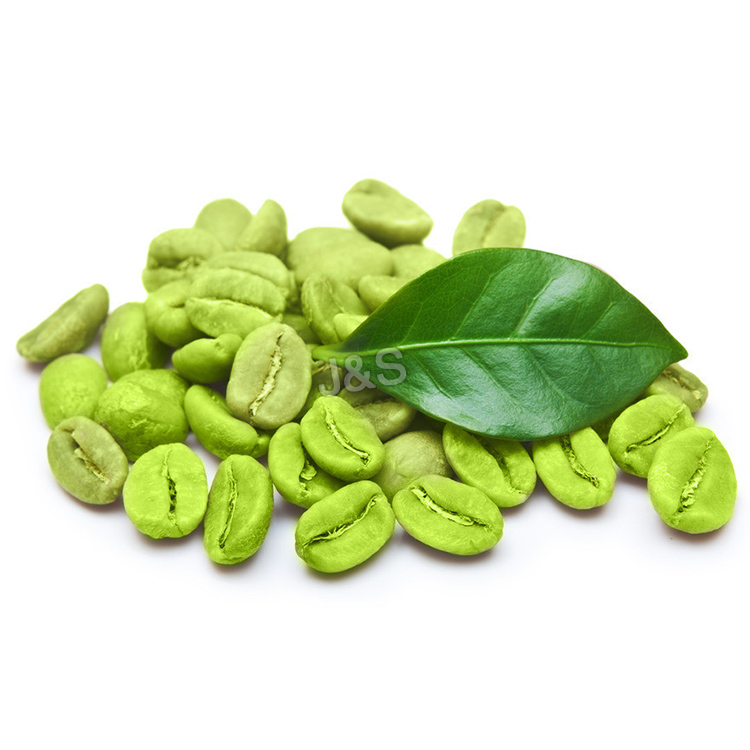
[Latin Name] Coffea arabica L.
[Plant Source] from China
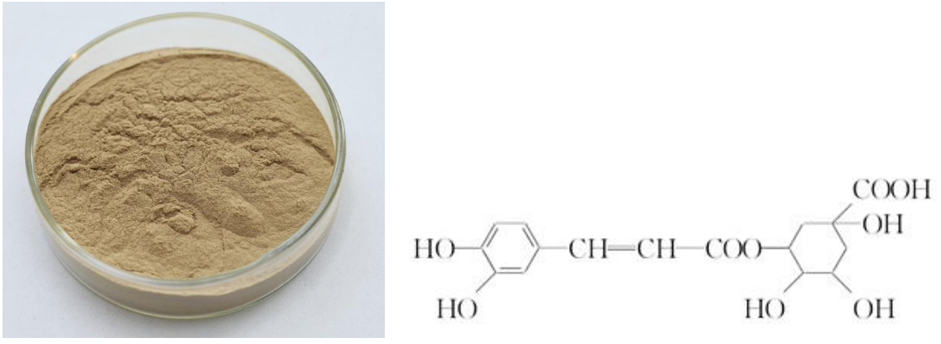
[Specifications] chlorogenic acid 10%-70%
[Appearance] Yellow brown fine powder
Plant Part Used:Bean
[Particle size] 80 Mesh
[Loss on drying] ≤5.0%
[Heavy Metal] ≤10PPM
[Storage] Store in cool & dry area, keep away from the direct light and heat.
[Shelf life] 24 Months
[Package] Packed in paper-drums and two plastic-bags inside.
[Net weight] 25kgs/drum
[Brief Introduction]
Green Coffee Bean Extract is sourced from Europe and is standardized to more than 99% Chlorogenic Acid. Chlorogenic Acid is the compound present in coffee. Which has been long known as for its beneficial properties. This active ingredient akes Green Coffee Bean an excellent agent to absorb free oxygen radicals; as well as helping to avert hydroxyl radicals, both which contribute to degradation of cells in the body.Green Coffee Beans have strong polyphenols which act to help reduce free oxygen radicals in the body, but it is standardized to more than 99% Cholorgenic Acid, a dietary polyphenol that helps to regulate metabolism.Test results showed Green Coffee Bean had more than double the rate of oxygen radical absorbance capability when compared to green tea and grape seed extracts
[Main Functions]
1.Chlorogenic acid, long known as an antioxidant with potential anti-cancer activity, also slows the release of glucose into bloodstream after a meal.
2.lower one’sblood sugar level, suppress the appetite, lower blood pressure, and reduce levels of visceral fat.
3.Useful in fighting the free radicals in our bodies that can damage our cells and contribute to conditions such as cardiovascular disease. Test results
showed Green Coffee Bean had more than double the rate of oxygen radical absorbance capability when compared to green tea and grape seed extracts.
4.Act as an effective painkiller especially for migraine medications;
5.Reduce the risk of diabetes.
Product detail pictures:
Related Product Guide:
We thinks what customers think, the urgency of urgency to act in the interests of a customer position of principle, allowing for better quality, lower processing costs, prices are more reasonable, won the new and old customers the support and affirmation for 11 Years Factory wholesale Green Coffee Bean Extract Factory in Paris , The product will supply to all over the world, such as: Madras, Poland, Puerto Rico, We have to continue to uphold the "quality, comprehensive, efficient" business philosophy of "honest, responsible, innovative"spirit of service, abide by the contract and abide by reputation, first-class products and improve service welcome overseas customers patrons.
In October when you’re carving pumpkins, don’t just throw away the pumpkin seeds. With a little bit of effort you can make a snack that the whole family will love. I make mine with a little olive oil, a tablespoon of chili powder, salt, garlic powder, and hot pepper juice. Mine are spicy but you can use whatever spices you like! Roasted pumpkin seeds are fun, healthy, and super good. Plus, you get to use a part of the pumpkin that most people usually just throw away!
Goji berries are the red-orange fruits of certain Lycium species, highly revered as a major Chinese tonic herb for their blood building qualities and restorative effects on the liver, kidney and immune functions. Commonly brewed for centuries as an herbal substance in numerous tea preparations, they are known for their ability to replenish Yin Jing essence, the primordial energy of the body associated with the kidney-adrenal system, sexual libido and fertility. Containing specific phytonutrients, like lycium barbarum polysaccharides (LBPs), they have been utilized for centuries as a Chinese tea ingredient in herbal formulations. Today they are commonly consumed in the West as a dried fruit or soaked and blended into drinks.
Earth Circle s, Goji Berries – 1 lb – https://amzn.to/1UwifGy
Earth Circle s Raw Goji Berries — 8 oz – https://amzn.to/25YHn0r
Goji Berry Powder, 8oz, Raw, Sunfood – https://bit.ly/24MZEeC
Goji Berries, 16oz, Raw – Sunfood – https://bit.ly/1UMvk0M
Dragon Herbs Heaven Mountain Goji Berries – 8oz – https://bit.ly/1iQSPRD
Goji Berry Powder, Lost Empire Herbs, 50g – https://bit.ly/2ghLwvE
Nativas Naturals – Goji Berries, 4oz-16oz – https://bit.ly/1UMur8G
Mountain Rose Herbs, Lycii (Goji) Berries, , 1oz – 1lb – https://bit.ly/2gmwxhJ
JIng Herbs, Lycium (Goji) Extract Powder – 50 grams – https://bit.ly/25YGRzA
Dragon Herbs, Goji and Schizandra Drops – 2 fl oz, Dragon Herbs – https://bit.ly/18LPu6U
Goji Berries Page: https://bit.ly/1ushlAK
Additional Sourced Info:
Tibetan Goji Berries are not Chinese Wolfberries: https://bit.ly/1tt5sPa
Lycium barbarum polysaccharides: Protective effects against heat-induced damage of rat testes: https://1.usa.gov/1PpGdlc
The protective effect of goji berry extract in ischemic reperfusion in testis torsion: https://1.usa.gov/1VVUwV2
The effect of Lycium barbarum polysaccharides on erectile function recovery in a rat model of cavernous nerve injury: https://bit.ly/28A0TCP
An evidence-based update on the pharmacological activities and possible molecular targets of Lycium barbarum polysaccharides: https://1.usa.gov/1JCcuGv
Improvement effect of Lycium barbarum polysaccharide on sub-health mice: https://1.usa.gov/28A1SCS
Comparative analysis of carotenoid accumulation in two goji (Lycium barbarum L. and L. ruthenicum Murr.) fruits: https://1.usa.gov/1tncxjM
Fasting plasma zeaxanthin response to Fructus barbarum L. (wolfberry; Kei Tze) in a food-based human supplementation trial: https://1.usa.gov/1YogHE5
Lycium barbarum Polysaccharides Protect Human Lens Epithelial Cells against Oxidative Stress–Induced Apoptosis and Senescence: https://1.usa.gov/1tncmEZ
Nutrition Data, Goji Berries (Tibetan): https://bit.ly/1rmzdPJ
Lycium barbarum (goji) juice improves in vivo antioxidant biomarkers in serum of healthy adults: https://1.usa.gov/1YogD7s
Neuroprotective effects of anti-aging oriental medicine Lycium barbarum against beta-amyloid peptide neurotoxicity: https://1.usa.gov/1sCZSsO
All information is for educational purposes only and is the personal view of the author; not intended as medical advice,
diagnosis or prescription. This information has not been evaluated by the FDA and is not intended to cure or prevent any disease.
 By Camille from Australia - 2017.07.28 15:46
A good manufacturers, we have cooperated twice, good quality and good service attitude.
By Chris Fountas from Morocco - 2018.12.14 15:26