14 Years Factory wholesale White Willow Bark Extract Factory for Cannes


Product Detail

Product Tags

Related Video

Feedback (2)

Our pursuit and company goal is to "Always satisfy our customer requirements". We continue to develop and design superior quality products for both our old and new customers and achieve a win-win prospect for our clients as well as us for Grape Skin Extract, Phytosterol Benefits, Huperzine A, Our aim is to help customers realize their goals. We are making great efforts to achieve this win-win situation and sincerely welcome you to join us!
14 Years Factory wholesale White Willow Bark Extract Factory for Cannes Detail:

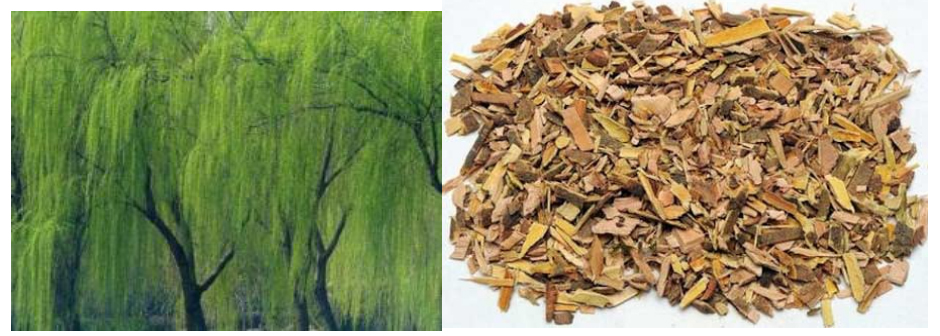
[Latin Name] Salix alba L.

[Plant Source] from China

[Specifications] Salicin 15-98%

[Appearance] Yellow Brown to White powder

Plant Part Used: Bark

[Particle size] 80 Mesh

[Loss on drying] ≤5.0%

[Heavy Metal] ≤10PPM

[Storage] Store in cool & dry area, keep away from the direct light and heat.

[Shelf life] 24 Months

[Package] Packed in paper-drums and two plastic-bags inside.

[Net weight] 25kgs/drum
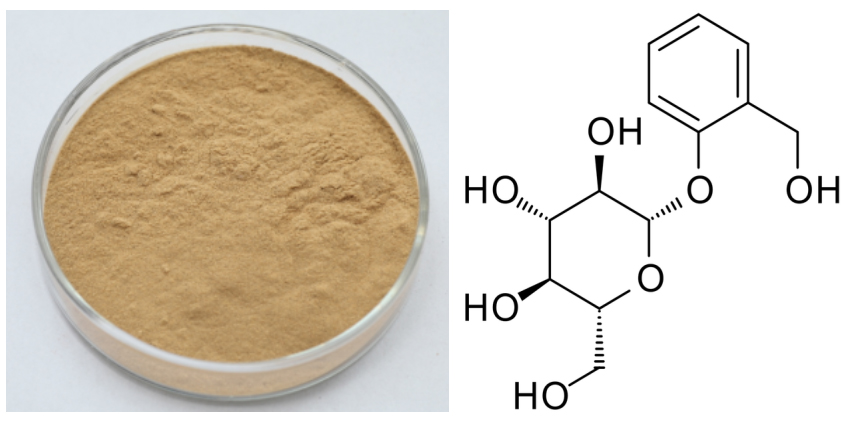
White Willow Bark Extract111

Brief Introduction

Salicin is a naturally occurring compound found in the bark of several species of trees, primarily North American in origin, that are from the willow, poplar, and aspen families. White willow, from whose Latin name, Salix alba, the term salicin is derived, is the most well known source of this compound, but it is found in a number of other trees, shrubs, and herbaceous plants as well being synthesized commercially. It is a member of the glucoside family of chemicals and is used as an analgesic and antipyretic. Salicin is used as a precursor for the synthesis of salicylic acid and acetylsalicylic acid, commonly known as aspirin.

A colorless, crystalline solid in its pure form, salicin has the chemical formula C13H18O7. Part of its chemical structure is equivalent to the sugar glucose, meaning it is classified as a glucoside. It is soluble, but not strongly so, in water and alcolhol. Salicin has a bitter taste and is a natural analgesic and antipyretic, or fever reducer. In large quantities, it can be toxic, and overdoses may lead to liver and kidney damage. In its raw form, it may be mildly irritating to skin, respiratory organs, and eyes.

Function

1. Salicin is used to ease pain and reduce inflammation.

2. Relieve acute and chronic pain, including headache, back and neck pain, muscle aches, and menstrual cramps; Control arthritis discomforts.

3. Relieve acute and chronic pain.

4. It has the same effect on the body as aspirin without any of the side effects.

5. It is an anti-inflammatory, a fever reducer, an analgesic, an anti-rheumatic, and an astringent. Specifically, it helps to relieve headaches.

Application

1.Anti-inflammatory, anti-rheumatic,

2.Reduce a fever,

3.Use as an analgesic and astringent,

4.Relieve headache,

5.Ease pain caused by rheumatism, arthritis, and carpal tunnel syndrome.
White Willow Bark Extract11122


Product detail pictures:

14 Years Factory wholesale White Willow Bark Extract Factory for Cannes detail pictures


Related Product Guide:

Our advantages are lessen charges,dynamic income team,specialized QC,sturdy factories,premium quality services for 14 Years Factory wholesale White Willow Bark Extract Factory for Cannes , The product will supply to all over the world, such as: Slovenia, Iceland, European, Today, We are with great passion and sincerity to further fulfill our global customers' needs with good quality and design innovation. We fully welcome customers from all over the world to establish stable and mutually beneficial business relationships, to have a bright future together.


  • Rhodiola rosea (commonly golden root, rose root, roseroot, western roseroot, Aaron’s rod, arctic root, king’s crown, lignum rhodium, orpin rose) is a perennial flowering plant in the family Crassulaceae. It grows in cold regions of the world, including much of the Arctic, the mountains of Central Asia, scattered in eastern North America from Baffin Island to the mountains of North Carolina, and mountainous parts of Europe, such as the Alps, Pyrenees, and Carpathian Mountains, Scandinavia, Iceland, Great Britain and Ireland. It grows on sea cliffs and on mountains at altitudes up to 2280 meters. Several shoots grow from the same thick root. Shoots may reach 5 to 35 cm in height. R. rosea is dioecious – having separate female and male plants.

    This video is targeted to blind users.

    Attribution:
    Article text available under CC-BY-SA
    Creative Commons image source in video


    About our stevia seeds:
    - They are fresh and fertile — the flowers were cross pollinated by native insects.
    - The stevia seeds live for 8-12 weeks at warm temperature. 5-6 months at 4 C in refrigerators.
    - We ship seeds that are no older than 40 days after collection.
    - More resistant to lack of water. Industrial varieties, irrigation systems are mandatory, highest cotization in the market because of the high content of Rebadioside A (better taste and sweeter than Stevioside)

    Clean stevia seeds means the debris. They are more expensive than the raw seeds, not only because of the labour and equipment costs involved, but also because of the ratio of raw stevia seeds to clean stevia seeds is 1:4. Every 4 kilos of raw stevia seeds make 1 kilo of clean viable stevia seeds. Germination rate is 45% — 50% if properly planted. Emergence rate is 80%.

    Raw Stevia Seeds
    These seeds come directly from the farm with feathery attachment still on. Our stevia seeds are fresh, untreated and free of any harsh chemicals that can dramatically reduce germination rates. Our stock is frequently rotating, no seed will ever be more than a few months old.

    Getting Started
    Stevia rebaudiana seeds are rarely available because of production problems and poor germination, so plants are generally used instead. Plants are available from several mail order sources. Be sure you are getting Stevia rebaudiana (Stevia is the genus and rebaudiana is the species) since this is the only sweet variety. Stevia stems are brittle, but nurseries have developed packing methods to protect them in transit. Arrange for plants to arrive soon after your last frost date. Later on, very high temperatures may stress transplants. Transfer plants to the garden as soon as possible after arrival, making sure they don’t dry out in the meantime.

    In garden beds, space plants 10 to 12 inches apart in the row, with two rows per bed. Stagger rows so that plants end up in a zigzag pattern. Use a trowel to dig a hole, then pour in some water and set the plants a bit deeper than they were in the pot, so the root ball is covered by a thin layer of garden soil. After back-filling around the roots, water again to settle the soil. If the weather is hot and sunny at planting time, it’s a good idea to place a thin mulch around the plants to reduce moisture loss. Cool night temperatures will halt plant growth. For early plantings or areas with cool summers, hotcaps or row covers will allow faster growth and offer protection from late frosts. Don’t let the plants overheat on hot days, however.

    If you are fortunate enough to obtain high-quality Stevia seeds, they are easily germinated indoors under lights. Seedlings grow slowly, so allow 7 to 8 weeks from seed to transplanting.

    Plant Care
    In general, Stevia should be treated as a vegetable crop. When hot weather sets in, usually a month after planting, beds should be mulched 3 to 6 inches deep with organic residue such as grass clippings, chopped leaves, straw, hay, or compost. This will protect the shallow feeder roots and hold in moisture. Plant growth is slow at first, accelerating by mid summer.

    A consistent moisture supply is important for Stevia. Irrigate once or twice a week, whenever rain fails to water the plants. Sandy soils require more frequent irrigation. Trickle irrigation is ideal, ensuring consistent moisture levels without wetting leaves. A simple and effective system is the black, “weeping” soaker hose made from recycled rubber. Place a soaker hose between the two rows of plants, beneath the mulch. Attach to a garden hose and turn the water on at a trickle for a couple of hours. The system can be automated with the addition of a timer.

    Side-dressing is usually not necessary, but low nitrogen or organic fertilizer may be applied in the summer as plant growth begins to accelerate. Excess nitrogen causes tender growth and reduced leaf sweetness.

    Stevia may be affected by two lesion-producing fungal diseases, Septoria steviae and Sclerotinia sclerotiorum. With Sclerotinia, dark brown lesions form on stems, near the soil line, followed by wilting and eventual collapse of the plant. Stevia plants are usually full grown before diseases appear. As harvest time nears, commercial growers watch plants closely and harvest the entire crop at the first sign of disease. Meticulous weed control (by hand) permits strong growth, which helps plants resist disease. Humid, wet weather and standing water favor the development of fungal diseases, making raised beds or hills a preventative measure. Additionally, avoid wetting leaves during irrigation. Stevia is usually the last plant insects will feed on, so pests are seldom a problem outdoors. Aphids, thrips, and whiteflies can cause damage in heavily infested greenhouses.

    Web: https://www.natureherbs.org | www.natureherbs.co
    Email : natureherbs@ymail.com
    Watsapp: +91 841 888 5555
    Skype: nature.herbs

    We are really happy to find such a manufacturer that ensuring product quality at the same time the price is very cheap.
    5 Stars By Evangeline from Hyderabad - 2018.02.04 14:13
    This company conforms to the market requirement and joins in the market competition by its high quality product, this is an enterprise that have Chinese spirit.
    5 Stars By Honorio from Comoros - 2017.12.02 14:11
    Write your message here and send it to us