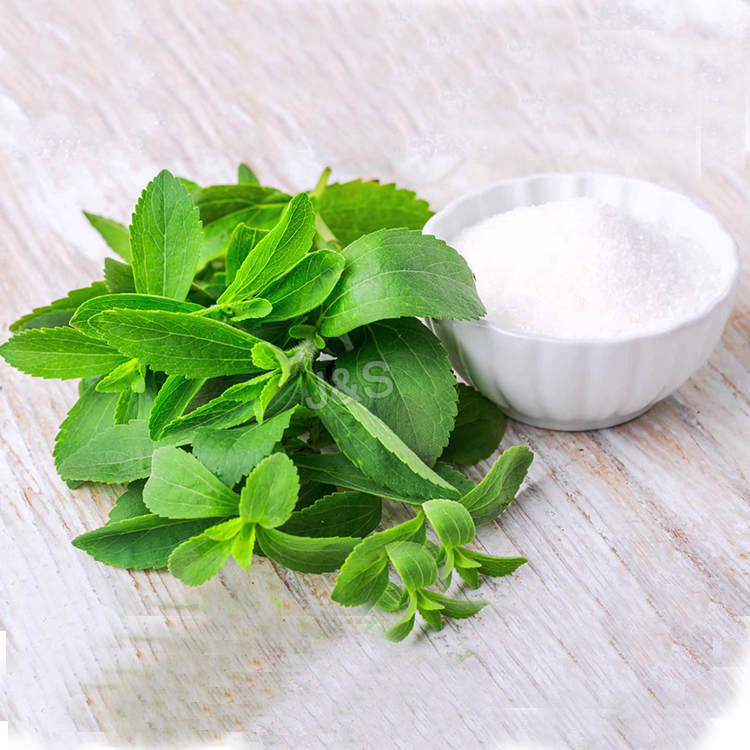
14 Years Manufacturer Stevia Extract Manufacturer in Iraq
14 Years Manufacturer Stevia Extract Manufacturer in Iraq Detail:
[Latin Name] Stevia rebaudiana
[Plant Source]from China
[Specifications] 1.Stevia Extract Powder (Steviosides)
Total Steviol Glycosides 80%, 90%, 95%
2. Rebaudioside-A
Rebaudioside-A 40%, 60%, 80%, 90%, 95%, 98%
3. Stevioside 90%
One monomer in Steviol Glycosides
[Appearance] Fine white powder
Plant Part Used:Leaf
[Particle size] 80 Mesh
[Loss on drying] ≤5.0%
[Heavy Metal] ≤10PPM
[Shelf life] 24 Months
[Package] Packed in paper-drums and two plastic-bags inside.
[Net weight] 25kgs/drum
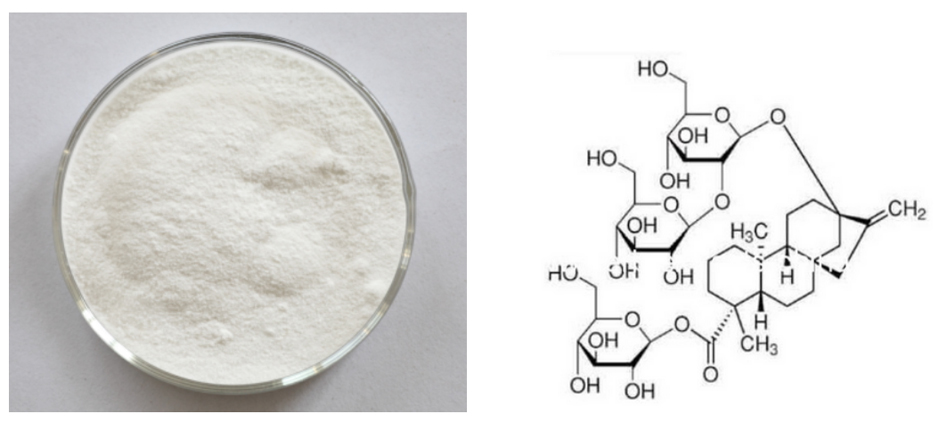
Stevia Extract
[Characteristics]
Stevia sugar features high sweetness and low calorie and its sweetness is 200 350 times of that of cane sugar but its calorie is only 1/300 of that of cane sugar.
The component of stevia extract that gives it its sweetness is a mixture of various steviol glycosides. The components of sweetness in stevia leaves are stevioside, rebaudioside A, C, D, E and dulcoside A. Rebaudioside C, D, E and dulcoside A are small in quantity. The principal components are stevioside and rebaudioside A.
The quality of stevioside and rebaudiosideA is better than those of other components, which are commercially extracted and used in various applications.
The steviol glycosides present in stevia extract are referred to as “steviosides” or ¡°stevia extract¡±. Among these “steviosides”, the most common is Stevioside followed by RebaudiosideA. The Stevioside has a slight and pleasant herbal taste and the Rebaudioside-A has no herbal taste.
Although Rebaudioside C and dulcoside A are small in quantity in stevia extract, they are the major components giving bitter aftertaste.
[Function]
A large number of pharmaceutical tests have proved that stevia sugar has no side effects, carcinogens, and is safe for eating.
Compared with cane sugar, it can save 70% of the cost. With pure white color, pleasing taste and no peculiar smell, Stevia sugar is a new sugar source with broad perspective for development. Stevia rebaudianum sugar is the natural low hotsweet agent mostly similar to the flavor of cane sugar, approved to be used by State Ministry of Health and Ministry of Light Industry.
It is the third natural succedaneum of cane sugar and beet sugar with development and health care value, extracted from the leaves of the herbal vegetable of the composite family-stevia rebaudianum.
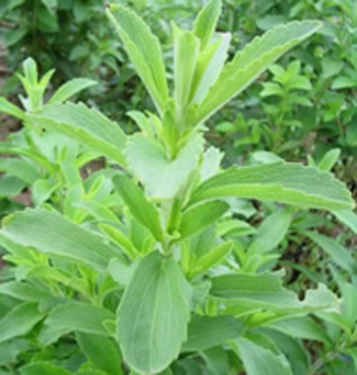
Product detail pictures:
Related Product Guide:
Our merchandise are broadly identified and trusted by end users and can satisfy continually developing economic and social requires for 14 Years Manufacturer Stevia Extract Manufacturer in Iraq , The product will supply to all over the world, such as: Algeria, Pretoria, Mauritius, Hard work to keep making progress, innovation in the industry, make every effort to first-class enterprise. We try our best to build the scientific management model, to learn abundant professional knowledge, to develop advanced production equipment and production process , to create the first-call quality products, reasonable price , high quality of service , quick delivery , to give you create new value .
Find out which plants and herbs boost testosterone naturally.
This hormone helps build muscle, affects your bone strength, your sex drive, your memory, your heart, and your penis size. Higher testosterone levels are strongly connected with lower body fat, more muscle mass, and stronger bones.
A deficiency in testosterone is a condition that burdens some 13.8 million men in the United States over the age of 45, according to a recent census data. Low testosterone has also a negative impact on just about every major system in the male body, including insulin resistance, shorter life, obesity, and cardiovascular disease.
Plants That Boost Testosterone Levels Naturally complete list:
Red kidney beans are all considered sources of vitamin D and zinc, which are correlated with higher testosterone levels.
Macadamia nuts for healthy testosterone production – dietary fat, in general, is known for its testosterone increasing effect, and nuts in general, are very high in healthy fats.
Mushrooms – according to a study published by Evidence-Based Complementary and Alternative Medicine concluded that mushrooms, particularly Ganoderma lucidum — or reishi mushrooms — increases the levels of this hormone by two-fold, while also helping to recover after physical activity.
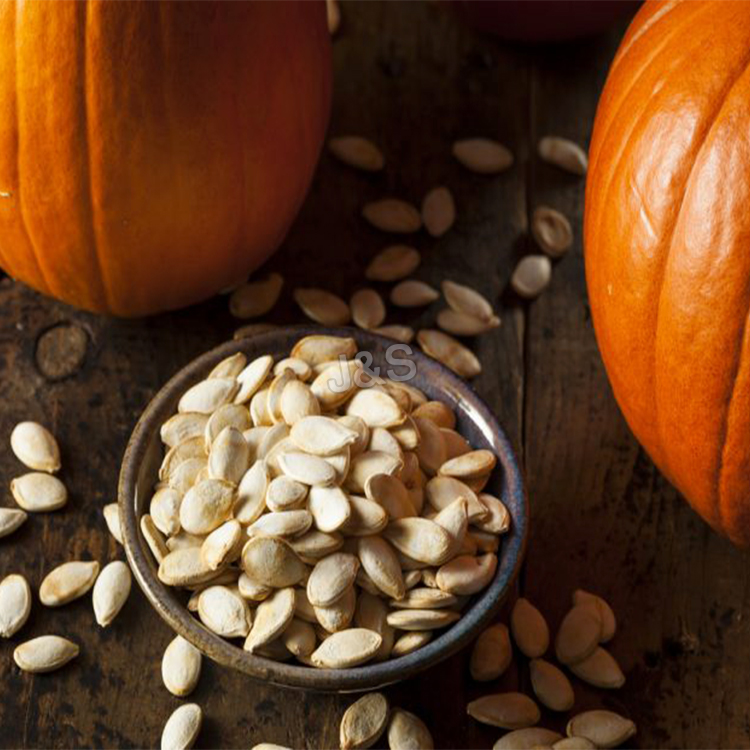
Pumpkin seeds are rich in zinc, an essential mineral which promotes chemical reactions in the body like testosterone reproduction. According to a study, men with low zinc intake had lower testosterone levels. You may add pumpkin seeds to your salads, oatmeal, and shakes.
Avocados are an important source of healthy fats, that are vital in the formation of testosterone.
Coconut’s a great food to promote lean body mass, boost your muscle growth, and balance your body’s hormones including testosterone.
Garlic is a storehouse of two active compounds, allicin and quercetin, that have been shown, among other things, to suppress the body’s manufacture of cortisol, a stress hormone that been strongly associated to a slowed or halted production of testosterone.
Source – https://www.yourhealthremedy.com/health-tips/plants-that-boost-testosterone/
Images – pixabay
Music: Broken Reality Kevin MacLeod (incompetech.com)
Licensed under Creative Commons: By Attribution 3.0 License
https://creativecommons.org/licenses/by/3.0/
Chemistry playlist: https://www.youtube.com/playlist?list=PL_hX5wLdhf_KyuOalV6rwHjo810Zaa6xq
more at https://scitech.quickfound.net/
Overview of how plastics & synthetic rubbers are made.
Reupload of a previously uploaded film with improved video & sound.
Public domain film from the Library of Congress Prelinger Archives, slightly cropped to remove uneven edges, with the aspect ratio corrected, and one-pass brightness-contrast-color correction & mild video noise reduction applied.
The soundtrack was also processed with volume normalization, noise reduction, clipping reduction, and/or equalization (the resulting sound, though not perfect, is far less noisy than the original).
https://creativecommons.org/licenses/by-sa/3.0/
https://en.wikipedia.org/wiki/Polymer
A polymer is a large molecule (macromolecule) composed of repeating structural units. These sub-units are typically connected by covalent chemical bonds. Although the term polymer is sometimes taken to refer to plastics, it actually encompasses a large class of compounds comprising both natural and synthetic materials with a wide variety of properties.
Because of the extraordinary range of properties of polymeric materials, they play an essential and ubiquitous role in everyday life. This role ranges from familiar synthetic plastics and elastomers to natural biopolymers such as nucleic acids and proteins that are essential for life.
Natural polymeric materials such as shellac, amber, wool, silk and natural rubber have been used for centuries. A variety of other natural polymers exist, such as cellulose, which is the main constituent of wood and paper. The list of synthetic polymers includes synthetic rubber, Bakelite, neoprene, nylon, PVC, polystyrene, polyethylene, polypropylene, polyacrylonitrile, PVB, silicone, and many more.
Most commonly, the continuously linked backbone of a polymer used for the preparation of plastics consists mainly of carbon atoms. A simple example is polyethylene (‘polythene’ in British English), whose repeating unit is based on ethylene monomer. However, other structures do exist; for example, elements such as silicon form familiar materials such as silicones, examples being Silly Putty and waterproof plumbing sealant. Oxygen is also commonly present in polymer backbones, such as those of polyethylene glycol, polysaccharides (in glycosidic bonds), and DNA (in phosphodiester bonds).
Polymers are studied in the fields of polymer chemistry, polymer physics, and polymer science…
Polymerization is the process of combining many small molecules known as monomers into a covalently bonded chain or network. During the polymerization process, some chemical groups may be lost from each monomer. This is the case, for example, in the polymerization of PET polyester. The monomers are terephthalic acid (HOOC-C6H4-COOH) and ethylene glycol (HO-CH2-CH2-OH) but the repeating unit is -OC-C6H4-COO-CH2-CH2-O-, which corresponds to the combination of the two monomers with the loss of two water molecules. The distinct piece of each monomer that is incorporated into the polymer is known as a repeat unit or monomer residue…
https://en.wikipedia.org/wiki/Synthetic_rubber
Synthetic rubber is any type of artificial elastomer, invariably a polymer. An elastomer is a material with the mechanical (or material) property that it can undergo much more elastic deformation under stress than most materials and still return to its previous size without permanent deformation.About 15 billion kilograms of rubbers are produced annually, and of that amount two thirds is synthetic…
Natural vs synthetic rubber
Natural rubber, coming from latex, is mainly poly-cis-isoprene containing traces of impurities. Although it exhibits many excellent properties, natural rubber is often inferior to synthetic rubbers, especially with respect to its thermal stability and its compatibility with petroleum products.
Synthetic rubber is made by the polymerization of a variety of petroleum-based precursors called monomers. The most prevalent synthetic rubbers are styrene-butadiene rubbers (SBR) derived from the copolymerization of styrene and 1,3-butadiene. Other synthetic rubbers are prepared from isoprene (2-methyl-1,3-butadiene), chloroprene (2-chloro-1,3-butadiene), and isobutylene (methylpropene) with a small percentage of isoprene for cross-linking. These and other monomers can be mixed in various proportions to be copolymerized to produce products with a range of physical, mechanical, and chemical properties. The monomers can be produced pure and the addition of impurities or additives can be controlled by design to give optimal properties. Polymerization of pure monomers can be better controlled to give a desired proportion of cis and trans double bonds…
 By Claire from Ukraine - 2018.06.18 17:25
We are long-term partners, there is no disappointment every time, we hope to maintain this friendship later!
By Phoebe from Mali - 2017.04.28 15:45