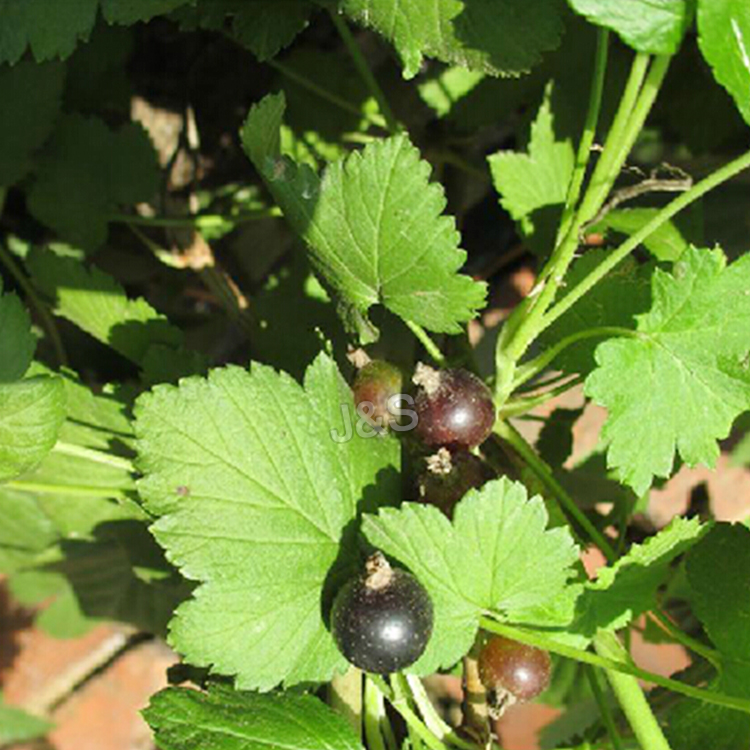
15 Years Manufacturer White Willow Bark Extract Manufacturer in United Arab Emirates
15 Years Manufacturer White Willow Bark Extract Manufacturer in United Arab Emirates Detail:
[Latin Name] Salix alba L.
[Plant Source] from China
[Specifications] Salicin 15-98%
[Appearance] Yellow Brown to White powder
Plant Part Used: Bark
[Particle size] 80 Mesh
[Loss on drying] ≤5.0%
[Heavy Metal] ≤10PPM
[Storage] Store in cool & dry area, keep away from the direct light and heat.
[Shelf life] 24 Months
[Package] Packed in paper-drums and two plastic-bags inside.
[Net weight] 25kgs/drum
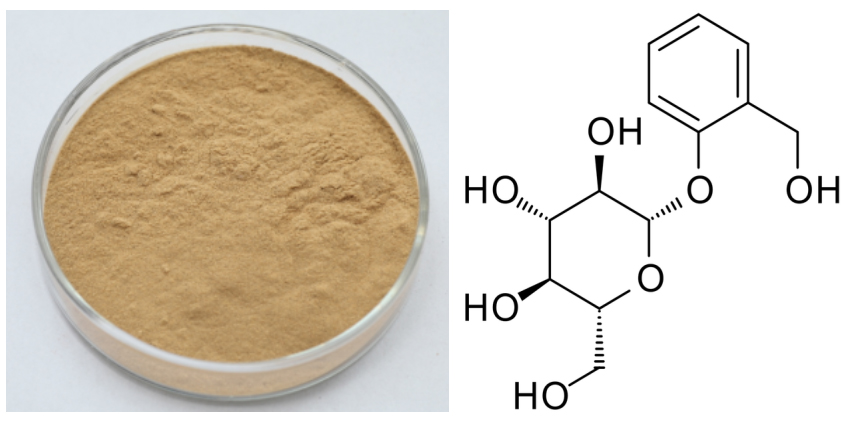
Brief Introduction
Salicin is a naturally occurring compound found in the bark of several species of trees, primarily North American in origin, that are from the willow, poplar, and aspen families. White willow, from whose Latin name, Salix alba, the term salicin is derived, is the most well known source of this compound, but it is found in a number of other trees, shrubs, and herbaceous plants as well being synthesized commercially. It is a member of the glucoside family of chemicals and is used as an analgesic and antipyretic. Salicin is used as a precursor for the synthesis of salicylic acid and acetylsalicylic acid, commonly known as aspirin.
A colorless, crystalline solid in its pure form, salicin has the chemical formula C13H18O7. Part of its chemical structure is equivalent to the sugar glucose, meaning it is classified as a glucoside. It is soluble, but not strongly so, in water and alcolhol. Salicin has a bitter taste and is a natural analgesic and antipyretic, or fever reducer. In large quantities, it can be toxic, and overdoses may lead to liver and kidney damage. In its raw form, it may be mildly irritating to skin, respiratory organs, and eyes.
Function
1. Salicin is used to ease pain and reduce inflammation.
2. Relieve acute and chronic pain, including headache, back and neck pain, muscle aches, and menstrual cramps; Control arthritis discomforts.
3. Relieve acute and chronic pain.
4. It has the same effect on the body as aspirin without any of the side effects.
5. It is an anti-inflammatory, a fever reducer, an analgesic, an anti-rheumatic, and an astringent. Specifically, it helps to relieve headaches.
Application
1.Anti-inflammatory, anti-rheumatic,
2.Reduce a fever,
3.Use as an analgesic and astringent,
4.Relieve headache,
5.Ease pain caused by rheumatism, arthritis, and carpal tunnel syndrome.
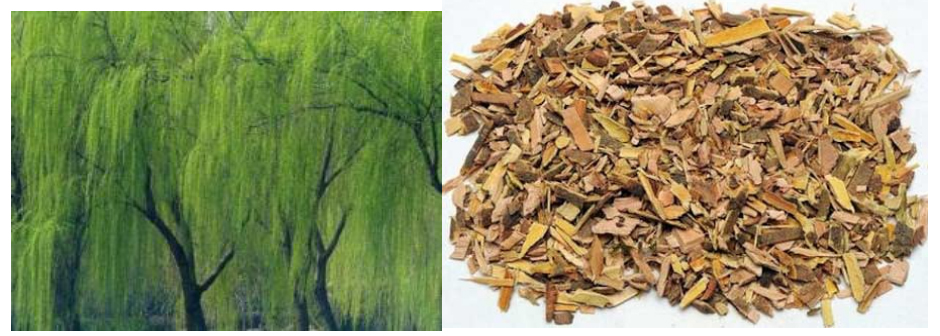
Product detail pictures:
Related Product Guide:
Well-run equipment, specialist income crew, and better after-sales services; We're also a unified major family, anyone stay with the organization value "unification, determination, tolerance" for 15 Years Manufacturer White Willow Bark Extract Manufacturer in United Arab Emirates , The product will supply to all over the world, such as: Adelaide, US, Accra, Since its foundation , the company keeps living up to the belief of "honest selling , best quality , people-orientation and benefits to customers. " We are doing everything to offer our customers with best services and best products . We promise that we'll be responsible all the way to the end once our services begin.
CBSE Class 11 Biology, Biomolecules – 2, Polysaccharides and Nucleic Acids.
This is the animated lesson with explanation which is very interesting and easy to understand way of learning.
For any query and explanation please write info@shikshahouse.com
It can be difficult to tell the difference between viral and bacterial pneumonia
What you should know:
•The most common symptoms include greenish or yellow mucus, fever, chills, stabbing chest pain, and shortness of breath
•Drink plenty of fluids
•Treatment depends on cause
Related Videos:
•Children and medicine, https://www.youtube.com/user/CVSPharmacyVideos#grid/user/8D0EC2BDAD62811B
•Questions to ask your Pharmacist, https://www.youtube.com/user/CVSPharmacyVideos#grid/user/395739CF2712C87F
Related Health Articles:
•Pneumonia
Roughly 60,000 people die of pneumonia each year — and together with influenza, they rank as the seventh-leading cause of death in the United States…Read More: https://bit.ly/djXZUp
•Pneumococcal Polysaccharide vaccine
The pneumococcal polysaccharide vaccine helps protect against severe infections due to the bacteria Streptococcus pneumoniae. This bacteria frequently causes meningitis and pneumonia in older adults and those with chronic illnesses…Read More: https://bit.ly/cMoyJr
Transcript
Hi, I’m Greg Collins and I’m a CVS pharmacist. There are many symptoms associated with pneumonia. The most common include a cough with greenish or yellow mucus; bloody sputum on occasion, fever with shaking chills, sharp or stabbing chest pain that gets worse with deep breathing or coughing, rapid, shallow breathing, and shortness of breath. Other symptoms include headache; excessive sweating and clammy skin; loss of appetite; excessive fatigue; and confusion, especially in the elderly.
Treatment of pneumonia depends on whether the cause is related to bacteria or a virus. If the cause is bacterial, the goal is to cure the infection with antibiotics. If the cause is viral, antibiotics will NOT be effective, but sometimes antiviral medication may be prescribed. It can sometimes be difficult to tell the difference between viral and bacterial pneumonia, so antibiotics are often prescribed. Many people can be treated with antibiotics at home. When at home, be sure to follow these steps: drink plenty of fluids to help loosen your chest congestion and bring up phlegm; get lots of rest; control your fever with aspirin or acetaminophen but DO NOT give aspirin to children. If you have an underlying chronic disease, severe symptoms, or low oxygen levels, you will likely require hospitalization for intravenous antibiotics and oxygen therapy. Infants and the elderly are more commonly admitted for treatment of pneumonia. When in the hospital, respiratory treatments may be necessary. Occasionally, steroid medications may be used to decrease wheezing if there is an underlying lung disease such as asthma.
I hope this helps you understand pneumonia and how it’s treated. If you have any questions at all, talk to a CVS pharmacist or MinuteClinic nurse practitioner. We’re here to help.
Source: CVS Caremark Health Resources
 By Hazel from Los Angeles - 2018.06.28 19:27
Products and services are very good, our leader is very satisfied with this procurement, it is better than we expected,
By Elaine from France - 2018.06.12 16:22