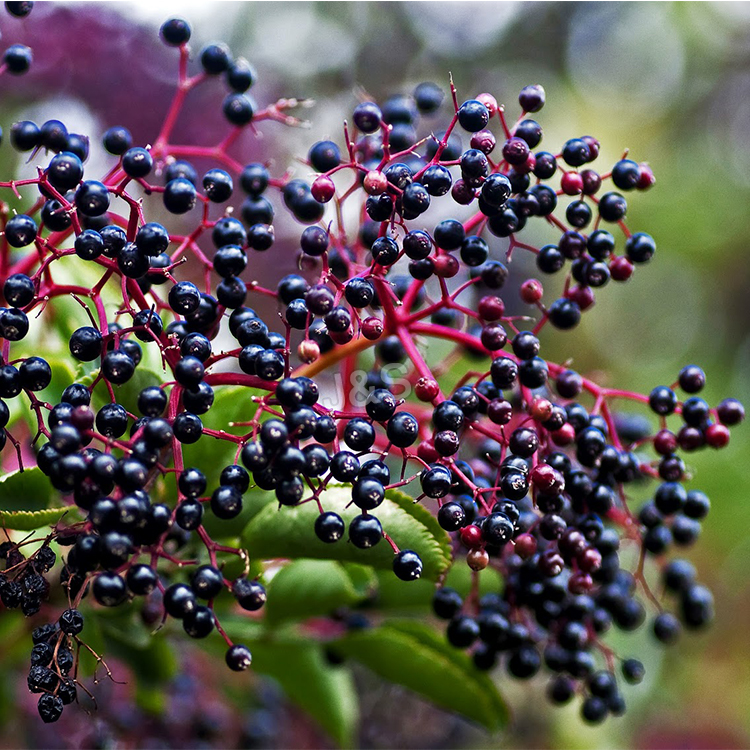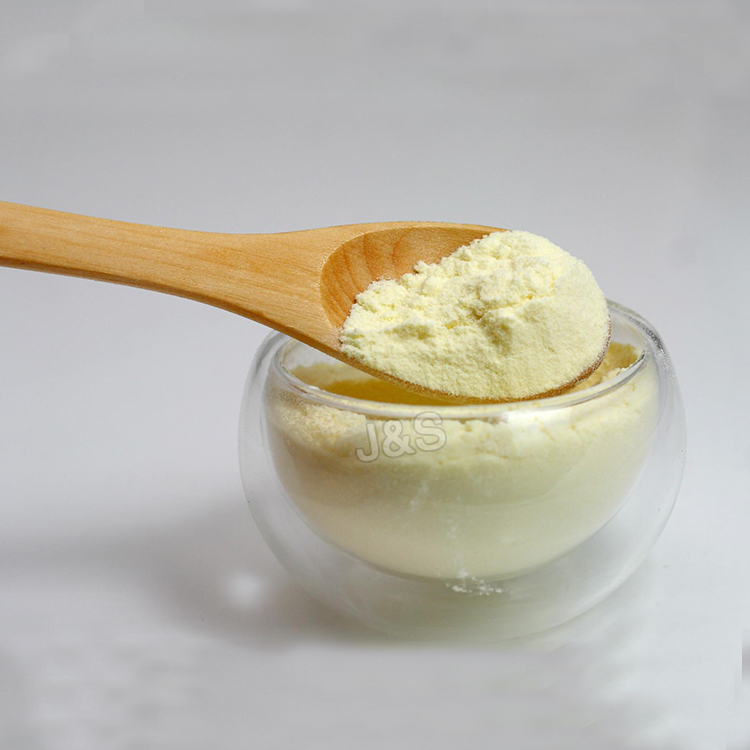
Bottom price for Lyophilized royal jelly powder Factory from Norway
Bottom price for Lyophilized royal jelly powder Factory from Norway Detail:
[Products Name] Royal jelly powder,Lyophilized royal jelly powder
[Specification] 10-HDA 4.0%, 5.0%, 6.0%, HPLC
[Gerneral feature]
1. Low antibiotics, Chloramphenicol< 0.1ppb
2. certified by, according to EOS & NOP standard;
3.100% pure with no additives;
4. More easily absorbed into the body than fresh royal jelly
5. Can be easily produced into tablets.
[Our advantages]
- 600 bee farmers, 150 units of bee-feeding groups located in natural mountains;
- certificated by;
- NON-antibiotics, widely exported to Europe;
- Health Certificate, Sanitary Certificate and Quality Certificate are available.
[Lyophilized technology]
Lyophilized technology, also known as Freeze-drying, it is a dehydration process typically used to maintain activity of all nutrition ingredients in royal jelly, also to make the royal jelly convenient for transport. Freeze-drying works by freezing the material and then reducing the surrounding pressure to allow the frozen water in the material to sublimate directly from the solid phase to the gas phase. This technology can maintain all activity of nutrition ingredient.
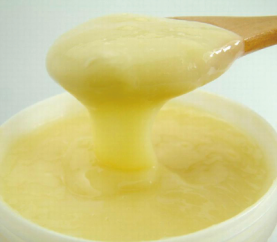
Lyophilized royal jelly powder is processed directly from fresh royal jelly.
3kgs fresh royal jelly is used to make 1kg lyophilized royal jelly powder.
During all the production process, there is no additives.
[Packing]
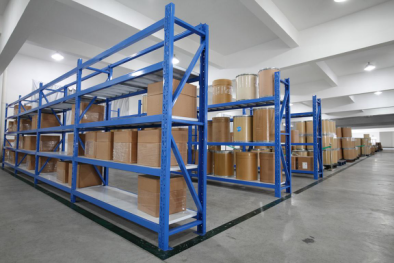
5kg/bag, 25kgs/drum
1kg/bag, 20kgs/carton
Main indices of physical and chemic in Lyophilized royal jelly
| Ingredients Indices | Lyophilized royal jelly | Standards | Results |
| Ash | 3.2 | <5 | Complies |
| Water | 4.1% | <7% | Complies |
| Glucose | 43.9% | <50% | Complies |
| Protein | 38.29% | >33% | Complies |
| 10-HDA | 6.19% | >4.2% | Complies |
[Our work flow]
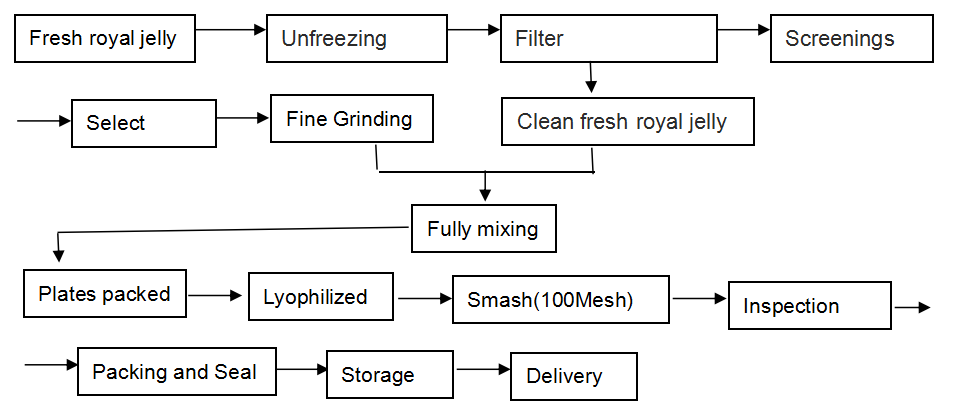
Our Lyophilized Royal Jelly Powder is produced in this way: we lyophilize the fresh royal jelly by advanced freeze-drying facilities without losing any nutritional ingredients, reserving the natural ingredients in utmost, and then make them into the form of powder, for any food additives are not needed to add.
The raw material we use is the natural fresh royal jelly which is up to the export standard . We process our products strictly according to export standard. Our workshop is up to the requirements of GMP.
Royal Jelly powder has been selected as drug excipients by many European and American pharmaceutical producing enterprises.Meanwhile it is applies to health food and cosmetics industries.
[Quality control]
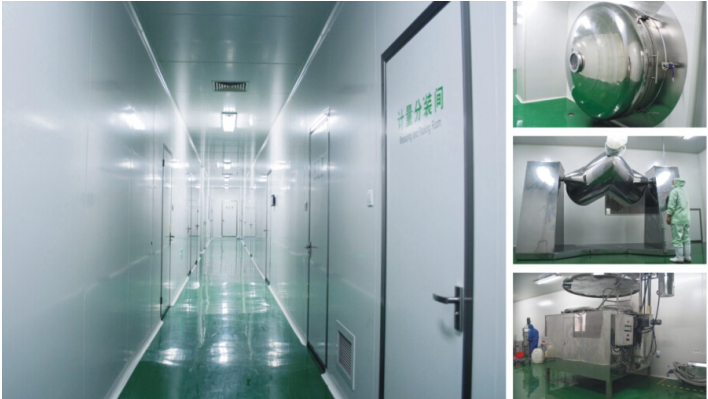
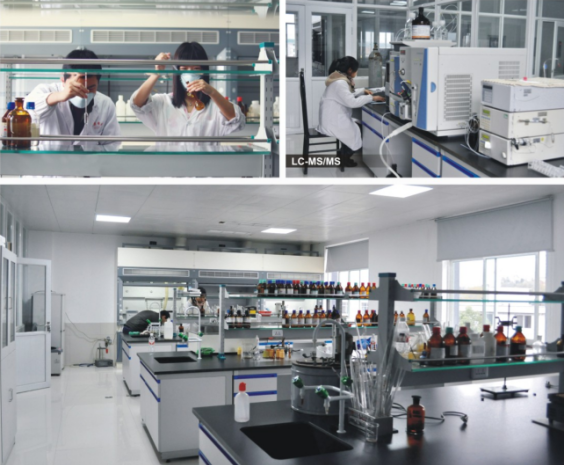
Traceability record
GMP standard production
Advanced inspection equipment
[Function]
1.Enhances the immune system
2.Promotes wound healing
3.Has antitumor/anticancer properties
4.Lowers cholesterol levels
5.Increases fat metabolism
6.Is a powerful antioxidant
7.Regulates blood sugar levels
[Applications]
It’s widely used in health tonic, health pharmacy, hairdressing and cosmetic area, and mainly was applied in capsules, troche and oral liquids etc.
Product detail pictures:
Related Product Guide:
"Based on domestic market and expand overseas business" is our development strategy for Bottom price for Lyophilized royal jelly powder Factory from Norway , The product will supply to all over the world, such as: Pakistan, Zambia, Cairo, Our mission is "Provide Products with Reliable Quality and Reasonable Prices". We welcome customers from every corner of the world to contact us for future business relationships and achieving mutual success!
Useful for CBSE, ICSE, NCERT & International Students
Grade 12
Subject: Chemistry
Lesson : Biomolecules
Topic: Polysaccharide
Carbohydrates are classified on the basis of their behaviour on hydrolysis. They have been broadly divided into following three groups.
(i) Monosaccharides: A carbohydrate that cannot be hydrolysed further to give simpler unit of polyhydroxy aldehyde or ketone is called a monosaccharide. About 20 monosaccharides are known to occur in nature. Some common examples are glucose, fructose, ribose, etc.
(ii) Oligosaccharides: Carbohydrates that yield two to ten monosaccharide units, on hydrolysis, are called oligosaccharides. They are further classified as disaccharides, trisaccharides, tetrasaccharides, etc., depending upon the number of monosaccharides, they provide on hydrolysis. Amongst these the most common are disaccharides. The two monosaccharide units obtained on hydrolysis of a disaccharide may be same or different. For example, sucrose on hydrolysis gives one molecule each of glucose and fructose whereas maltose gives two molecules of glucose only.
(iii) Polysaccharides: Carbohydrates which yield a large number of monosaccharide units on hydrolysis are called polysaccharides. Some common examples are starch, cellulose, glycogen, gums, etc. Polysaccharides are not sweet in taste, hence they are also called non-sugars.
Visit www.oztern.com to find personalized test preparation solutions for Pre Medical – AIPMT, AIIMS, JIPMER, State, Pre Engineering – IIT JEE, JEE MAIN, BITSAT, State and Foundations – Class 6 to 10.
https://www.dickenlargement-pills.com
You can increase your dick size by the help Male Extra natural dick enlargement pills. it strengthen your erections and prevent sexual impotence
 By Coral from Montreal - 2017.12.09 14:01
We have been appreciated the Chinese manufacturing, this time also did not let us disappoint,good job!
By Ryan from Philippines - 2017.09.28 18:29