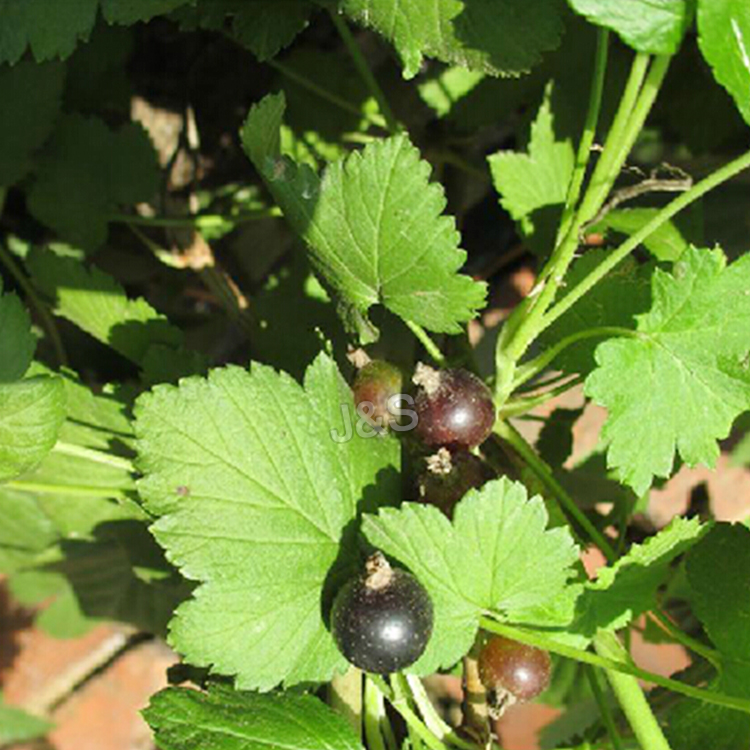
China New Product White Willow Bark Extract Supply to Slovakia
China New Product White Willow Bark Extract Supply to Slovakia Detail:
[Latin Name] Salix alba L.
[Plant Source] from China
[Specifications] Salicin 15-98%
[Appearance] Yellow Brown to White powder
Plant Part Used: Bark
[Particle size] 80 Mesh
[Loss on drying] ≤5.0%
[Heavy Metal] ≤10PPM
[Storage] Store in cool & dry area, keep away from the direct light and heat.
[Shelf life] 24 Months
[Package] Packed in paper-drums and two plastic-bags inside.
[Net weight] 25kgs/drum
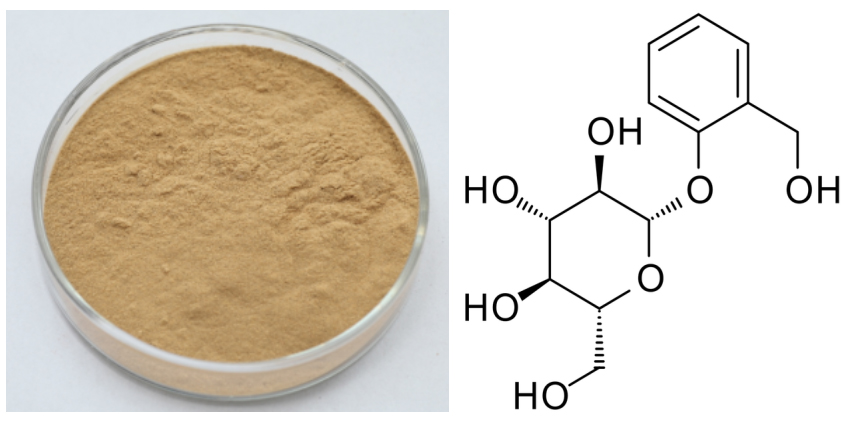
Brief Introduction
Salicin is a naturally occurring compound found in the bark of several species of trees, primarily North American in origin, that are from the willow, poplar, and aspen families. White willow, from whose Latin name, Salix alba, the term salicin is derived, is the most well known source of this compound, but it is found in a number of other trees, shrubs, and herbaceous plants as well being synthesized commercially. It is a member of the glucoside family of chemicals and is used as an analgesic and antipyretic. Salicin is used as a precursor for the synthesis of salicylic acid and acetylsalicylic acid, commonly known as aspirin.
A colorless, crystalline solid in its pure form, salicin has the chemical formula C13H18O7. Part of its chemical structure is equivalent to the sugar glucose, meaning it is classified as a glucoside. It is soluble, but not strongly so, in water and alcolhol. Salicin has a bitter taste and is a natural analgesic and antipyretic, or fever reducer. In large quantities, it can be toxic, and overdoses may lead to liver and kidney damage. In its raw form, it may be mildly irritating to skin, respiratory organs, and eyes.
Function
1. Salicin is used to ease pain and reduce inflammation.
2. Relieve acute and chronic pain, including headache, back and neck pain, muscle aches, and menstrual cramps; Control arthritis discomforts.
3. Relieve acute and chronic pain.
4. It has the same effect on the body as aspirin without any of the side effects.
5. It is an anti-inflammatory, a fever reducer, an analgesic, an anti-rheumatic, and an astringent. Specifically, it helps to relieve headaches.
Application
1.Anti-inflammatory, anti-rheumatic,
2.Reduce a fever,
3.Use as an analgesic and astringent,
4.Relieve headache,
5.Ease pain caused by rheumatism, arthritis, and carpal tunnel syndrome.
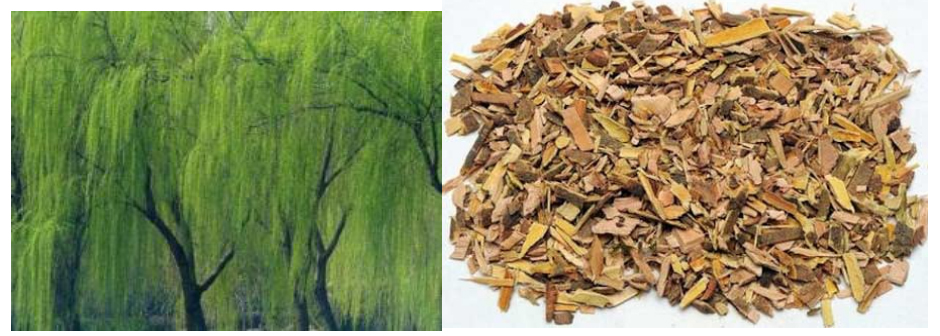
Product detail pictures:
Related Product Guide:
We take "customer-friendly, quality-oriented, integrative, innovative" as objectives. "Truth and honesty" is our management ideal for China New Product White Willow Bark Extract Supply to Slovakia , The product will supply to all over the world, such as: Malaysia, US, Finland, If any product meed your demand, please feel free to contact us. We're sure your any inquiry or requirement will get prompt attention, high-quality products, preferential prices and cheap freight. Sincerely welcome friends all over the world to call or come to visit, to discuss cooperation for a better future!
There is something really great about the aroma of roasted garlic. It has long been used as a flavor booster in curries, stir-fries, pizza toppings, pastas, meat preparations and dips. It enhances any dish and treats some of the most common ailments. While garlic is found in almost every kitchen today, in the past it was highly valued for its many health benefiting properties. Garlic has been used as a bug-repellant. Medieval Europe used garlic to fight the plague. The Egyptians buried it with their dead.
1. The Blood Purifier
If you are tired of covering up those zits with make-up every morning, it is time to take on the root cause of acne. Purify your blood from the inside to get healthy skin on the outside. Use two cloves of raw garlic and some warm water everyday. Do this early in the morning and drink a lot of water the whole day. If you want to lose some pounds, squeeze the juice of 1/2 lemon in a glass of warm water and drink it with 2 cloves of garlic in the morning. Garlic helps to clean your system and flush out all those bad toxins.
2. Cold and Flu
Garlic will provide you relief from that stubborn cold and flu. Taking 2 or 3 cloves of raw or cooked garlic a day is going to relieve a stuffy nose and cure the cold. It will also build-up your immunity against the cold and flu over time. One of the earliest uses of garlic was by those who ate meat. It was believed that meat could cause infection and garlic fights off infection from the body. Garlic can be added to hot stews or broths and soups to fight the cold and flu. Garlic is at its best when it is in its raw state.
3. Prevention of Heart Disease
Eating garlic on a daily basis helps to lower cholesterol levels. This is because of the anti-oxidant properties of Allicin, which is found in garlic. It also regulates blood pressure and blood sugar levels.
4. Anti-bacterial and Anti-parasitic
Garlic has been used as an anti-biotic to treat bacterial, fungal and parasitic infections for the last 7,000 years. Diluted garlic extract helps children with tapeworm infections. A garlic-based mouthwash will not give you a minty breath. But a very small quantity of its extracts is great to fight cavity-causing bacteria.
5. Cancer Prevention
Daily consumption of garlic will prevent stomach and colorectal cancers. It strengthens the immunity system of the body to fight cancer.
6. For Skin and Hair
The stimulating properties of garlic protects the skin from the effect of free radicals. It also slows down the depletion of collagen which leads to a loss of elasticity in aging skin. Garlic does wonders to skin infected with fungal infections and provides relief from skin ailments. It is also a great remedy for fungal infections like athlete’s foot and ringworms. Garlic is excellent for your thinning hair. If you rub crushed garlic extract on your scalp or massage it with garlic-infused oil, this will prevent and even reverse hair loss.
Thank you for watching. Please give a thumbs up and
Subscribe and dont forget to leave a comment.
Check us out on Facebook https://www.facebook.com/HealthyLivingYouTube
___________________________
Images licensed under CC:
https://pixabay.com
https://commons.wikimedia.org
https://Freepik.com
US Market for Cranberry Supplements
กระเพาะปัสสาวะอักเสบ (Urinary Tract Infections. UTI)
#แครนเบอรี่ #cranberry
#โปรแอนโทไซยานิดิน #proanthocyanidin
#Pacs #36mg
สอบถามข้อมูลเพิ่มเติม
Tel 0888-515-666, 02-718-0700 ถึง2
www.harnthai.com
 By Karl from Slovenia - 2017.06.22 12:49
This company has the idea of "better quality, lower processing costs, prices are more reasonable", so they have competitive product quality and price, that's the main reason we chose to cooperate.
By Mavis from moldova - 2017.01.11 17:15