Chinese Professional Flaxseed Extract Supply to Rotterdam
Chinese Professional Flaxseed Extract Supply to Rotterdam Detail:
[Latin Name] Linum Usitatissimum L.
[Plant Source] from China
[Specifications]SDG20% 40% 60%
[Appearance] yellow brown powder
Plant Part Used:Seed
[Particle size] 80 Mesh
[Loss on drying] ≤5.0%
[Heavy Metal] ≤10PPM
[Storage] Store in cool & dry area, keep away from the direct light and heat.
[Shelf life] 24 Months
[Package] Packed in paper-drums and two plastic-bags inside.
[Net weight] 25kgs/drum
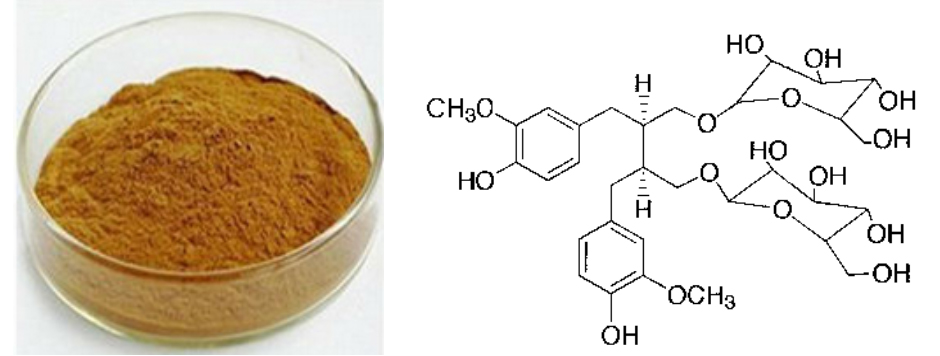
Product description:
Flaxseed extract is a kind of plant ligan most notably found in flaxseed. Secoisolariciresinol diglycoside, or SDG is existed as its main bioactive components. SDG is classified as a phytoestrogen since it is a plant-derived, nonsteroid compound that possesses estrogen-like activity. Flaxseed extract SDG has weak estrogenic activity, when intake as food it will be trasfer to flax ligan which have same structure with estrogens.The level of SDG in flaxseed typically varies between 0.6% and 1.8%. Flaxseed extract powder SDG can reduce the blood lipid, cholesterin and triglyceride, it can also prevent for apoplexy, hyperension, blood clots, arteriosclerosis and arrhythmia. In addition, flax seed extract powder SDG is benificial for diabetes and CHD.
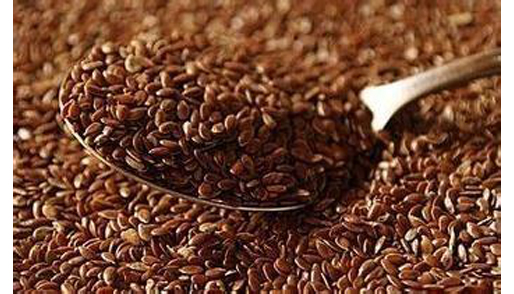
Main Function:
1.Flaxseed extract used to lose weight. Can burn surplus fat of Body;
2.Flaxseed extract will reduce allergic reaction, reduce asthma, improve arthritis;
3.Flaxseed extract with the function of improving female menstrual period syndrome;
4.Flaxseed extract can reduce the bad influence of hazardous chemicals produced when under pressure, control Stress, reduce depression and insomnia;
5.Flaxseed extract will improve skin fat content, moisten the skin smooth, soft and flexible, make the skin breath and sweat to normal, to mitigate various skin problems.
Product detail pictures:
Related Product Guide:
As for aggressive costs, we believe that you will be searching far and wide for anything that can beat us. We can state with absolute certainty that for such high-quality at such rates we have been the lowest around for Chinese Professional Flaxseed Extract Supply to Rotterdam , The product will supply to all over the world, such as: Guinea, French, belarus, Our staffs are rich in experience and trained strictly, with professional knowledge, with energy and always respect their customers as the No. 1, and promise to do their best to provide the effective and individual service for customers. The Company pays attention to maintaining and developing the long-term cooperation relationship with the customers. We promise, as your ideal partner, we will develop a bright future and enjoy the satisfying fruit together with you, with persisting zeal, endless energy and forward spirit.
Expand your vocabulary and learn how to say new words:
https://www.dictionaryvoice.com/How_To_Pronounce_Polysaccharide.html
Please leave a Like, a Comment, and Share.
Bookmark us and share:
https://www.dictionaryvoice.com
Twitter:
https://twitter.com/DictionaryVoice
Facebook:
https://www.facebook.com/pages/Dictionary-Voice/750369141710497
More Pronunciations:
1) How to Pronounce Polysaccharide
https://www.dictionaryvoice.com/How_To_Pronounce_Polysaccharide.html
Components of the gastrointestinal tract (GI tract) and digestive enzymes. This video and other related animations and images are available for instant download licensing here: https://www.alilamedicalmedia.com/-/galleries/images-videos-by-medical-specialties/gastroenterology-digestive-diseases
Voice by: Sue Stern
©Alila Medical Media. All rights reserved.
The digestive system is composed of 2 main components: the gastrointestinal tract, or GI tract, where digestion and absorption take place; and accessory organs which secrete various fluids/enzymes to help with digestion. The GI tract is a continuous chain of organs where food enters at one end and waste gets out from the other. These organs are lined with smooth muscles whose rhythmic contractions generate waves of movement along their walls, known as peristalsis. Peristalsis is the force that propels food down the tract.
Digestion is the process of breaking down food into smaller, simpler components, so they can be absorbed by the body. Basically, carbohydrates such as sugars and starch are broken down into glucose, proteins into amino acids, and fat molecules into fatty acids and glycerol.
Digestion starts in the oral cavity where the food is moistened with saliva and chewed, food bolus is formed to facilitate swallowing. Saliva is secreted by the salivary glands and contains the enzyme amylase. Amylase breaks down starch into maltose and dextrin which are processed further in the small intestine.
The food bolus is propelled down the esophagus into the stomach, the major organ of the GI tract. The stomach produces gastric juice containing pepsin, a protease, and hydrochloric acid which act to digest proteins. At the same time, mechanical churning is performed by muscular contraction of the stomach wall. The result is the formation of chyme, a semi-liquid mass of partially digested food. Chyme is stored in the stomach and is slowly released into the first part of the small intestine, the duodenum. The duodenum receives the following digestive enzymes from accessory organs:
- Bile, produced in the liver and stored in the gallbladder; bile emulsifies fats and makes it easier for lipases to break them down.
- Pancreatic juice from the pancreas. This mixture contains proteases, lipases and amylase, and plays major role in digestion of proteins and fats.
The small intestine also produces its own enzymes: peptidases, sucrase, lactase, and maltase. Intestinal enzymes contribute mainly to the hydrolysis of polysaccharides.
The small intestine is where most of digestion and absorption take place. The walls of the small intestine absorb the digested nutrients into the bloodstream, which in turn delivers them to the rest of the body. In the small intestine, the chyme moves more slowly allowing time for thorough digestion and absorption. This is made possible by segmentation contractions of the circular muscles in the intestinal walls. Segmentation contractions move chyme in both directions. This allows a better mixing with digestive juices and a longer contact time with the intestinal walls.
The large intestine converts digested left-over into feces. It absorbs water and any remaining nutrients. The bacteria of the colon, known as gut flora, can break down substances in the chyme that are not digestible by the human digestive system. Bacterial fermentation produces various vitamins that are absorbed through the walls of the colon. The semi-solid fecal matter is then stored in the r. until it can be pushed out from the body during a bowel movement.
All images/videos by Alila Medical Media are for information purposes ONLY and are NOT intended to replace professional medical advice, diagnosis or treatment. Always seek the advice of a qualified healthcare provider with any questions you may have regarding a medical condition.
 By Eden from Israel - 2018.12.14 15:26
The customer service staff is very patient and has a positive and progressive attitude to our interest, so that we can have a comprehensive understanding of the product and finally we reached an agreement, thanks!
By Stephanie from Liberia - 2017.09.22 11:32