Chinese Professional Propolis block Manufacturer in Jeddah
Chinese Professional Propolis block Manufacturer in Jeddah Detail:
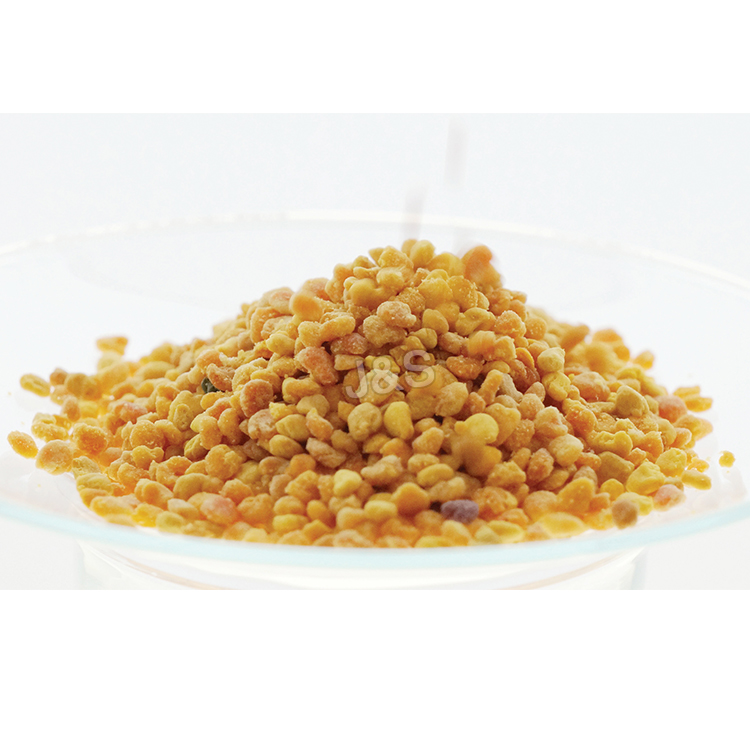
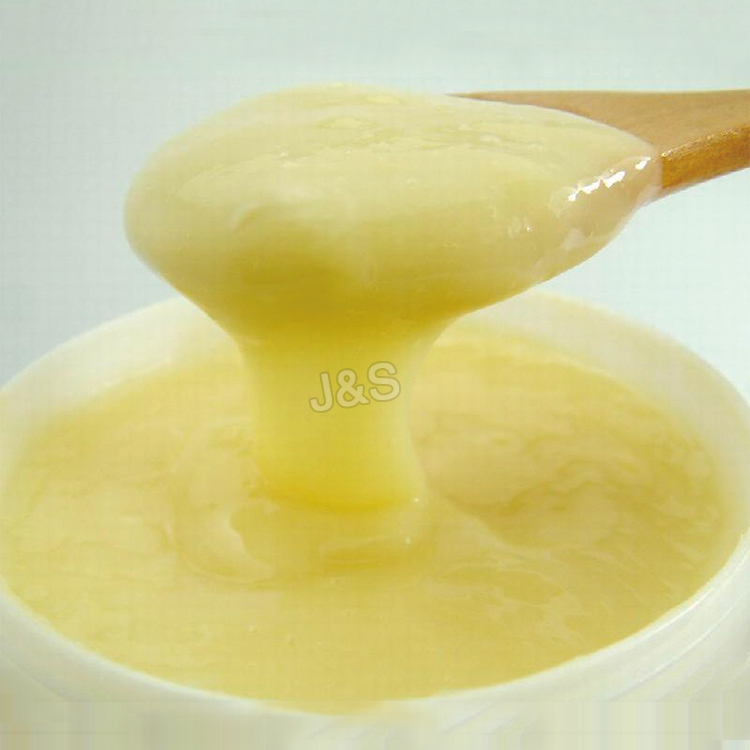
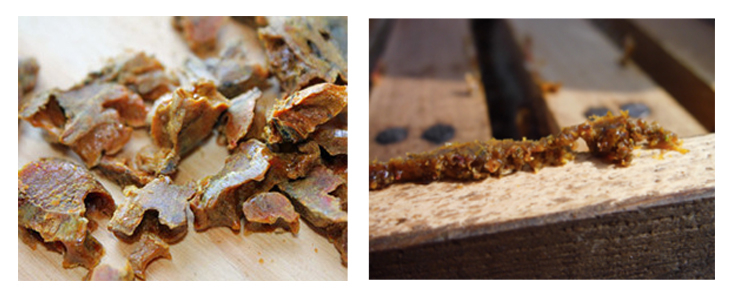
[Products Name] Propolis block, pure propolis, raw propolis
[Specification] Propolis content 90%,95%
[Gerneral feature]
1. Low antibiotics
2. Low PAHs, can approve to 76/769/EEC/German:LMBG;
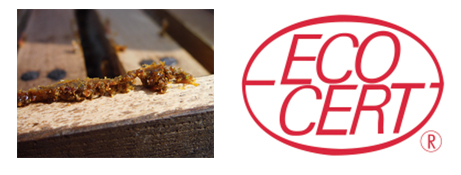
3. certified by, according to EOS & NOP standard;
4.Pure natural propolis;
5.High content of flavones;
6.Low temperature extracted, retain high activity of all nutritions;
[Packaging]
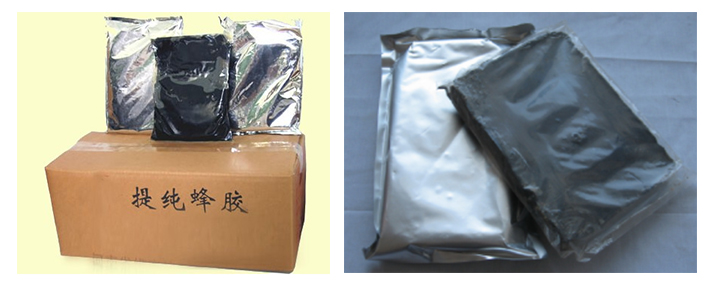
1. 1kg/aluminum foil bag, 20kgs/carton.
[How to get it]
First, we collect raw propolis from beehives, then extract by low temperature with ethanol. Filter and concentrate, we get the pure propolis block at 90% to 95%.
[Introduction]
Propolis comes from the substance like natural resin, which is collected by the bees from exudates of plants branches and bud the chemical substances of Propolis are found to be various, such as beeswax, resin, incense lipids, aromatic oil, fat-soluble oils, pollen and other matter. Studies have shown that the source of propolis resin in material has three types: bees collected plants secreted fluid, secretion in vivo metabolism of bee, and involvement in the process of forming the material.
We can supply Propolis Extract with food-grade and medicine-grade .The raw materiall is came from non-polluting food grade propolis .Propolis extract was made of high-grade propolis. It maintains the propolis effective ingredients during the procedure of extraction under constant low temperature , taking off the useless substances and sterilization.
[Function]
Propolis is a natural product processed by bees mixed with glutinous and its secretion.
Propolis contains more than 20 kinds of useful flavonoids, rich vitamins, enzymes, amino acids and other microelements, etc. Propolis is called “purple gold” owing to its valued nutrients.
Propolis can remove free radical, lower blood sugar and blood fat, soften blood vessels, improve micro-circulation, enhance immunity, anti-bacteria and anti-cancer.
Product detail pictures:
Related Product Guide:
To consistently enhance the management method by virtue of the rule of "sincerely, fantastic religion and top quality are the base of business development", we extensively absorb the essence of associated goods internationally, and constantly acquire new merchandise to satisfy the needs of shoppers for Chinese Professional Propolis block Manufacturer in Jeddah , The product will supply to all over the world, such as: Monaco, Lithuania, Bhutan, Being guided by customer demands, aiming at improving the efficiency and quality of customer service, we constantly improve products and provide more comprehensive services. We sincerely welcome friends to negotiate business and start cooperation with us. We hope to join hands with friends in different industries to create a brilliant future.
Chamomile (Matricaria chamomilla L.) is a well-known medicinal plant species from the Asteraceae family often referred to as the “star among medicinal species.” Nowadays it is a highly favored and much used medicinal plant in folk and traditional medicine. Its multitherapeutic, cosmetic, and nutritional values have been established through years of traditional and scientific use and research. Chamomile has an established domestic (Indian) and international market, which is increasing day by day. The plant available in the market many a times is adulterated and substituted by close relatives of chamomile. This article briefly reviews the medicinal uses along with botany and cultivation techniques. Since chamomile is a rich source of natural products, details on chemical constituents of essential oil and plant parts as well as their pharmacological properties are included. Furthermore, particular emphasis is given to the biochemistry, biotechnology, market demand, and trade of the plant. This is an attempt to compile and document information on different aspects of chamomile and highlight the need for research and development.
Keywords: Amino acid, cadmium, co-cultivation, copper, cultivation, medicinal plant, salicylic acid, secondary metabolites, tissue culture
chamomile is an annual plant with thin spindle-shaped roots only penetrating flatly into the soil. The branched stem is erect, heavily ramified, and grows to a height of 10–80 cm. The long and narrow leaves are bi- to tripinnate. The flower heads are placed separately, they have a diameter of 10–30 mm, and they are pedunculate and heterogamous. The golden yellow tubular florets with 5 teeth are 1.5–2.5 mm long, ending always in a glandulous tube. The 11–27 white plant flowers are 6–11 mm long, 3.5 mm wide, and arranged concentrically. The receptacle is 6–8 mm wide, flat in the beginning and conical, cone-shaped later, hollow—the latter being a very important distinctive characteristic of Matricaria—and without paleae. The fruit is a yellowish brown achene.
The crop growth is slow till mid-January and picks up gradually till early February. As the season warms up, there is high activity in crop growth (increase in height, branching, bud formation) and stray flowers may be seen in the crop. Bud formation is profuse in March, there is all round growth in the plants, the early formed buds open into flowers, hence the plucking of flowers has to be also selective all through the crop cycle. With sudden rise in the temperature from 33° C to 39° C within a few days, heavy seed-setting and plant maturity will be observed in the crop. There is seed shedding and in the next year a self-germinated crop is observed.
M. chamomilla cultivation as a commercial venture lies in how efficiently and effectively one can collect the flowers at the right stage during the peak flowering season extending over a period of 3–6 weeks during March-April. Flowering is so profuse that practically every alternate day at least 30–40 units of labor will be required to be employed to pluck the flowers from an area of 0.25–0.3 ha. Flower plucking is a selective process as flowers in all stages, namely, buds, semi-opened buds, flowers in all stages of bloom appear on the plants. Flowers at the near full bloom stage give the best quality of the product, hence care has to be exercised to see that as little as possible buds, stems, leaves, and extraneous material is plucked. Flowering will be observed on plants here and there all over the field from the later half of February and these flowers are plucked at the appropriate stage. Flowers are produced in flushes and 4-5 flushes are obtained. The 2nd, 3rd, and 4th flushes are the major contributors to flower yield. The peak period of plucking is between the 2nd week of March and the 3rd week of April in North India. In normal soils, Singh obtained a maximum yield of 7637 kg of fresh flowers, the average being 3500-4000 kg/ha.
Web: https://www.natureherbs.org | www.natureherbs.co
Email : natureherbs@ymail.com
Watsapp: +91 841 888 5555
Skype: nature.herbs
Sodium is a chemical element with the symbol Na (from Latin: natrium) and atomic number 11. It is a soft, silver-white, highly reactive metal and is a member of the alkali metals; its only stable isotope is 23Na. The free metal does not occur in nature, but instead must be prepared from its compounds; it was first isolated by Humphry Davy in 1807 by the electrolysis of sodium hydroxide. Sodium is the sixth most abundant element in the Earth’s crust, and exists in numerous minerals such as feldspars, sodalite and rock salt (NaCl). Many salts of sodium are highly water-soluble, and their sodium has been leached by the action of water so that sodium and chlorine (Cl) are the most common dissolved elements by weight in the Earth’s bodies of oceanic water.
Many sodium compounds are useful, such as sodium hydroxide (lye) for soap-making, and sodium chloride for use as a de-icing agent and a nutrient (edible salt). Sodium is an essential element for all animals and some plants. In animals, sodium ions are used against potassium ions to build up charges on cell membranes, allowing transmission of nerve impulses when the charge is dissipated. The consequent need of animals for sodium causes it to be classified as a dietary in macro-mineral.
This video is targeted to blind users.
Attribution:
Article text available under CC-BY-SA
Creative Commons image source in video
 By Ryan from Honduras - 2018.12.11 11:26
The company keeps to the operation concept "scientific management, high quality and efficiency primacy, customer supreme", we have always maintained business cooperation. Work with you,we feel easy!
By Prima from Switzerland - 2017.11.01 17:04