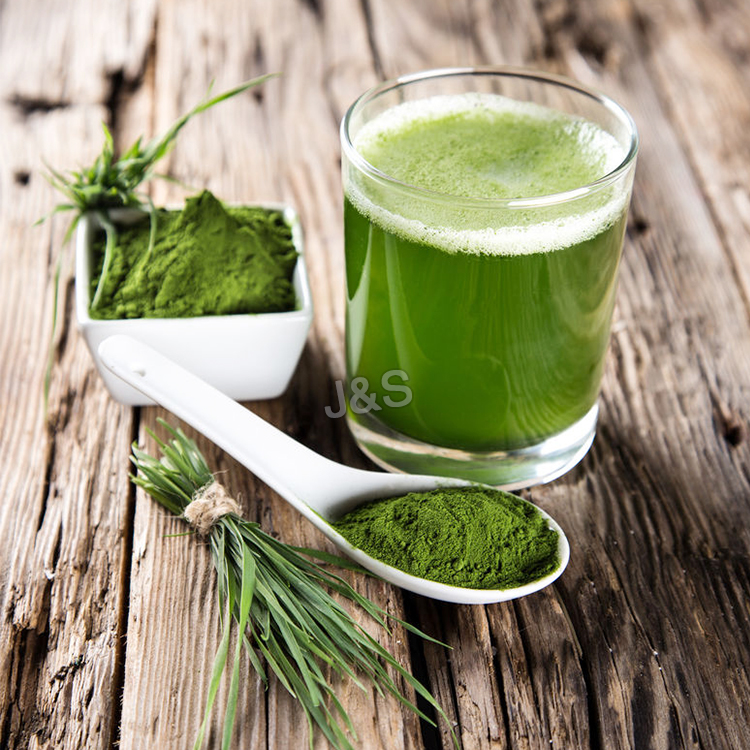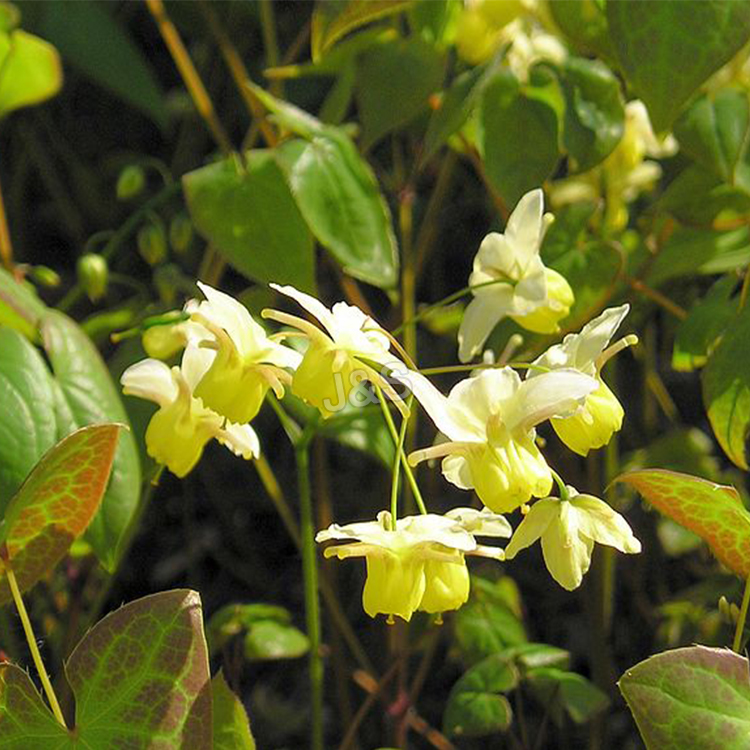
Factory Price For Epimedium Extract in South Africa
Factory Price For Epimedium Extract in South Africa Detail:
[Latin Name] Epimedium sagittatnm Maxim
[Plant Source] Leaf
[Specification] Icariin 10% 20% 40% 50%
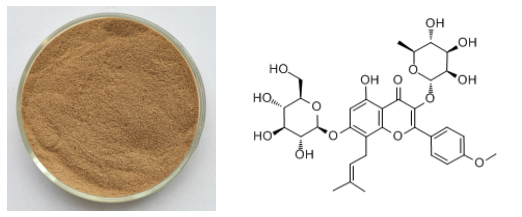
[Appearance] Light yellow fine powder
Plant Part Used: Leaf
[Particle size]80Mesh
[Loss on drying] ≤5.0%
[Heavy Metal] ≤10PPM
[Pesticide residue] EC396-2005, USP 34, EP 8.0, FDA
[Storage] Store in cool & dry area, keep away from the direct light and heat.
[Shelf life] 24 Months
[Package] Packed in paper-drums and two plastic-bags inside.
[Net weight] 25kgs/drum
[What is Epimedium?]
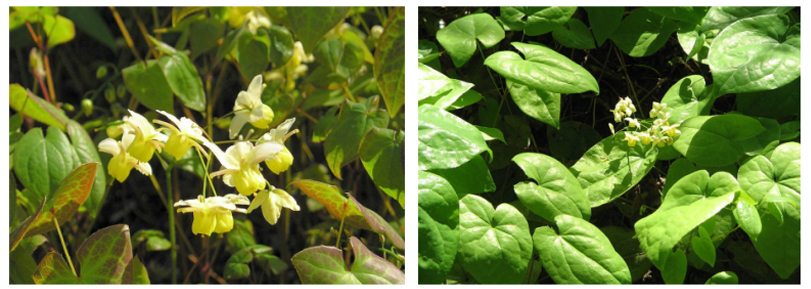
Epimedium extract is a popular aphrodisiac supplement and herbal sexual performance enhancer.It has a long history of traditional use in China for the alleviation of erectile dysfunction and for improving libido and fertility.
Also known as Horny Goat Weed, this supplement supposedly got its name after a farmer noticed that his flock of goats were particularly aroused after eating flowers of a specific type. These Epimedium flowers contain icariin, which is a natural compound that increases blood flow to sexual organs and promotes sex drive. Icariin has been found to increase Nitric Oxide synthesis as well as inhibiting the activity of the PDE-5 enzyme
[Icariin in Epimedium Extract]
Epimedium extracts powder contain an active phytochemical called icariin.Icariin has been observed to exhibit a number of useful traits, including renoprotective (liver protecting) hepatoprotective (kidney protecting), cardioprotective (heart protecting) and neuroprotective (brain protecting) effects.
It is also an antioxidant and can cause vasodilation. It exhibits antimicrobial characteristics and is thought to act as an aphrodisiac.
Icariin is classified as a flavonol glycoside, which is a type of flavonoid. Specifically, icariin is the 8-prenyl derivation of kaempferol 3,7-O-diglucoside, a prevalent and important flavonoid.
[Function]
1. Combat mental and physical fatigue;
2. Induce vasodilation and improve circulation;
3. Lower blood pressure in hypertensive patients;
4. Improve symptoms of erectile dysfunction (ED) through its action as a PDE5 inhibitor;
5. Improve the use of free testosterone in the blood;
6. Increase libido;
7. Alleviate symptoms of depression and stimulate improved cognitive function;
8. Protect against neurological degeneration.
Product detail pictures:
Related Product Guide:
Our company aims to operating faithfully, serving to all of our customers , and working in new technology and new machine constantly for Factory Price For Epimedium Extract in South Africa , The product will supply to all over the world, such as: Auckland, Azerbaijan, San Diego, We pursue the management tenet of "Quality is superior, Service is supreme, Reputation is first", and will sincerely create and share success with all clients. We welcome you to contact us for more information and look forward to working with you.
Video abstract of original research paper “In vitro inhibition of hyaluronidase by sodium copper chlorophyllin complex and chlorophyllin analogs” published in the open access journal Clinical, Cosmetic and Investigational Dermatology by McCook et al.
Background: Inhibitors of hyaluronidase are potent agents that maintain hyaluronic acid homeostasis and may serve as anti-aging, anti-inflammatory, and anti-microbial agents. Sodium copper chlorophyllin complex is being used therapeutically as a component in anti-aging cosmeceuticals, and has been shown to have anti-hyaluronidase activity. In this study we evaluated various commercial lots of sodium copper chlorophyllin complex to identify the primary small molecule constituents, and to test various sodium copper chlorophyllin complexes and their small molecule analog compounds for hyaluronidase inhibitory activity in vitro. Ascorbate analogs were tested in combination with copper chlorophyllin complexes for potential additive or synergistic activity.
Materials and methods: For hyaluronidase activity assays, dilutions of test materials were evaluated for hydrolytic activity of hyaluronidase by precipitation of non-digested hyaluronate by measuring related turbidity at 595 nm. High-performance liquid chromatography and mass spectroscopy was used to analyze and identify the primary small molecule constituents in various old and new commercial lots of sodium copper chlorophyllin complex.
Results: The most active small molecule component of sodium copper chlorophyllin complex was disodium copper isochlorin e4, followed by oxidized disodium copper isochlorin e4. Sodium copper chlorophyllin complex and copper isochlorin e4 disodium salt had hyaluronidase inhibitory activity down to 10 μg/mL. The oxidized form of copper isochlorin e4 disodium salt had substantial hyaluronidase inhibitory activity at 100 μg/mL but not at 10 μg/mL. Ascorbate derivatives did not enhance the hyaluronidase inhibitory activity of sodium copper chlorophyllin. Copper isochlorin e4 analogs were always the dominant components of the small molecule content of the commercial lots tested; oxidized copper isochlorin e4 was found in increased concentrations in older compared to newer lots tested.
Conclusion: These results support the concept of using the hyaluronidase inhibitory activity of sodium copper chlorophyllin complex to increase the hyaluronic acid level of the dermal extracellular matrix for the improvement of the appearance of aging facial skin.
View the original paper here: https://www.dovepress.com/in-vitro-inhibition-of-hyaluronidase-by-sodium-copper-chlorophyllin-co-peer-reviewed-article-CCID
कलोंजी और ज़ैतून से बढ़ाएं लिंग की लंबाई और मोटाई सिर्फ १ महीने मालिश करके घरेलु देसी चमत्कारी नुस्खे से ।। जानने के लिए देखें ये वीडियो
Ling ka aakar or size badhane ke liye ek behtreen oil ka zikr mene is video me kiya he. Lot o peoples who don’t have the real idea of penis length and girth , they must watch this video because of the the genuine information provided here. I use two ingredients in this penis massage oil
1 Olive Oil
2 Kalonji ( Black seeds)
Olive oil
Olive oil is full of essential nutrients like vitamins, minerals and even omega fatty acids. There is nothing like olive oil that can compare to the benefits and safe use of olive oil. To ensure that the your penis is strengthened in a hassle free way, natural olive oil can be used very effectively. It will provide the penis muscles with the nutrients to make it strong as well as improve the blood circulation to the specific region and thus keep it healthy and free from disease. A regular penis massage is required for this purpose.
Kalonji ( Black seeds)
Black seeds often called Kaloji , its oil or Nigella seed oil are very strong and pungent, Yes I have we used it to recover from radiotherapy as it is reportedly known to assist in the management and re growth of damaged tissues Nothing much to report it is a old wives tales from the far and middle east.
Method of Applying oil on Penis:
1. Apply the oil only the quantity as shown in the video
2. Massage gently with just your index finger and the thumb. .and see in video also..
3. Massage for just 2-3 minutes or even less if you are sensitive. .but regular or in alternate days..
4. Don’t use cold water and avoid exposure to cold environment for at least an hour after using a penis enlargement oil.
If any one of you has any question regarding these plz keep in contact and please don’t shame to write or comment me.
• ling kaise bada kare, kare,
• ling ko mota kaise kare, ,
• lund mota karne ka tarika,
• ling bada karne ke gharelu upay,
• mota karne personal health,
• ling ko lamba kaise kare,
• ling lamba kaise kare in hindi,
• ling lamba kaise kare,
• ling size, mota hone ki medicine,
• lamba hone ka tarika,
• ling ki lambai,
• lund bada karna,
• land ko kaise bada kare,
see this video
Please don’t forget to subscribe our channel to keep you up to date
Subscribe us : https://www.youtube.com/channel/UCcKiogd6bB0OZUkHCPQ4_pA
Follow us at facebook: https://www.facebook.com/herbalmaza/
Follow us at Google+: https://plus.google.com/u/2/
And Detailed Blog post on: www.herbalmaza.com
For other videos
तूफानी घोड़े जैसी सेक्स पावर बढ़ाने का आसान दमदार हैरतअंगेज़ नुस्खा खजूर और बादाम | mardana taqat
बुढ़ापे में उड़ा दे कुँवारी के होश एक खुराक में देसी नुस्खा | SEX BENEFITS OF GARLIC & HONEY IN HINDI
घोड़े जैसी मरदाना ताकत पाने का घरेलु दमदार नुस्खा। Mardana Kamzori Ka Ilaj | Desi Nuskha | Herbalmaza
 By Nana from Chile - 2018.06.26 19:27
This supplier stick to the principle of "Quality first, Honesty as base", it is absolutely to be trust.
By Deirdre from Orlando - 2017.11.11 11:41