Factory Wholesale PriceList for Red clover extract Manufacturer in UK
Factory Wholesale PriceList for Red clover extract Manufacturer in UK Detail:
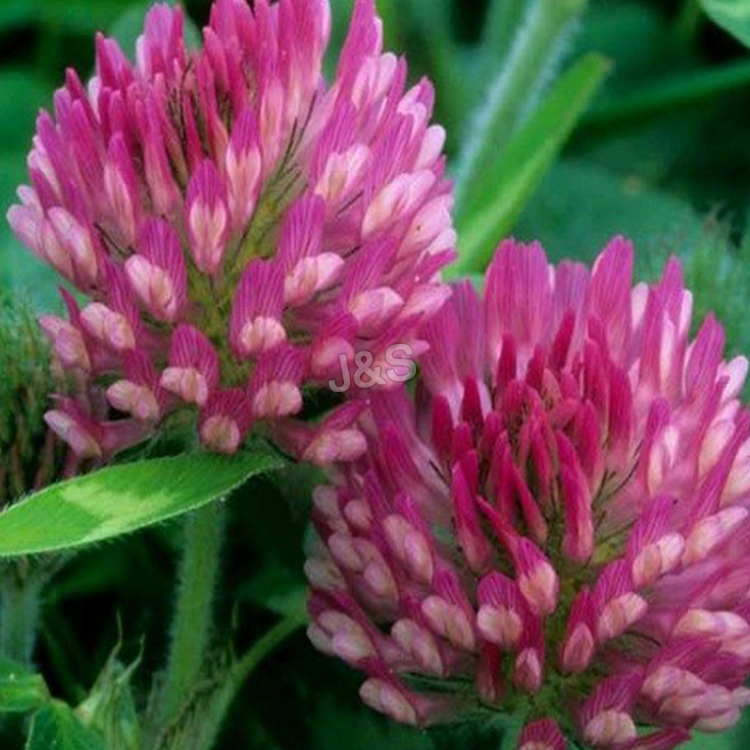
[Latin Name] Trifolium pratensis L.
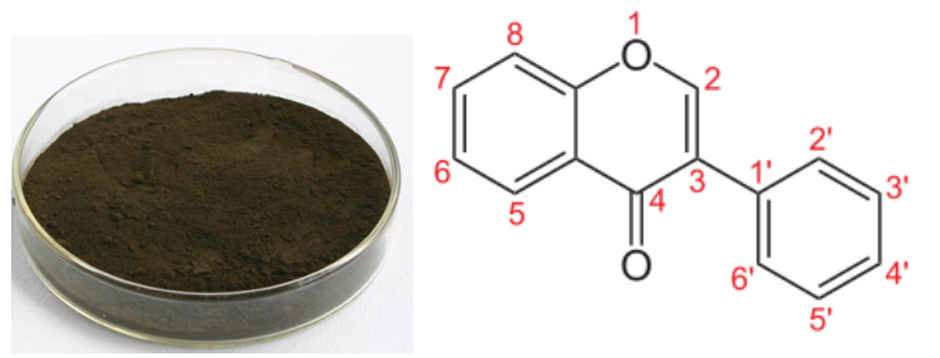
[Specification] Total isoflavones 20%; 40%; 60% HPLC
[Appearance] Brown to tan fine powder
Plant Part Used: Whole herb
[Particle size] 80Mesh
[Loss on drying] ≤5.0%
[Heavy Metal] ≤10PPM
[Storage] Store in cool & dry area, keep away from the direct light and heat.
[Shelf life] 24 Months
[Package] Packed in paper-drums and two plastic-bags inside.
[Net weight] 25kgs/drum
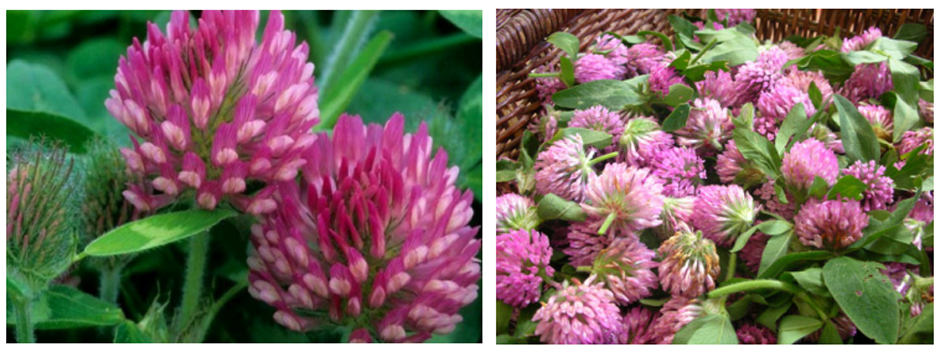
[What is Red Clober]
Red clover is a member of the legume family – the same class of plants where we find chickpeas and soybeans. Red clover extracts are used as dietary supplements for their high content of isoflavone compounds – which possess weak estrogenic activity and have been associated with a variety of health benefits during menopause (reduction of hot flashes, promotion of heart health and maintenance of bone density).
[Function]
1. Red Clover Extract can Improving health, anti-spasm, known for healing properties.
2. Red Clover Extract can Treating the skin diseases (such as eczema, burns, ulcers, psoriasis),
3. Red Clover Extract can Treating respiratory discomfort (such as asthma, bronchitis, intermittent cough)
4. Red Clover Extract can Owning anti-cancer activity and prevention of prostate disease.
5. Red Clover Extract can Most valuable of its estrogen-like effect and alleviate breast pain suffering.
6. Red Clover Extract can Contained red clover isoflavones plays in a weak estrogen, estrogen reduces the number and thusalleviate the suffering.
7. Red Clover Extract can Maintaining bone mineral density in postmenopausal women
8. Red Clover Extract can Raising high density lipoprotein cholesterol.
Product detail pictures:
Related Product Guide:
Our pursuit and corporation aim should be to "Always satisfy our consumer requirements". We carry on to build and style and design remarkable quality items for both our outdated and new clients and reach a win-win prospect for our clients at the same time as us for Factory Wholesale PriceList for Red clover extract Manufacturer in UK , The product will supply to all over the world, such as: Porto, Madrid, kazan, To have much more enterprise. ompanions, we've got updated the item list and seek for optimistic co-operation. Our web-site shows the latest and complete information and facts about our merchandise list and company. For further acknowledge, our consultant service group in Bulgaria will reply to all of the inquiries and complications immediately. They're about to make their finest effort to meet buyers need. Also we support the delivery of absolutely free samples. Business visits to our business in Bulgaria and factory are generally welcome for a win-win negotiation. Hope to expertise a happy company co-operation perform with you.
i know friends that you are searching for How to increase penis size naturally, in this video you can get one use full information to how to increase your penis size with simply available home remedies with out any side effects.
if you increase your penis size as sayed in video within two month your penis circumfferens, penis dick size,grith,lenth of your penis also increase.
this is the best wto enlarge your penis free and easy
to prepare this you just fallow easy steps as mentioned
to fallow me on my facebook pagehttps://www.facebook.com/healthtipadda/:
to watch how to increase sex power naturally click: https://youtu.be/I0C_PwP8RCw
-~-~~-~~~-~~-~-
Please watch: “Jio DTH Launching in this week|Plans, Price & Offers |reliancejioDth Tv launched recently in telugu ”
-~-~~-~~~-~~-~-
https://davesmith.ludaxx.com/
https://www.davegsmith.com
Why it Works for
F21 is an All Natural Sugar Blocker that helps limit your blood sugar absorption. It consists of different compounds found to have various health benefits, such as L-Arabinose, Coriolus Versicolor Polysacchride, Konjac-Mannan, Magnesium Stearate, Mint flavor: Menthol and Natural Colors. F21 not only does it help promote weight loss, (PSK) boosts your immune system response. In fact, for every gram of F21, you can block up to 20 grams of sugar (sucrose). The formula not only helps promote weight loss, it benefits the digestive system by allowing the blocked sucrose to support beneficial probiotic bacteria while the polysaccharide (PSK) boosts your immune system response.
But how does this formula break down the sugar in our bodies? There are basically three steps:
STEP 1
Sugar (sucrose) enters the body as a whole molecule.
STEP 2
The enzyme “sucrose” separates the sucrose molecule into two individual sugar molecules, Glucose and Fructose, which then enter the blood stream to be used. F21 inhibits sucrose from separating the sucrose molecule.
STEP 3
Instead of the sugars entering the blood stream, the whole sucrose molecule and F21 remain in the digestive tract and become prebiotics.
The main ingredient in F21 is L-Arabinose, which helps prevent sugar (sucrose) from being metabolized in the body. It also helps to satisfy any cravings for sugar. Another ingredient, Polysaccharide (PSK), is an extremely powerful antioxidant and immune-regulatory defender. It’s well researched anti-tumor, anti-infection and anti-inflammation effects help repair damaged cells and support the immune system.
Konjac-Mannan is a natural appetite suppressant. It acts as a trigger signaling your stomach to feel a little more satisfied and can help to reduce hunger cravings.
Prebiotics are indigestible fibers that are food for the probiotics. Both F21 and the whole sucrose molecule remain in the large intestine and become food for probiotics.
Menthol is an compound made synthetically or obtained from cornmint, peppermint or other mint oils. Menthol has local anesthetic and counterirritant qualities, and it is widely used to relieve minor throat irritation. It is known to be a powerfully medicinal compound linked to several potential health benefits. Peppermint oil, a natural source of menthol, has been investigated as a treatment for several diseases and conditions.
Magnesium stearate, also called octadecanoic acid, is manufactured from both animal and vegetable oils and this is the reason why some nutritional supplements specify that the magnesium stearate used is sourced from vegetables.
 By Deirdre from Iraq - 2017.07.28 15:46
This is a very professional wholesaler, we always come to their company for procurement, good quality and cheap.
By April from Argentina - 2018.09.21 11:44