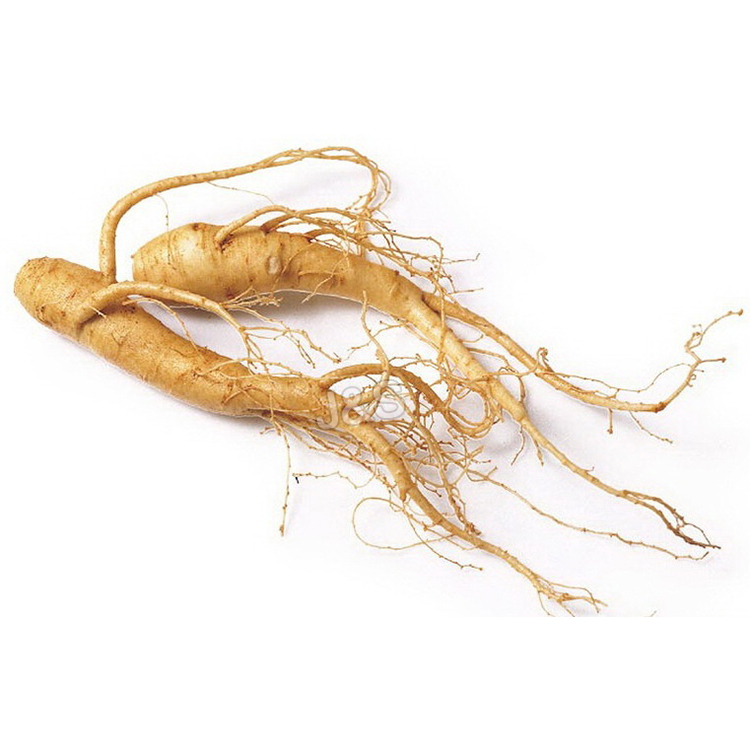
Good Quality Kava Extract Manufacturer in Birmingham
Good Quality Kava Extract Manufacturer in Birmingham Detail:
[Latin Name] Piper methyicium L.
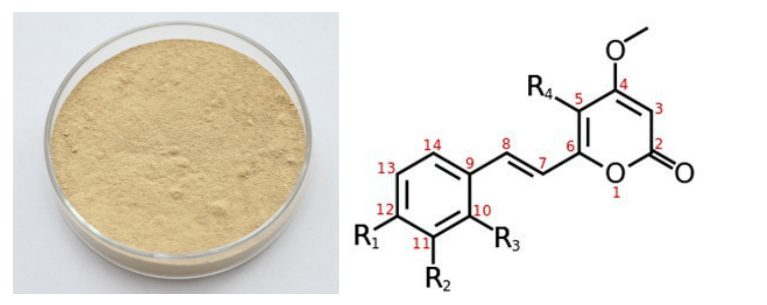
[Specification] Kavalactones ≥30.0%
[Appearance] Yellow powder
Plant Part Used: Root
[Particle size] 80Mesh
[Loss on drying] ≤5.0%
[Heavy Metal] ≤10PPM
[Storage] Store in cool & dry area, keep away from the direct light and heat.
[Shelf life] 24 Months
[Package] Packed in paper-drums and two plastic-bags inside.
[Net weight] 25kgs/drum
[What is Kava?]
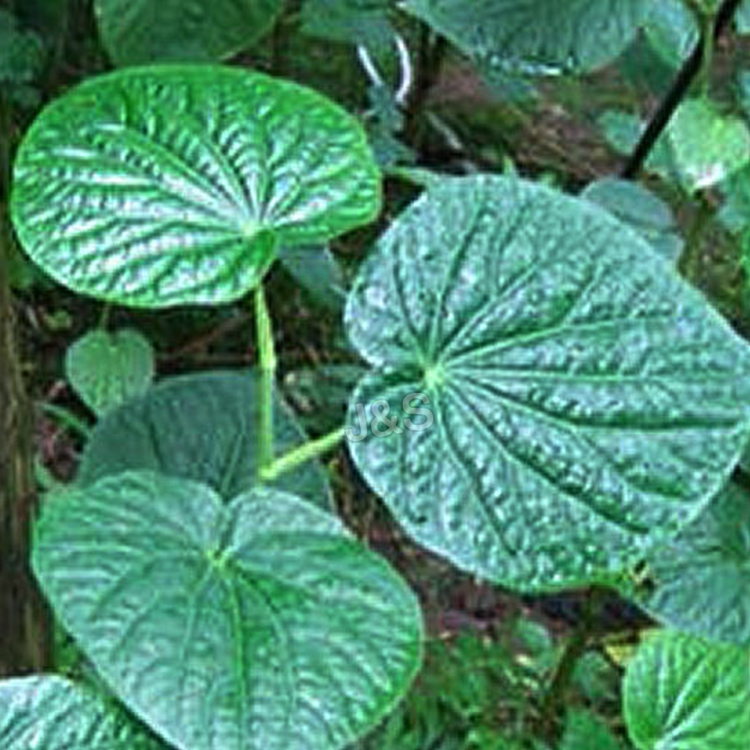
Kava, also known as piper methysticum, kava kava, and ‘awa, is a small shrub native to the islands in the South Pacific. The root and stems are made into a non-alcoholic, psychoactive beverage that has been used socially and ceremonially for hundreds of years in Hawaii, Fiji, and Tonga.
Kava is traditionally prepared by placing ground root and stem into a porous sack, submerging in water, and squeezing the juice into a large, carved, wooden bowl. Coconut half-shell cups are dipped and filled — punch bowl style. After drinking a cup or two a feeling of heightened attention combined with relaxation begins to come on. Although it is soothing, it is unlike alcohol in that thoughts remain clear. The flavor is largely inoffensive, but some find that it takes getting used to; it really depends on your preference for earthy flavors.
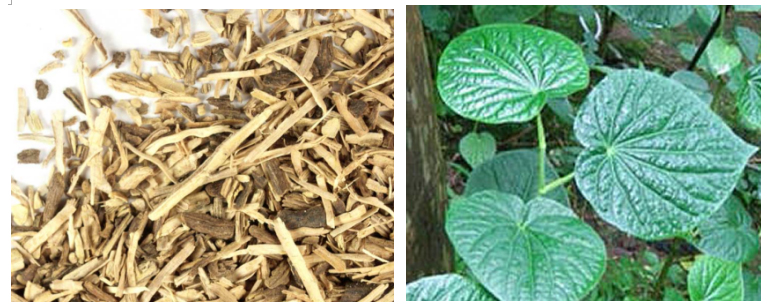
[Kava is Safe to Use]
The safe and effective benefits of kava to relieve symptoms of anxiety were also supported in a meta-analysis, a systematic statistical review of seven human clinical trials published in 2000 in the Journal of Clinical Psychopharmacology, and again in a similar critical review in 2001. The reviews did not find significant adverse effects related to liver toxicity.
In conclusion, the liver is affected by many substances, including prescription and non- prescription drugs, as well as alcohol, which is a major cause of liver damage. We must be aware that herbs are potent medicines, to be treated with the appropriate respect regarding potential interactions and toxicity, including to the liver. On the other hand, Kava kava’s margin of safety far surpasses that of it’s pharmaceutical equivalent.
[Function]
Kava’s can help offset a number of problems, most notably stress, anxiety, and disrupted sleep patterns. However, kava’s anxiolytic (anti-panic or anti-anxiety agent) and calming properties can offset many other stress and anxiety related ailments.
1. Kava as a Therapy for Anxiety
2. Kava May Remedy Menopausal Mood Swings
3. Weight Loss
4. Combat Premature Aging
5. Quit Smoking Aid
6. Combat pain as an analgesic
7. Insomnia
8. Depression
Product detail pictures:
Related Product Guide:
We are going to make every single effort for being excellent and excellent, and accelerate our ways for standing while in the rank of international top-grade and high-tech enterprises for Good Quality Kava Extract Manufacturer in Birmingham , The product will supply to all over the world, such as: Bolivia, Belgium, Ottawa, With many years good service and development, we have a qualified international trade sales team. Our goods have exported to North America, Europe, Japan, Korea, Australia, New Zealand, Russia and other countries. Looking forward to build up a good and long term cooperation with you in coming future!
“In Search of the (Membrane) Holy Grail: A 20-Year Journey”
Mark Benjamin
Civil and Environmental Engineering, University of Washington
ABSTRACT: Natural matter (NOM) is universally recognized as a major foulant of membranes used for drinking water treatment. The fouling has been attributed to adsorption of NOM in membrane pores and/or to formation of a gel layer that covers the membrane surface. Colloids, humics, and polysaccharides have each been implicated as major contributors to this fouling material. Most efforts to reduce the impact of this fouling have focused on pretreatment with conventional coagulants or powdered activated carbon.
We have developed a new micron-sized, granular adsorbent by mild heating of aluminum hydroxide and demonstrated that it can adsorb NOM rapidly and more efficiently than conventional additives. In addition, a cake layer of the new adsorbent imposes very little hydraulic resistance. As a result, when these adsorbents are used as the media for precoat filtration, a substantial portion of the NOM can be removed from the feed with only a few seconds of contact time, thereby reducing DBP formation potential and also dramatically reducing the fouling of downstream membranes. Our recent research has focused identifying the chemical characteristics of the fouling fraction of the NOM, on ways to efficiently backwash the adsorbents off of the support material after their capacity to collect the contaminants has been exhausted, and on regeneration of adsorbent.
At virtually every step in the research, we have encountered unexpected and challenging issues, many of which we have overcome, but others of which we continue to struggle with. The presentation will provide an overview of the successes, the frustrations, and the excitement we still feel about the potential of this new process.
(7 Jul 2016) LEAD IN:
There’s a sweet spot growing in southern Spain’s Andalucia region.
Many farmers are now turning to Stevia – a plant that is widely being used as a natural sugar substitute.
While the Spanish industry is seeing new trading and processing companies beginning to emerge, there’s still several hurdles to overcome.
STORY-LINE:
Around 200 times sweeter than sugar and with a slight taste of licorice – this is Stevia.
Used widely as a sugar substitute, stevia is a fast growing plant that thrives in Malaga’s unique tropical weather.
Farmer Sergio Martin is busy cultivating the latest crop of plants in Malaga.
He and many other farmers are turning away from traditional agriculture and growing stevia instead because of the higher returns.
“Before I sowed my tomatoes, pepper, onion, potatoes… But the future of that kind of agriculture is very dark. So, I have chosen to change to another type of agriculture, to stevia. Because, it’s a plant that does not store pests. It has three harvest seasons per year. Now it’s four years since we seeded it and there is no need to seed it again. So, it’s more affordable, in the sense of being able to maintain it without big costs,” explains Martin.
The compound extracted from stevia is unique among other food ingredients because it doesn’t contain calories and it’s secure for diabetics because it doesn’t affect insulin levels.
Once stevia leaves are dry, they must be boiled in order to extract the sweetener (Steviol glycoside), also known as compound E-960.
In 2010, Granada University botany lecturer Jose Luis Rosua set up technology company SteviGran (acronym for Stevia and Granada) to process the leaves.
He explains the process: “We receive kilograms of dried leaf. Then we begin to boil it in order to extract its compounds. Obviously, after the first boil we get a product with these features (while holding a jar full of dark liquid extracted from Stevia plant) that does not have European Union authorisation. So, we must purify it. There are different stages during the purification process – micro, ultra and nano filtration – until we achieve a purified product like this (while holding a jar full of liquid that looks like water). This purified product can be sold diluted, as long as it has 95 percent steviol (glycoside). Or it’s normally sold as stevia pure powder.”
SteviGran processes pure stevia powder and turns it into pills to be used as a sugar alternative.
Jams, chocolates, even beer are some products that includes this natural sweetener from the Stevia plant.
With more consumers worried about calorie intake and the effects of sugar and artificial sweeteners, many are turning to stevia.
Some worldwide food companies as Coca-Cola Company and PepsiCo have launched several drinks flavoured with stevia.
However, stevia isn’t as perfect as it sounds. Some chefs say it is difficult to work with as it doesn’t always mix well with other ingredients. It can also be hard to counteract its peculiar licorice flavour in certain recipes.
Some nutritionists are also calling for more scientific work on the impact and effects of stevia on the human body.
Professor José Miguel Mulet from the Agricultural Engineering and Natural Environment school at the Polytechnic University of Valencia says there is a lot of misinformation about stevia.
In the European Union, stevia leaf is not recognized as food product and farmers are not allowed to sell the plant or leaf to herbalists.
It is classified only as a raw material to obtain the sweetener.
In November 2011, the European Union legalized the sweetener extracted from the stevia plant, the steviol glycoside known as E-960, as a new food, but not the Stevia as a plant.
You can license this story through AP Archive: https://www.aparchive.com/metadata/youtube/ca17901a9026859c049dd1c1863a286e
Find out more about AP Archive: https://www.aparchive.com/HowWeWork
 By Gill from US - 2017.10.27 12:12
Timely delivery, strict implementation of the contract provisions of the goods, encountered special circumstances, but also actively cooperate, a trustworthy company!
By Aaron from Turkey - 2018.09.21 11:01