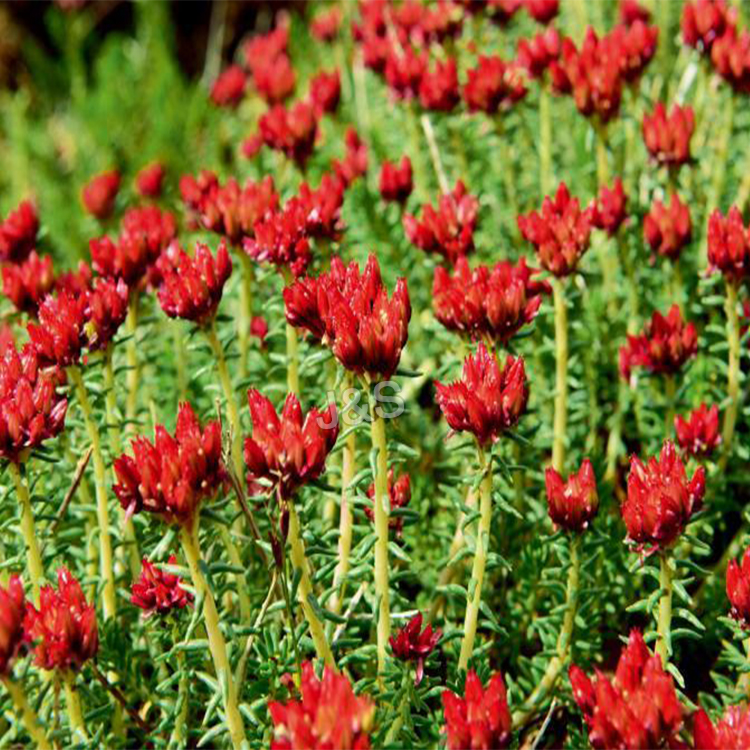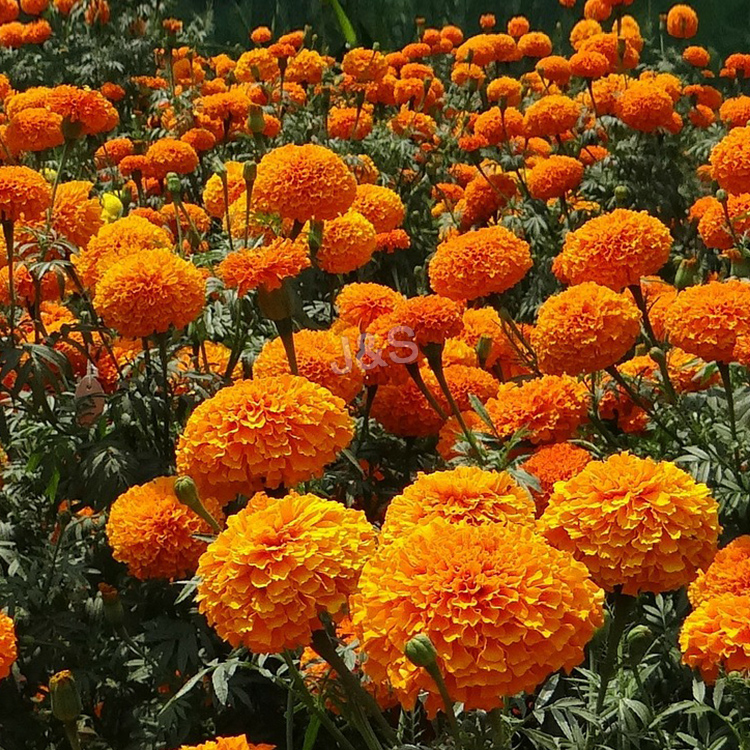
Goods high definition for Marigold extract in Angola
Goods high definition for Marigold extract in Angola Detail:
[Latin Name] Tagetes erecta L
[Plant Source]fromChinal
[Specifications] 5%~90%
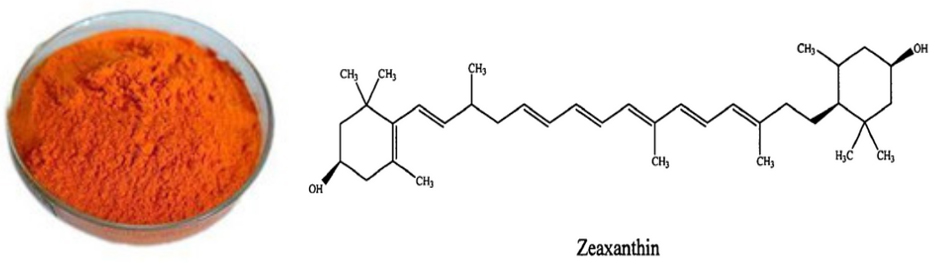
[Appearance] Orange Yellow fine powder
Plant Part Used: Flower
[Particle size] 80 Mesh
[Loss on drying] ≤5.0%
[Heavy Metal] ≤10PPM
[Storage] Store in cool & dry area, keep away from the direct light and heat.
[Shelf life] 24 Months
[Package] Packed in paper-drums and two plastic-bags inside.
[Net weight] 25kgs/drum
Introduction
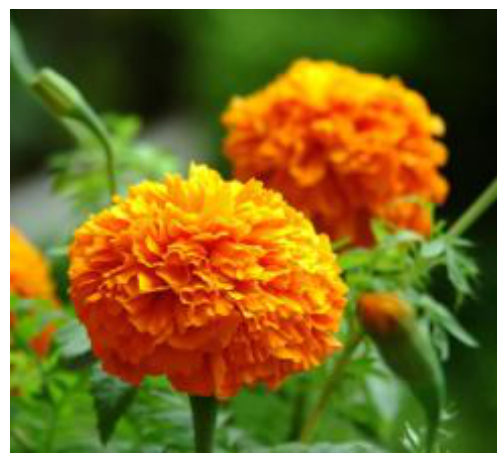
Marigold flower belongs to compositae family and tagetes erecta. It is an annual herb and widely planted in Heilungkiang, Jilin, Inner Mongolia, Shanxi, Yunnan , etc.The marigold we used comes from Yunnan province. Based on the local situation of special soil environment and lighting condition , the local marigold have characteristics like growing fast,long flowering period ,high productive capacity and adequate quality.Thus, the steady supply of raw materials, high yield and reduction of cost can be guaranteed.
Products function
1).Protect skin from the harmful solar ray.
2).Protect skin through reducing the risk of macular degenration.
3).Prevent cardiopathy and cancer and resist arteriosclerosis.
4).Prevent retina against oxidation when absorb light
5).Anti-cancer and preventing diffuse of cancer cell
6).Promote eyes’ health
Usage
(1)Applied in pharmaceutical health care product field, it is mainly used in vision care products to alleviate visual fatigue, prevent macular degeneration,and protect the health of eye
(2)Applied in cosmetics, it is mainly used to whitening, anti-wrinkle and UV protection.
Product detail pictures:
Related Product Guide:
We stick to our enterprise spirit of "Quality, Performance, Innovation and Integrity". We purpose to create a lot more price for our prospects with our rich resources, innovative machinery, experienced workers and great products and services for Goods high definition for Marigold extract in Angola , The product will supply to all over the world, such as: Chile, Belgium, Ottawa, We take measure at any expense to achieve essentially the most up-to-date equipment and approaches. The packing of nominated brand is our a further distinguishing feature. The items to assure years of trouble-free service has attracted a great deal customers. The solutions are obtainable in improved designs and richer assortment, they're created scientifically of purely raw supplies. It readily available in a variety of designs and specifications for your selection. The most recent kinds are a great deal better than the preceding one particular and they are quite popular with lots of prospects.
Belgian biochemist Christian de Duve (1917-2013) was best known for his work on understanding and categorising subcellular organelles. He won the Nobel Prize in Physiology or Medicine in 1974 for his joint discovery of lysosomes, the subcellular organelles that digest macromolecules and deal with ingested bacteria. [Listener: Peter Newmark]
TRANSCRIPT: And so, a year later, another patient with the disease was detected at the University of Brussels and Pierre Baudhuin in our laboratory did a microscopic… electron microscopic examination on the biopsy fragment of the liver of that child because, by that time, we had acquired an electron microscope and Baudhuin and Beaufay were the main experts and so they found that, indeed, the glycogen, or much of the glycogen in this pathological sample, was surrounded by a membrane, was confined within a sac-like particle which, presumably, was a lysosome, and this indeed turned out to be the case. And so, in this way, he discovered the first lysosomal storage disease which he then went on to generalise into a major concept, the concept of an inborn lysosomal disease being that in the cells all kinds of materials – lipids, polysaccharides, you name it, they are there – get into lysosomes, sometimes by endocytosis but most of the time by autophagy. Those materials are then digested in the lysosomes by… 50 or more enzymes are now known… broken down… the products of the breakdown… the breakdown products go through the membrane, are utilised by the cell, and this goes on and on and on. But if one of those enzymes happens to be missing or deficient then among all this material, those molecules that require the missing enzyme to be broken down, would accumulate. And so, depending on the nature of the missing enzyme, you would have a different kind of chemical material accumulating, always in the lysosomes. Now, that was a tremendously fruitful concept – it was a paper published in Gastroenterology in 1965 –and it has a major impact on the whole field because, for a number of… many years the whole category of diseases was known; they were called storage diseases, they were genetic diseases – in French they were called thesaurismoses… thesaurismosis, essentially due to their abnormal storage of materials within cells, and those could be mucopolysaccharides of one form or another… in Hurler or Hunter Disease, could be lipids of one form or another; or another, glucocerebrosides, glycolipids, in Gaucher’s Disease, in Fabry’s Disease; sphingomyelin in Niemann-Pick Disease. I mean, these diseases all have the names of the physicians who described them but there was a whole mysterious chapter of pathology and literally, from one day to the other, the whole thing was clarified. Of course it needed many investigations by a number of really very good biochemists, mostly in the United States, to actually identify the missing enzyme and… clarifying the whole field. So that was a major… a major contribution which interestingly was made through the lysosome field by the only one in my group who had actually decided he didn’t want to have anything to do with them, but that’s life.
How to approach histology for Human Anatomy students. Using a key will help get you through it! Add some penguin fairy dust will help too!
There are lots of histology keys out there, but the one I showed in the video is here: https://www.penguinprof.com/uploads/8/4/3/1/8431323/histology_key.jpg
Want more?
Subscribe: https://www.youtube.com/user/ThePenguinProf
FB Page: https://www.facebook.com/ThePenguinProf
Twitter: https://twitter.com/penguinprof
Web: https://www.penguinprof.com/
—————————————————————————————————
Details:
Tissue in the human body:
Epithelial: Is made of cells arranged in a continuous sheet with one or more layers, has apical & basal surfaces.
A basement membrane is the attachment between the basal surface of the cell & the underlying connective tissue.
Two types of epithelial tissues: (1) Covering & lining epithelia and (2) Glandular Epithelium.
The number of cell layers & the shape of the cells in the top layer can classify epithelium.
Simple Epithelium – one cell layer
Stratified epithelium – two or more cell layers
Pseudostratified Columnar Epithelium – When cells of an epithelial tissue are all anchored to the basement Membrane but not all cells reach the apical surface.
Glandular Epithelium — (1) Endocrine: Release hormones directly into the blood stream and (2) Exocrine – Secrete into ducts.
Connective: contains many different cell types including: fibroblasts, macrophages, mast cells, and adipocytes. Connective Tissue Matrix is made of two materials: ground substance – proteins and polysaccharides, fiber — reticular, collagen and elastic.
Classification of Connective Tissue:
Loose Connective – fibers & many cell types in gelatinous matrix, found in skin, & surrounding blood vessels, nerves, and organs.
Dense Connective – Bundles of parallel collagen fibers& fibroblasts, found in tendons& ligaments.
Cartilage – Cartilage is made of collagen & elastin fibers embedded in a matrix glycoprotein & cells called chondrocytes, which was found in small spaces.
Cartilage has three subtypes:
Hyaline cartilage — Weakest, most abundant type, Found at end of long bones, & structures like the ear and nose,
Elastic cartilage- maintains shape, branching elastic fibers distinguish it from hyaline and
Fibrous Cartilage – Strongest type, has dense collagen & little matrix, found in pelvis, skull & vertebral discs.
Muscle: is divided into 3 categories, skeletal, cardiac and smooth.
Skeletal Muscle — voluntary, striated, striations perpendicular to the muscle fibers and it is mainly found attached to bones.
Cardiac Muscle — involuntary, striated, branched and has intercalated discs
Smooth Muscle — involuntary, nonstriated, spindle shaped and is found in blood vessels & the GI tract.
Nervous: Consists of only two cell types in the central nervous system (CNS) & peripheral nervous system (PNS):
Neurons – Cells that convert stimuli into electrical impulses to the brain, and Neuroglia — supportive cells.
Neurons — are made up of cell body, axon and dendrites. There are 3 types of neurons:
Motor Neuron — carry impulses from CNS to muscles and glands,
Interneuron – interpret input from sensory neurons and end responses to motor neurons
Sensory Neuron — receive information from environment and transmit to CNS.
Neuroglia — is made up of astrocytes, oligodendrocytes, ependymal cells and microglia in the CNS, and schwann cells and satellite cells in the PNS.
Good quality, reasonable prices, rich variety and perfect after-sales service, it's nice!