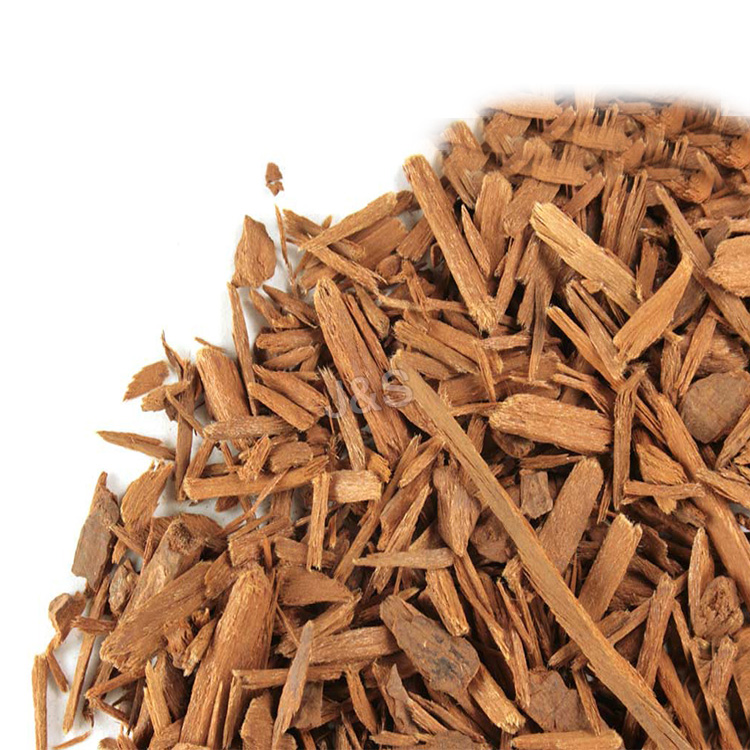
Hot-selling attractive White Willow Bark Extract Supply to Tunisia
Hot-selling attractive White Willow Bark Extract Supply to Tunisia Detail:
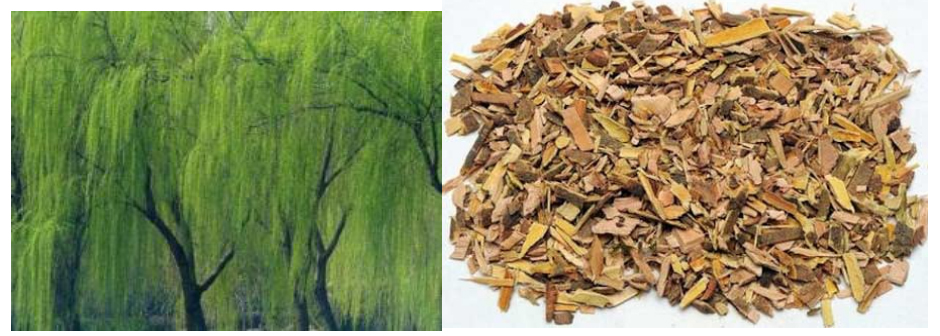
[Latin Name] Salix alba L.
[Plant Source] from China
[Specifications] Salicin 15-98%
[Appearance] Yellow Brown to White powder
Plant Part Used: Bark
[Particle size] 80 Mesh
[Loss on drying] ≤5.0%
[Heavy Metal] ≤10PPM
[Storage] Store in cool & dry area, keep away from the direct light and heat.
[Shelf life] 24 Months
[Package] Packed in paper-drums and two plastic-bags inside.
[Net weight] 25kgs/drum
Brief Introduction
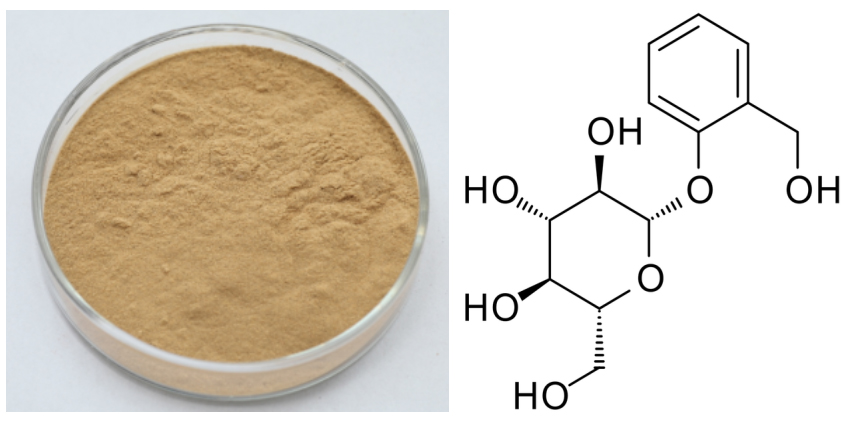
Salicin is a naturally occurring compound found in the bark of several species of trees, primarily North American in origin, that are from the willow, poplar, and aspen families. White willow, from whose Latin name, Salix alba, the term salicin is derived, is the most well known source of this compound, but it is found in a number of other trees, shrubs, and herbaceous plants as well being synthesized commercially. It is a member of the glucoside family of chemicals and is used as an analgesic and antipyretic. Salicin is used as a precursor for the synthesis of salicylic acid and acetylsalicylic acid, commonly known as aspirin.
A colorless, crystalline solid in its pure form, salicin has the chemical formula C13H18O7. Part of its chemical structure is equivalent to the sugar glucose, meaning it is classified as a glucoside. It is soluble, but not strongly so, in water and alcolhol. Salicin has a bitter taste and is a natural analgesic and antipyretic, or fever reducer. In large quantities, it can be toxic, and overdoses may lead to liver and kidney damage. In its raw form, it may be mildly irritating to skin, respiratory organs, and eyes.
Function
1. Salicin is used to ease pain and reduce inflammation.
2. Relieve acute and chronic pain, including headache, back and neck pain, muscle aches, and menstrual cramps; Control arthritis discomforts.
3. Relieve acute and chronic pain.
4. It has the same effect on the body as aspirin without any of the side effects.
5. It is an anti-inflammatory, a fever reducer, an analgesic, an anti-rheumatic, and an astringent. Specifically, it helps to relieve headaches.
Application
1.Anti-inflammatory, anti-rheumatic,
2.Reduce a fever,
3.Use as an analgesic and astringent,
4.Relieve headache,
5.Ease pain caused by rheumatism, arthritis, and carpal tunnel syndrome.
Product detail pictures:
Related Product Guide:
Our well-equipped facilities and great good quality regulate throughout all stages of manufacturing enables us to guarantee total buyer gratification for Hot-selling attractive White Willow Bark Extract Supply to Tunisia , The product will supply to all over the world, such as: Slovakia, Ecuador, Bolivia, Our company has abundant strength and possesses a steady and perfect sales network system. We wish we could establish sound business relationships with all customers from at home and abroad on the basis of mutual benefits.
https://www.stomponstep1.com/hypersensitivity-type-1-2-3-4-urticaria-anaphylaxis-immune-complexes-i-ii-iii-iv
SKIP AHEAD:
0:26 – Definition of Hypersensitivity
1:12 – Mnemonic for remembering the 4 types
2:58 – Type I (Type 1) HS
6:48 – Anaphylactic Shock
7:45 – Type II (Type 2) HS
8:57 – Type III (Type 3) HS and Immune Complexes
10:29 – Type IV (Type 4) HS
Hypersensitivity is when an otherwise healthy immune system has an undesirable exaggerated response to a foreign substance (or perceived foreign substance) that damages the body’s own cells. These are the same immune processes that are necessary to prevent infection, but they create problems when they are hyperactive or misguided. The way I remember the four different types of hypersensitivity is my ABCD mnemonic.
I = Allergic Anaphylaxis and Atopy
II = antiBody
III = immune Complex
IV = Delayed
* Types I, II and III all can involve antibodies. Therefore, having antibody in the mnemonic for type II may be confusing. However, the “classic” role of antibody involving complement activation, NK cell activation and opsonization are part of Type II which is why I feel that is the simplest way to remember it.
Type I Hypersensitivity is triggered by an innocuous foreign substance (like dust, pollen or animal dander) that would cause no problems in the majority of people. The antigen simultaneously binds more than one membrane bound IgE on a mast cell (or basophil). This process, called Crosslinking, triggers the release of mast cell granules full of histamine. Histamine then goes on to signal the various changes associated with allergies similar to how it functions during acute inflammation. This allergic reaction happens almost instantly and the symptoms can become evident within minutes. This is possible because the mast cells are Pre-Sensitized to the innocuous substance which means they have pre-formed membrane bound IgE that recognizes the particular innocuous antigen. To be pre-sensitized the immune system must have seen the antigen previously, because antibody (IgE) formation takes time. Histamine’s role in Type I Hypersensitivity is why Anti-Histamines (Histamine Antagonists) like Diphenhydramine or Loratidine can control some allergy symptoms.
Type I Hypersensitivity is the process that leads to various different “allergies”. A more mild form would include Allergic Rhinitis (seasonal allergies) that cause things like coughing, sneezing, watery eyes and nasal congestion. Some individuals with these allergies also experience an atopic rash referred to as Urticaria (Hives) or Atopic Dermatitis (Eczema). This red rash is raised and pruritic (itchy). Through a similar mechanism Type I Hypersensitivity can lead to exacerbation of Allergic Asthma by environmental triggers. This type of hypersensitivity is also the mechanism behind more serious conditions like peanut or bee sting allergies that can lead to swelling of the lips/tongue/throat, shortness of breath, stridor, and anaphylactic shock. Anaphylatic shock is a life threatening condition in which systemic histamine directed inflammation causes hypotension via global vasodilation, an increase in vascular permeability and significant fluid movement into the tissue. It is treated with epinephrine, often in the form of an “Epi Pen” when outside of a medical setting. Epinephrine activates Alpha-1 Adrenergic Receptors to raise blood pressure via vasoconstriction and increased contractility of the heart.
Type II Hypersensitivity is the process by which IgG or IgM binds to a cell to cause injury or death (Antibody Dependent Cytotoxicity). This process has the same mechanism of action as normal humoral immunity except it is targeted at the body’s own cells instead of pathogens. The variable region of the antibody binds to the host cell while the constant portion interacts with NK cells, complement and macrophages. Examples of this reaction can be seen in Rheumatic Fever (body’s own cell look similar to Strep Pyo), Goodpasture Syndrome (Anti-Glomerular Basement Membrane Antibodies) and Hemolytic Disease of Newborns/Erythroblastosis Fetalis (when a Rh- mother has a second Rh+ child and the maternal IgG targets fetal RBCs).
The text for this video is too long for Youtube and exceeds the maximum allowed video description length. To read the rest of it go here https://www.stomponstep1.com/hypersensitivity-type-1-2-3-4-urticaria-anaphylaxis-immune-complexes-i-ii-iii-iv
 By Tina from Argentina - 2017.03.28 12:22
Speaking of this cooperation with the Chinese manufacturer, I just want to say"well dodne", we are very satisfied.
By Maud from Algeria - 2017.06.16 18:23