Hot Selling for White Willow Bark Extract Factory from Lithuania
Hot Selling for White Willow Bark Extract Factory from Lithuania Detail:
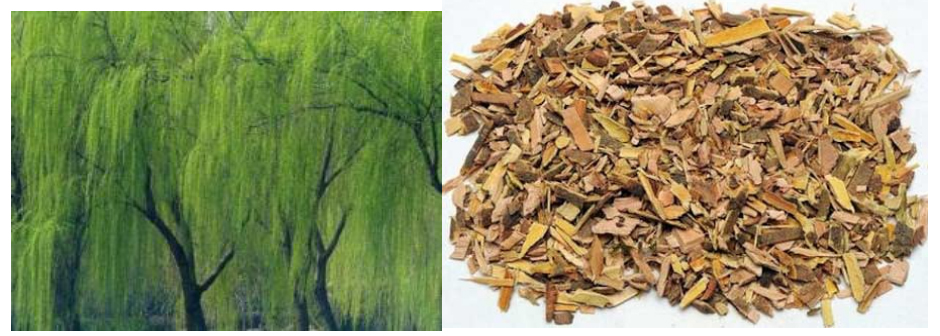
[Latin Name] Salix alba L.
[Plant Source] from China
[Specifications] Salicin 15-98%
[Appearance] Yellow Brown to White powder
Plant Part Used: Bark
[Particle size] 80 Mesh
[Loss on drying] ≤5.0%
[Heavy Metal] ≤10PPM
[Storage] Store in cool & dry area, keep away from the direct light and heat.
[Shelf life] 24 Months
[Package] Packed in paper-drums and two plastic-bags inside.
[Net weight] 25kgs/drum
Brief Introduction
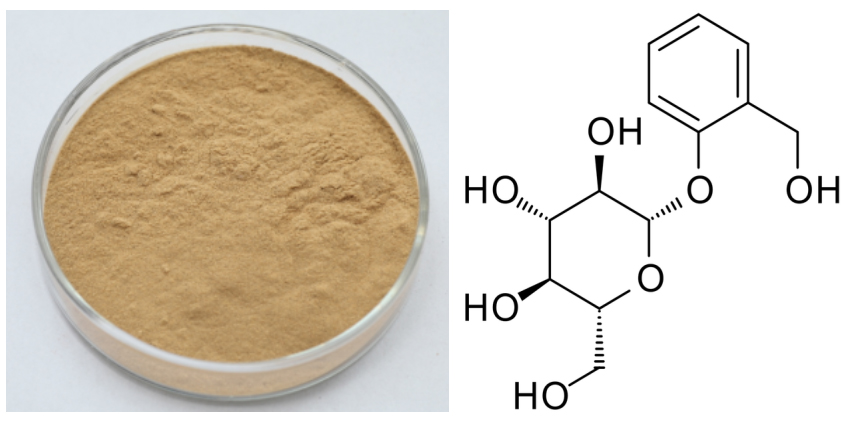
Salicin is a naturally occurring compound found in the bark of several species of trees, primarily North American in origin, that are from the willow, poplar, and aspen families. White willow, from whose Latin name, Salix alba, the term salicin is derived, is the most well known source of this compound, but it is found in a number of other trees, shrubs, and herbaceous plants as well being synthesized commercially. It is a member of the glucoside family of chemicals and is used as an analgesic and antipyretic. Salicin is used as a precursor for the synthesis of salicylic acid and acetylsalicylic acid, commonly known as aspirin.
A colorless, crystalline solid in its pure form, salicin has the chemical formula C13H18O7. Part of its chemical structure is equivalent to the sugar glucose, meaning it is classified as a glucoside. It is soluble, but not strongly so, in water and alcolhol. Salicin has a bitter taste and is a natural analgesic and antipyretic, or fever reducer. In large quantities, it can be toxic, and overdoses may lead to liver and kidney damage. In its raw form, it may be mildly irritating to skin, respiratory organs, and eyes.
Function
1. Salicin is used to ease pain and reduce inflammation.
2. Relieve acute and chronic pain, including headache, back and neck pain, muscle aches, and menstrual cramps; Control arthritis discomforts.
3. Relieve acute and chronic pain.
4. It has the same effect on the body as aspirin without any of the side effects.
5. It is an anti-inflammatory, a fever reducer, an analgesic, an anti-rheumatic, and an astringent. Specifically, it helps to relieve headaches.
Application
1.Anti-inflammatory, anti-rheumatic,
2.Reduce a fever,
3.Use as an analgesic and astringent,
4.Relieve headache,
5.Ease pain caused by rheumatism, arthritis, and carpal tunnel syndrome.
Product detail pictures:
Related Product Guide:
Our organization has been focusing on brand strategy. Customers' gratification is our greatest advertising. We also source OEM provider for Hot Selling for White Willow Bark Extract Factory from Lithuania , The product will supply to all over the world, such as: Denmark, Qatar, Kyrgyzstan, If any product meed your demand, please feel free to contact us. We're sure your any inquiry or requirement will get prompt attention, high-quality products, preferential prices and cheap freight. Sincerely welcome friends all over the world to call or come to visit, to discuss cooperation for a better future!
Buy Menofreeze Here: https://www.amazon.com/MenoFreeze-Menopausal-Irritability-Emotional-Isoflavones/dp/B00O3JGJVI
MenoFreeze Is The Right Choice To Maintain Healthy Hormonal Balance!
Menopause tends to start for some women around the age 50 and tends to creep up on unsuspecting women. Some women maynot have any symptoms at all but for others the symptoms appear with a vengence. Some of the symptoms may be just a nuisance like vaginal dryness or irregular peroids. However, most symptoms associated with menopause can have devastating effects on your quality of life. Night sweats, hot flashes, insomnia, anxiety, loss of sexual desire and weight gain can have a major impact on a woman’s overall well-being.
Don’t let the change of life; ruin your life. MenoFreeze can help you replenish and restore your hormonal balance… safely, effectively naturally and without harmful side effects.
MenoFreeze is an all natural, safe and multi-symptom relief product! Every capsule contains potent herbal extracts, minerals and vitamins that effectively address many menopause symptoms, as well as, providing support for overall bone health. With MenoFreeze you can take charge of your menopause symptoms without serious side effects of prescription drugs!
MenoFreeze Puts Your Emotional Well-Being Back In Balance!
MenoFreeze’s exact scientific formulation contains ingredients clinically proven to:
- Promotes hormonal balance reducing incidence and severity of hot flashes.
- Enhances weight loss by boosting metabolism and increasing lean body mass.
- Provides support for maintaining bone health, increasing bone density and strength.
- Reduces feelings of anxiety, stress, and irritability that negatively affect mood.
- Helps boost sexual desire and libido leading promoting sexual intimacy.
MenoFreeze addresses multiple symptoms efectively without dangerous side effects seen with HRT.
MenoFreeze contains quality, precisely blended herbal extracts, minerals and vitamins:
- Chaste Berry helps restore the hormonal balance between estrogen and progesterone
- Sage has been proven effective for decreasing incidence of hot flushes
- Cnidium Monnieri boosts sexual desire and interest in sexual intimacy
- Red clover flower provides significant relief from hot flushes and night sweats
- Guggullipid extract has been clincially shown to boost thyroid function, cholesterol management and adipose/fat reduction
- Vitamin D is vital for supporting healthy bones and preventing bone loss
- Maca root powder is a sexual performance and fertility enhancer
- Soy isoflavones is a powerful anti-oxidant, has ability to support bone health and prevent osteoporosis, and ease many menopausal symptoms
- Wild yam root help to regulate production of estrogen, aiding in estrogen balance
- Black cohosh has been proven to have a signifcant reduction in hot flash frequency
- Calcium is an important mineral necessary to keep bones healthy and strong
- Black pepper extract works to improve the absorption of all the other powerful ingredients
- Vitamin K is essential for the proper formation of healthy bones
MenoFreeze Turns Down The Heat, Takes Off The Weight & Improves Your Mood!
Are you aware that Pumpkin seeds are rich in Phosphorous. Find out what Siddha Specialist Arun has to say about the amazing health benefits it possesses in strengthening the bones and teeth. It is also considered to be one of the best antitoxidant ever and naturally helps in keeping a person young. Aishwarya Raghav tells you how to cook delicious ‘pumpkin seed chutney’.
எலும்புகள் மற்றும் பற்கள் உருவாக்கத்தில் பெரும் பங்கு வகிக்கும் பாஸ்பரஸ், பூசணி விதையில் அதிகம் இருக்கிறது. பூசணி விதையில் உள்ள ஆண்டி ஆக்ஸிடண்ட் சத்து உடல் மற்றும் சருமத்தை இளமையாக வைத்துக் கொள்ளும்.
இன்றைய அமிர்தம் : பூசணி விதைச்சட்னி
NEWS7 TAMIL
https://www.NS7.tv
facebook: https://fb.com/News7Tamil
twitter: https://twitter.com/News7Tamil
News 7 Tamil Television, part of Alliance Broadcasting Private Limited, is rapidly growing into a most watched and most respected news channel both in India as well as among the Tamil global diaspora. The channel’s strength has been its in-depth coverage coupled with the quality of international television production.
 By Quintina from Israel - 2017.01.28 18:53
The customer service reprersentative explained very detailed, service attitude is very good, reply is very timely and comprehensive, a happy communication! We hope to have a opportunity to cooperate.
By Elsa from Japan - 2018.07.12 12:19