Hot Selling for Yohimbe bark extract Manufacturer in Turin
Hot Selling for Yohimbe bark extract Manufacturer in Turin Detail:
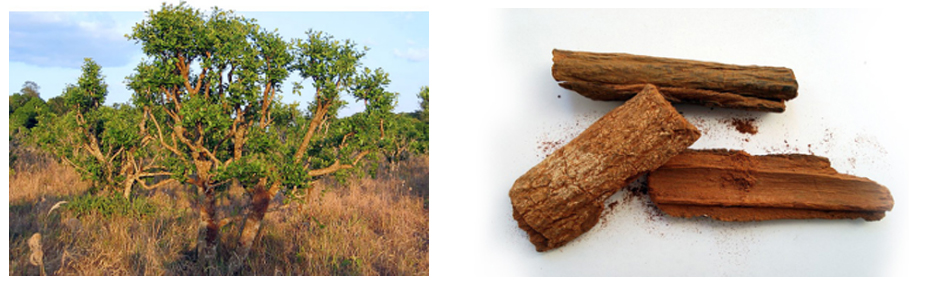
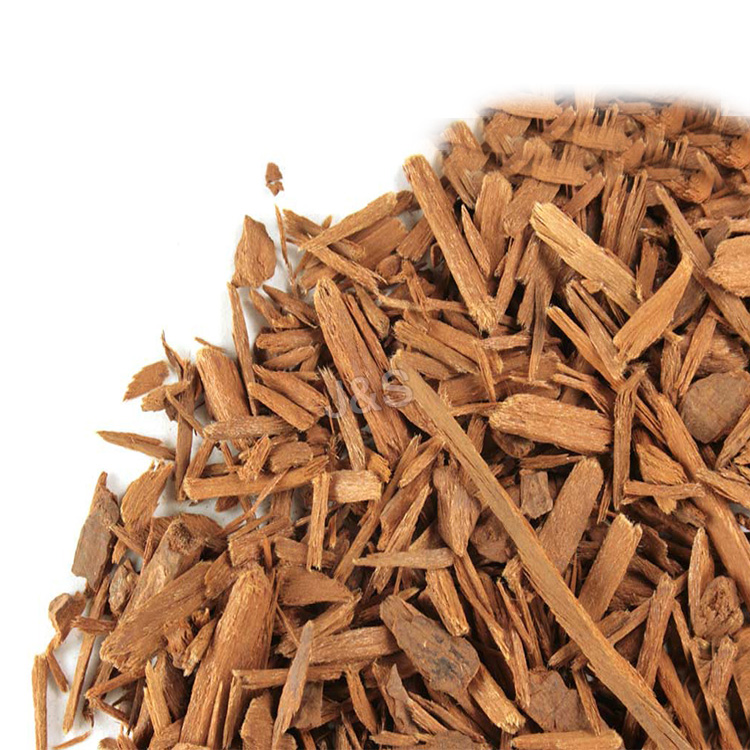
[Latin Name] Corynante Yohimbe
[Plant Source] Yohimbe bark collected from Africa
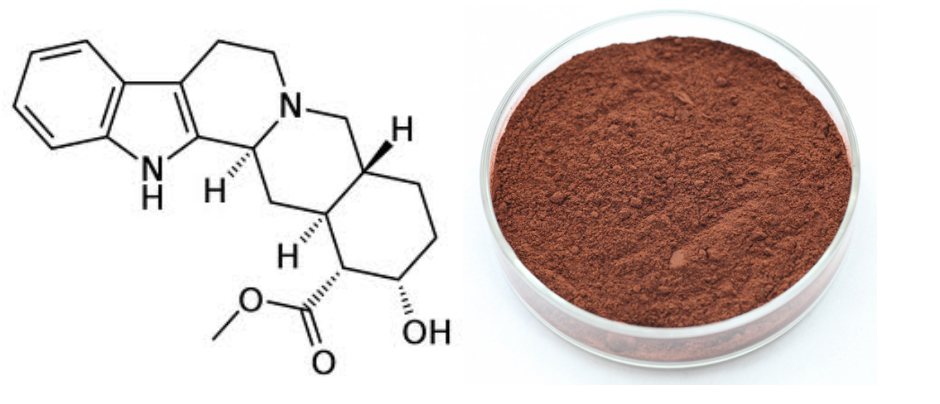
[Specifications] Yohimbine 8% (HPLC)
[Appearance] Red Brown Fine Powder
[Particle size] 80 Mesh
[Loss on drying] 5.0%
[Heavy Metal] 10PPM
[Extract solvents] Ethanol
[Storage] Store in cool & dry area, keep away from the direct light and heat.
[Package] Packed in paper-drums and two plastic-bags inside. Net weight:25kgs/drum
[What is yohimbe]
Yohimbe is a tree that grows in Africa, and the natives there have used the crude bark and purified compound to enhance sexual desire and performance. Yohimbe has been used for centuries as an aphrodisiac. It has even been smoked as a hallucinogen. Nowadays, Yohimbe bark extract is mostly used to treat impotence for men and women.
When ingested, Yohimbe is assimilated into the blood stream, and Yohimbe’s energizing effects come from its ability to increase blood flow to the genitals - and this applies to both men and women.Aside from its aphrodisiac effects, new research also show that Yohimbe has powerful antioxidant effects.
[Function]
Yohimbe Bark Extract Benefits£º
1.It’s an aphrodisiac for both men and women
2.Be used to fight impotence
3.It is shown to be a powerful antioxidant
4.It also helps prevent arteries from getting clogged
5.It helps sexual performance, increase libido
6.Ithas also been shown to help prevent heart attacks
Product detail pictures:
Related Product Guide:
We pursue the administration tenet of "Quality is remarkable, Services is supreme, Status is first", and will sincerely create and share success with all customers for Hot Selling for Yohimbe bark extract Manufacturer in Turin , The product will supply to all over the world, such as: Egypt, Ethiopia, Florence, The credibility is the priority, and the service is the vitality. We promise we have the ability to provide excellent quality and reasonable price products for customers. With us, your safety is guaranteed.
https://www.nutritionforest.com/pomegranate-extract.html
https://www.nutritionforest.com
Nutrition Forest Pomegranate Extract 500mg
Pomegranate, a juicy and toothsome fruit is cultivated in many areas which basically are available in winter season. Pomegranate, botanical name Punica Granatum, holds a compound called punicalagin which is expedient for anti-aging and skin lines, dullness. It also inhibits cardiovascular disease, supports normal blood pressure and help in reducing cholesterol.
Pomegranate extract is a powerful antioxidant which is wholesome not only for keeping heart healthy but blood vessels also. According to the study pomegranate juice has been found three times antioxidants more than red wine and green tea.
Pomegranate extract is extremely beneficial for skin problems. Pomegranate juice comprises of frolic acid, Vitamin C, Vitamin E, Vitamin K and minerals like iron and potassium. Vitamin C and Vitamin E are essential for our radiant skin. These vitamins are benign in skin rejuvenation, removing dullness and dead skin, wrinkles, fine lines and scars. Iron removes paleness of skin and also assists to sharpen brain.
Many cultures use pomegranate as a folk medicine. Pomegranate is native to Iran. It is primarily cultivated in Mediterranean counties, parts of the United States, Afghanistan, Russia, India, China, and Japan. You’ll see pomegranate in some royal and medical coats of arms.
How does it work?
Pomegranate contains a variety of chemicals that might have antioxidant effects. Some preliminary research suggests that chemicals in pomegranate juice might slow the progression of atherosclerosis (hardening of the arteries) and possibly fight cancer cells. But it is not known if pomegranate has these effects when people drink the juice.
pomegranate
pomegranate seeds
how to eat a pomegranate
benefits of pomegranate
pomegranates
how to eat pomegranate
pomegranate recipes
pomegranate health benefits
pomegranate fruit
pomegranate juice benefits
benefits of pomegranate juice
pomegranate nutrition
health benefits of pomegranate
how to make pomegranate juice
pomegranate calories
pomegranate arils
pomegranate season
calories in pomegranate
pomegranate juice recipe
pomegranate smoothie
pomegranate how to eat
how do you eat a pomegranate
pomagranate
anar fruit
pomegranate molasses recipe
pomegranate flower
is pomegranate juice good for you
is pomegranate good for you
pomegranate toronto
benefit of pomegranate
what is pomegranate good for
are pomegranates good for you
pomegranate juice side effects
pomegranate nutrition facts
pomegranet
calories in a pomegranate
benefits of eating pomegranate
pomegranate seeds benefits
pomegranate health
Chemistry playlist: https://www.youtube.com/playlist?list=PL_hX5wLdhf_KyuOalV6rwHjo810Zaa6xq
more at https://scitech.quickfound.net/
Overview of how plastics & synthetic rubbers are made.
Reupload of a previously uploaded film with improved video & sound.
Public domain film from the Library of Congress Prelinger Archives, slightly cropped to remove uneven edges, with the aspect ratio corrected, and one-pass brightness-contrast-color correction & mild video noise reduction applied.
The soundtrack was also processed with volume normalization, noise reduction, clipping reduction, and/or equalization (the resulting sound, though not perfect, is far less noisy than the original).
https://creativecommons.org/licenses/by-sa/3.0/
https://en.wikipedia.org/wiki/Polymer
A polymer is a large molecule (macromolecule) composed of repeating structural units. These sub-units are typically connected by covalent chemical bonds. Although the term polymer is sometimes taken to refer to plastics, it actually encompasses a large class of compounds comprising both natural and synthetic materials with a wide variety of properties.
Because of the extraordinary range of properties of polymeric materials, they play an essential and ubiquitous role in everyday life. This role ranges from familiar synthetic plastics and elastomers to natural biopolymers such as nucleic acids and proteins that are essential for life.
Natural polymeric materials such as shellac, amber, wool, silk and natural rubber have been used for centuries. A variety of other natural polymers exist, such as cellulose, which is the main constituent of wood and paper. The list of synthetic polymers includes synthetic rubber, Bakelite, neoprene, nylon, PVC, polystyrene, polyethylene, polypropylene, polyacrylonitrile, PVB, silicone, and many more.
Most commonly, the continuously linked backbone of a polymer used for the preparation of plastics consists mainly of carbon atoms. A simple example is polyethylene (‘polythene’ in British English), whose repeating unit is based on ethylene monomer. However, other structures do exist; for example, elements such as silicon form familiar materials such as silicones, examples being Silly Putty and waterproof plumbing sealant. Oxygen is also commonly present in polymer backbones, such as those of polyethylene glycol, polysaccharides (in glycosidic bonds), and DNA (in phosphodiester bonds).
Polymers are studied in the fields of polymer chemistry, polymer physics, and polymer science…
Polymerization is the process of combining many small molecules known as monomers into a covalently bonded chain or network. During the polymerization process, some chemical groups may be lost from each monomer. This is the case, for example, in the polymerization of PET polyester. The monomers are terephthalic acid (HOOC-C6H4-COOH) and ethylene glycol (HO-CH2-CH2-OH) but the repeating unit is -OC-C6H4-COO-CH2-CH2-O-, which corresponds to the combination of the two monomers with the loss of two water molecules. The distinct piece of each monomer that is incorporated into the polymer is known as a repeat unit or monomer residue…
https://en.wikipedia.org/wiki/Synthetic_rubber
Synthetic rubber is any type of artificial elastomer, invariably a polymer. An elastomer is a material with the mechanical (or material) property that it can undergo much more elastic deformation under stress than most materials and still return to its previous size without permanent deformation.About 15 billion kilograms of rubbers are produced annually, and of that amount two thirds is synthetic…
Natural vs synthetic rubber
Natural rubber, coming from latex, is mainly poly-cis-isoprene containing traces of impurities. Although it exhibits many excellent properties, natural rubber is often inferior to synthetic rubbers, especially with respect to its thermal stability and its compatibility with petroleum products.
Synthetic rubber is made by the polymerization of a variety of petroleum-based precursors called monomers. The most prevalent synthetic rubbers are styrene-butadiene rubbers (SBR) derived from the copolymerization of styrene and 1,3-butadiene. Other synthetic rubbers are prepared from isoprene (2-methyl-1,3-butadiene), chloroprene (2-chloro-1,3-butadiene), and isobutylene (methylpropene) with a small percentage of isoprene for cross-linking. These and other monomers can be mixed in various proportions to be copolymerized to produce products with a range of physical, mechanical, and chemical properties. The monomers can be produced pure and the addition of impurities or additives can be controlled by design to give optimal properties. Polymerization of pure monomers can be better controlled to give a desired proportion of cis and trans double bonds…
In China, we have many partners, this company is the most satisfying to us, reliable quality and good credit, it is worth appreciation.