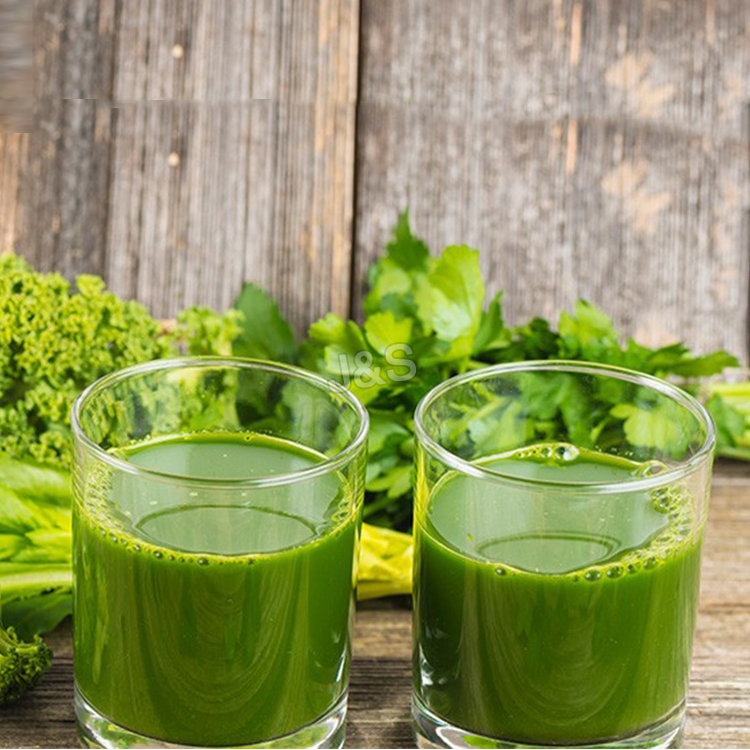
Manufacturer for Sodium copper chlorophyllin Factory in Sydney
Manufacturer for Sodium copper chlorophyllin Factory in Sydney Detail:
[Specification] 99%
[Appearance] Dark Green powder
Plant Part Used:
[Particle size] 80Mesh
[Loss on drying] ≤5.0%
[Heavy Metal] ≤10PPM
[Storage] Store in cool & dry area, keep away from the direct light and heat.
[Shelf life] 24 Months
[Package] Packed in paper-drums and two plastic-bags inside.
[Net weight] 25kgs/drum
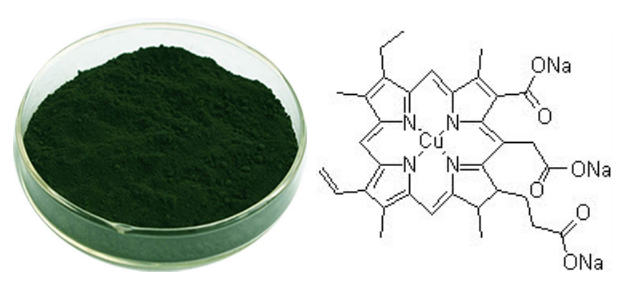
[What is that?]
Chlorophyll is a natural green pigment which is obtained through extraction and refining processes from natural green plants or silkworm feces.Chlorophyll is stabilized chlorophyll, which is prepared from chlorophyll by saponification and replacement of magnesium atom with copper and sodium. Chlorophyll is dark green to blue black powder, easily soluble in water but slightly soluble in alcohol and chloroform, with transparent jade green water solution without sediment.
[Function]
1.clears up odors of putrefaction effectively.
2.play an important role on cancer prevention.
3.Chlorophyll has superior coloring strength and good stabilization in neutral and alkali solutions.
4.Chlorophyll has effect on liver protection, fastening healing of stomach ulcers and intestine ulcers.
5.The active ingredient in a number of internally-taken preparations intended to reduce odors associated with incontinence, colostomies and similar procedures, as well as body odor in general.
6.Chlorophyll has strong antibacterial action, which makes it useful in surgeries, ulcerative carcinoma, acute rhinitis and rhinosinusitis, chronic ear infections, inflammations, etc.
Product detail pictures:
Related Product Guide:
The corporate upholds the philosophy of "Be No.1 in excellent, be rooted on credit rating and trustworthiness for growth", will keep on to serve outdated and new clients from home and abroad whole-heatedly for Manufacturer for Sodium copper chlorophyllin Factory in Sydney , The product will supply to all over the world, such as: United States, Germany, Portugal, We insist on "Quality First, Reputation First and Customer First". We are committed to providing high-quality products and good after-sales services. Up to now, our products have been exported to more than 60 countries and areas around the world, such as America, Australia and Europe. We enjoy a high reputation at home and abroad. Always persisting in the principle of "Credit, Customer and Quality", we expect cooperation with people in all walks of life for mutual benefits.
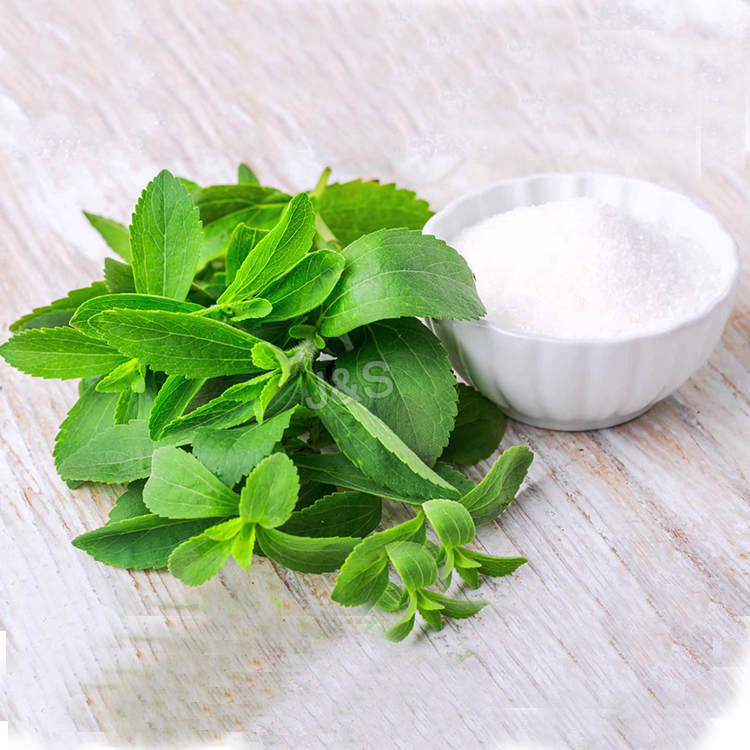
How to make stevia / stevioside concentrate. We were one of the first three companies selling stevia and stevia extract (Stevioside). We started way back in the mid 1990′s.
Since there is so much bad information going around, we felt a responsibility to make this video for you on how to make stevia liquid concentrate for yourself.
Why pay $8.00, $13.95, $15.95 for fifty cents of stevia concentrate.
There are only two ingredients.
1 teaspoon of stevia (green powder), or as we are making it (stevia extract aka stevioside aka steviol glycosides).
3 TABLESPOONS of purified water.
That’s it!
If you want a good, cheap preservative to use for the stevia liquid concentrate, ad 2-3 drops of unflavored water.
WARNING: Make Absolutely Sure the container you will be using has been sterilized!
Metabolism of a Cell – Introduction to Biology – 5.10
Article: https://www.academyofone.org/metabolism-of-a-cell-introduction-to-biology-5-10/
Visit: https://academyofone.org
AoO Prime: https://www.academyofone.org/register-2/
Royalty free music licensed by www.stockmusic.net
I have a slow metabolism… That’s why I’m fat. Justin timberlake has a fast metabolism and that’s why he is skinny. Everyone has a metabolism… Including cells! What’s going on everybody? My name is Jack Jenkins and this is Academy of One. Today we are talking about cell metabolism. First off, what is metabolism? Metabolism are all the life-sustaining chemical reactions cells do. With metabolism, the cell will gain the energy to preform all the things cells like to do including growing, reproducing and digestion. A lot of metabolic reactions are linked in chains called metabolic pathways. Within a metabolic pathway, the reactant molecule is modified by a catalyst, more specifically enzymes. This will give us a modified product. That modified product will serve as the reactant in the next reaction and turns into an even more modified product. This goes on till the cell gets tired. It’s like typing recursion into Google and seeing how long you can click it before you get tired. Metabolism can be broken down into two groups: catabolism and anabolism. Catabolism is the set of metabolic pathways that break big molecules into smaller ones. This breaking apart creates energy. Sugar is digested with catabolism. The polysaccharides will break apart until they become monosaccharides. You don’t remember your carbohydrates? Then I highly recommend you watch video 4.3 as a quick refresher… Also tell your friends to do it too… Or else I’ll hurt you! If catabolism breaks down molecules than it would only make sense that anabolism builds them up. Anabolism is the set of metabolic pathways that create big molecules from smaller ones. Where catabolism creates energy, anabolism requires energy in order to form the molecules. Let’s say you’re pumping it in the gym. Just getting yakked. What’s causing your muscles to get bigger is the anabolism of proteins that make your muscles bigger. As a side note, you’ve probably heard about anabolism in the form of anabolic steroids. These just promote protein synthesis in a very unhealthy way. Don’t take steroids. Sometimes things go a little awry at the metabolism factory. Sometimes too many enzymes can create a metabolic imbalance. This is where enzyme inhibitors come in. Enzyme inhibitors are molecules that bind to enzymes to decrease their activity. Like how you hug a violent dog in-order to calm it down… Wait… You’re not supposed to do that? Hopefully my niece doesn’t see any angry dogs… There are two types of enzyme inhabitation: Competitive and noncompetitive. Competitive inhibition is when the molecule binds to an active site on an enzyme. The active site is where the enzyme binds to a molecule, known as a substrate. Noncompetitive inhibition is when the molecule binds to the inhibitor site on the enzyme. This will confuse the enzyme and make the enzyme less able to catalyze the reaction. Well, that’s a wrap for this quick video on cell metabolism. In the next one we will talk about photosynthesis, which is how plant cells get there energy. Alright so go ahead and visit the… You guys know what to do by now. Just go outside and don’t hug a violent dog. I said don’t!
We have been engaged in this industry for many years, we appreciate the work attitude and production capacity of the company, this is a reputable and professional manufacturer.