Professional China White Willow Bark Extract Wholesale to India
Professional China White Willow Bark Extract Wholesale to India Detail:
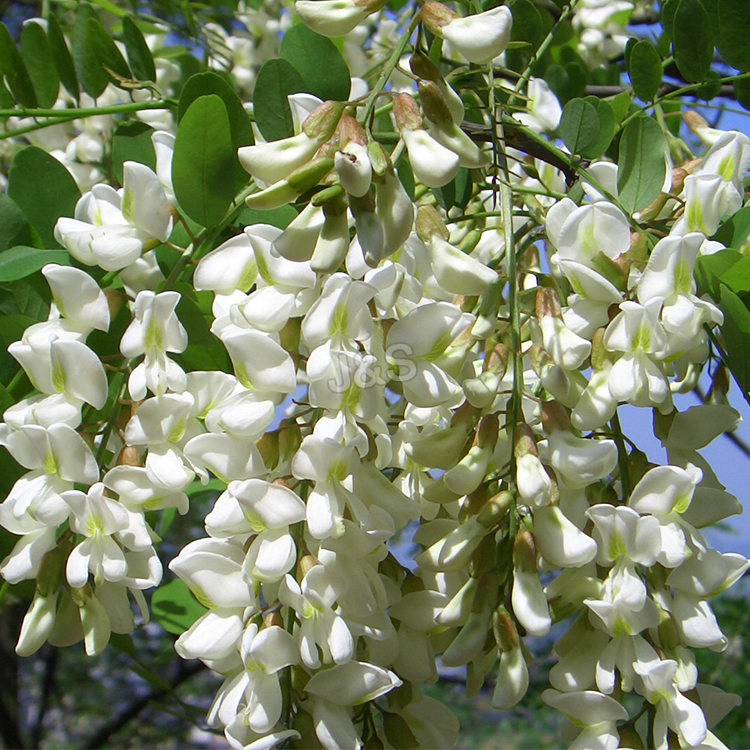
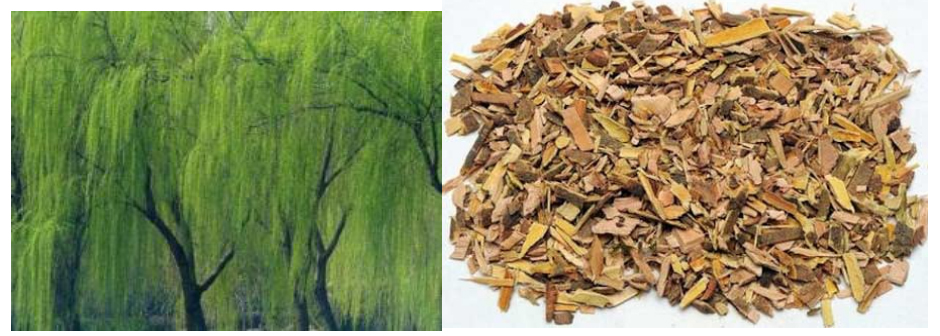
[Latin Name] Salix alba L.
[Plant Source] from China
[Specifications] Salicin 15-98%
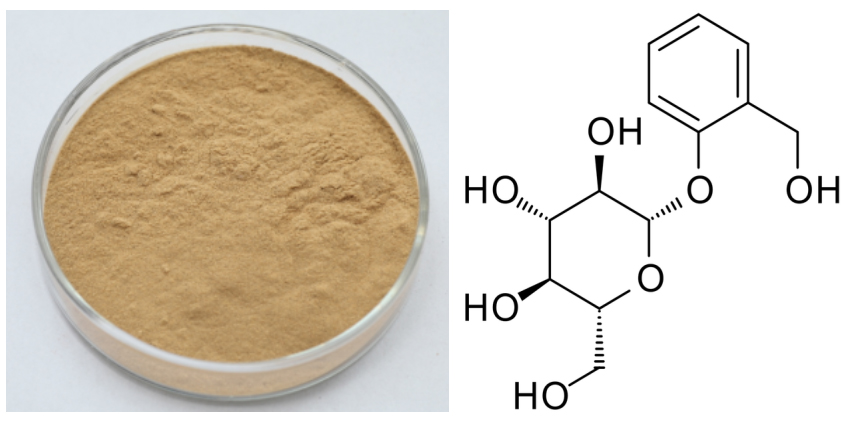
[Appearance] Yellow Brown to White powder
Plant Part Used: Bark
[Particle size] 80 Mesh
[Loss on drying] ≤5.0%
[Heavy Metal] ≤10PPM
[Storage] Store in cool & dry area, keep away from the direct light and heat.
[Shelf life] 24 Months
[Package] Packed in paper-drums and two plastic-bags inside.
[Net weight] 25kgs/drum
Brief Introduction
Salicin is a naturally occurring compound found in the bark of several species of trees, primarily North American in origin, that are from the willow, poplar, and aspen families. White willow, from whose Latin name, Salix alba, the term salicin is derived, is the most well known source of this compound, but it is found in a number of other trees, shrubs, and herbaceous plants as well being synthesized commercially. It is a member of the glucoside family of chemicals and is used as an analgesic and antipyretic. Salicin is used as a precursor for the synthesis of salicylic acid and acetylsalicylic acid, commonly known as aspirin.
A colorless, crystalline solid in its pure form, salicin has the chemical formula C13H18O7. Part of its chemical structure is equivalent to the sugar glucose, meaning it is classified as a glucoside. It is soluble, but not strongly so, in water and alcolhol. Salicin has a bitter taste and is a natural analgesic and antipyretic, or fever reducer. In large quantities, it can be toxic, and overdoses may lead to liver and kidney damage. In its raw form, it may be mildly irritating to skin, respiratory organs, and eyes.
Function
1. Salicin is used to ease pain and reduce inflammation.
2. Relieve acute and chronic pain, including headache, back and neck pain, muscle aches, and menstrual cramps; Control arthritis discomforts.
3. Relieve acute and chronic pain.
4. It has the same effect on the body as aspirin without any of the side effects.
5. It is an anti-inflammatory, a fever reducer, an analgesic, an anti-rheumatic, and an astringent. Specifically, it helps to relieve headaches.
Application
1.Anti-inflammatory, anti-rheumatic,
2.Reduce a fever,
3.Use as an analgesic and astringent,
4.Relieve headache,
5.Ease pain caused by rheumatism, arthritis, and carpal tunnel syndrome.
Product detail pictures:
Related Product Guide:
Our advancement depends over the highly developed devices, excellent talents and continually strengthened technology forces for Professional China White Willow Bark Extract Wholesale to India , The product will supply to all over the world, such as: Uganda, Austria, Liverpool, Corporate goal: Customers' satisfaction is our goal, and sincerely hope to establish long-terms stable cooperative relations with customers to jointly develop the market. Building brilliant tomorrow together!Our company regards "reasonable prices, efficient production time and good after-sales service" as our tenet. We hope to cooperate with more customers for mutual development and benefits. We welcome potential buyers to contact us.
Visit: https://star-buster.com/
With StarBuster on your side it can happen!
We have been a part of the professional research of human medicine for quite some time and have been recognized for our product excellence. This is why we have provided the ultimate solution for many men and revitalized their sexual health and confidence with the help of Star Buster ; an all-natural product with no harmful side effects that can solve the problems of low libido, erectile dysfunction and decreased sexual desire that are common with many men today.
Star Buster helps you overcome all these problems and let you experience the ultimate sexual experience ever and giving your partner the moment of a lifetime
What can Star-Buster do for you?
Prevent and stop Erectile Dysfunction
Prevent and stop Premature Ejaculation
Improve Potency and Fertility
Improve Sperm Quality and Promote Production
Enjoy Greater Sexual Pleasure and Orgasm
Revitalize your Sexual Desire with All-Natural Ingredients
Stevia grows best in upland areas in sub-tropical climate. In other places it can be grown as an annual. The plant prefers a lightly textured, well-drained soil to which matter has been added. It needs ample water so that the soil is consistently moist, but not wet. In hot, sunny climates it will do best in semi-shade. Propagation is from seed sown in spring, but germination rates can be low-expect half the seeds sown not to germinate. Plant seedlings out once all danger of frost is over. Leaves are best harvested just before flowering. The plants will also grow from cuttings,which are best taken in late winter.The concentration of stevioside in the leaves of Stevia increasing when the plants are grown under long day condition.While, cultivating stevia on a large scale, it can be grown in well-drained red soil and sandy loam soil. The soil should be in the pH range of 6.5-7.5. Saline soils should be avoided to cultivate this plant.
Stevia can be successfully cultivated all around the year all over India expect theareas, which receive snowfall, or temperatures go below 5 degree Celsius in winter.The summer temperatures actually do not affect this plant if the high summer temperatures have already been factored in the cultivation practices.Since seed germination rate is very poor,it is propagated vegetative. Though stem cuttings are used for vegetative tissue culture plants have proven to be the best planting material for Stevia. Tissue culture plants of Stevia are genetically pure, free from pathogens and haveexcellent vigor. The tissue culture plants can be planted throughout the year,expect during peak summer. An ideal planting density is 40,000 plants per acre with spacing of 25×40 cm in a raised bed system. The soil can be enriched with abasal dressing of 25 tons of well rotten farmyard manure/hectare
Soil Type
Stevia requires very good drainage any soil that retain the moisture for very long period of time are unsuitable for Stevia cultivation and should be religiously avoided.Red soil and sandy loam with a 6-7 pH are best for the cultivation of Stevia.
Raised bed preparation
Forming raised beds is the most economical way to grow Stevia. The raised bed should be of 15 cm in height and 60 cm in width. The distance between each plant 23 cm. This would give a plant population of around 40,000 per acre.
Planting Material
There are basically two options for multiplication. The first is the tissue culture and second the stem cutting. Tissue culture is the best option but many farmers are tempted to try the stem cutting method for multiplication. As per practical experience, stem cutting is sometimes more expensive to produce than the tissue culture since the success rate of the stem cuttings establishment is very low, it takes minimum of 25 weeks for the stem cutting to develop in proper feeding roots for transplantation (younger stem cuttings transplants have shown more than 50% mortality in first few weeks of transplants in main field).
Harvesting
Another important aspect of harvesting is the timing of harvest. It should be noted that at no point of time plants should be allowed to flower since after flowering the Stevioside percentage goes down rapidly and leaves are rendered unmarketable. Leaves are harvested by plucking in a small quantity, or the entire plant with the side branches is cut leaving 10 to 15 cm from the base.The first harvesting can be done four to five months after planting. Subsequent harvesting can be done every three months, for five consecutive years. The sweetener in the leaf is maximum till the plant flowers. Just before flowering, the plant should be cut completely leaving 10 cm from the ground. The new flush of leaves will sprout from here. The new plant will be ready for harvest again in three months. The plant yields around 3000 kg of dried leaves from an acre of plantation every year. Harvesting should be done as late as possible, since cool autumn temperatures and shorter days tend to intensify the sweetness of the plants as they evolve into a reproductive state.
Unlocking the sweetness in your harvest
Once all leaves have been harvested it’s required to dry them. This can be
accomplished on a net. The drying process is not one that requires excessive heat;more important is good air circulation. On a moderately warm fall day, stevia crop can be quick dried in the full sun in about 12 hours. (Drying times longer than that will lower the stevioside content of the final product.)
Crushing the dried leaves is the final step in releasing stevia’s sweetening power. The
dried leaves are powdered, sieved and the fine powder is stored in containers. This can be done either by hand or, for greater effect, in a coffee grinder or in a special blender for herbs.
Web: https://www.natureherbs.org | www.natureherbs.co
Email : natureherbs@ymail.com
Watsapp: +91 841 888 5555
Skype: nature.herbs
 By Janet from venezuela - 2018.07.27 12:26
High production efficiency and good product quality, fast delivery and completed after-sale protection, a right choice, a best choice.
By Erica from Poland - 2018.06.21 17:11