Quality Inspection for Red clover extract in Vancouver


Product Detail

Product Tags

Related Video

Feedback (2)

"Quality initial, Honesty as base, Sincere support and mutual profit" is our idea, so as to build repeatedly and pursue the excellence for Phytosterols Definition, Best Yohimbe, 5 Htp Uses, Our ultimate goal is to rank as a top brand and to lead as a pioneer in our field. We are sure our successful experience in tool production will win customer's trust, Wish to co-operate and co-create a better future with you!
Quality Inspection for Red clover extract in Vancouver Detail:

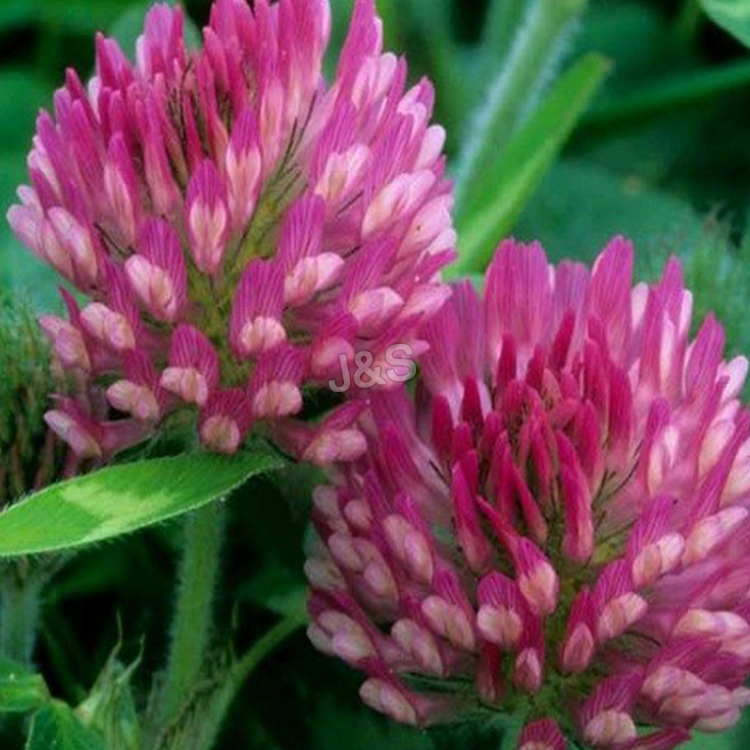
[Latin Name] Trifolium pratensis L.

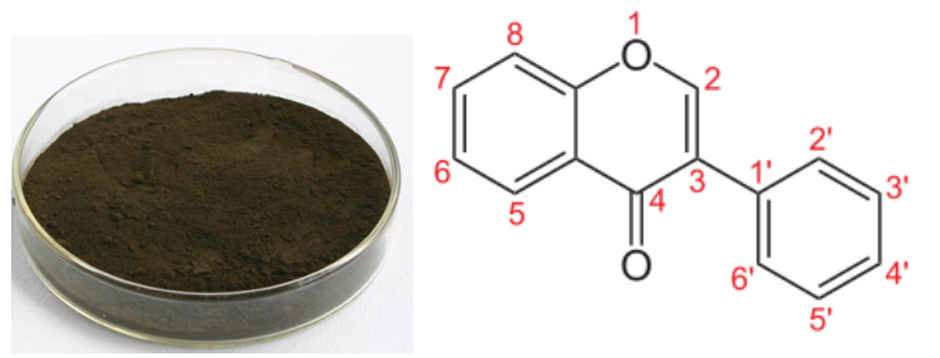
[Specification] Total isoflavones 20%; 40%; 60% HPLC

[Appearance] Brown to tan fine powder

Plant Part Used: Whole herb

[Particle size] 80Mesh

[Loss on drying] ≤5.0%

[Heavy Metal] ≤10PPM

[Storage] Store in cool & dry area, keep away from the direct light and heat.

[Shelf life] 24 Months

[Package] Packed in paper-drums and two plastic-bags inside.

[Net weight] 25kgs/drum
Red clover extract11

[What is Red Clober]

Red clover is a member of the legume family – the same class of plants where we find chickpeas and soybeans. Red clover extracts are used as dietary supplements for their high content of isoflavone compounds – which possess weak estrogenic activity and have been associated with a variety of health benefits during menopause (reduction of hot flashes, promotion of heart health and maintenance of bone density).
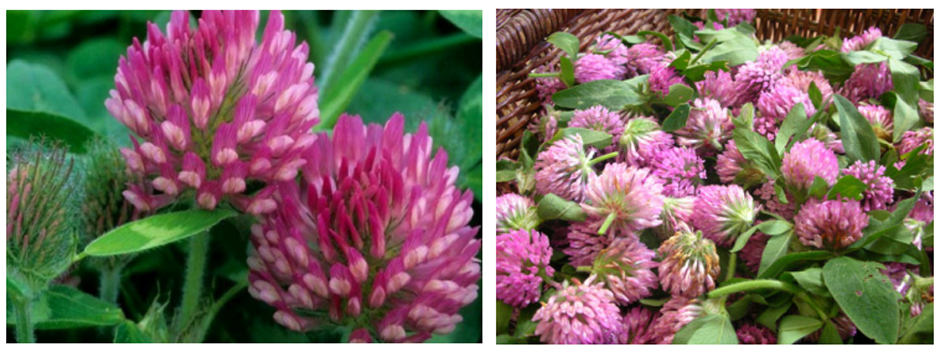
Red clover extract1221

[Function]

1. Red Clover Extract can Improving health, anti-spasm, known for healing properties.

2. Red Clover Extract can Treating the skin diseases (such as eczema, burns, ulcers, psoriasis),

3. Red Clover Extract can Treating respiratory discomfort (such as asthma, bronchitis, intermittent cough)

4. Red Clover Extract can Owning anti-cancer activity and prevention of prostate disease.

5. Red Clover Extract can Most valuable of its estrogen-like effect and alleviate breast pain suffering.

6. Red Clover Extract can Contained red clover isoflavones plays in a weak estrogen, estrogen reduces the number and thusalleviate the suffering.

7. Red Clover Extract can Maintaining bone mineral density in postmenopausal women

8. Red Clover Extract can Raising high density lipoprotein cholesterol.


Product detail pictures:

Quality Inspection for Red clover extract in Vancouver detail pictures


Related Product Guide:

We consistently carry out our spirit of ''Innovation bringing development, Highly-quality ensuring subsistence, Management promoting benefit, Credit attracting customers for Quality Inspection for Red clover extract in Vancouver , The product will supply to all over the world, such as: Mexico, Costa rica, Yemen, We have more than 8 years of experience in this industry and have a good reputation in this field. Our products have won praise from customers worldwide. Our aim is to help customers realize their goals. We are making great efforts to achieve this win-win situation and sincerely welcome you to join us.


  • Stevia grows best in upland areas in sub-tropical climate. In other places it can be grown as an annual. The plant prefers a lightly textured, well-drained soil to which organic matter has been added. It needs ample water so that the soil is consistently moist, but not wet. In hot, sunny climates it will do best in semi-shade. Propagation is from seed sown in spring, but germination rates can be low-expect half the seeds sown not to germinate. Plant seedlings out once all danger of frost is over. Leaves are best harvested just before flowering. The plants will also grow from cuttings,which are best taken in late winter.The concentration of stevioside in the leaves of Stevia increasing when the plants are grown under long day condition.While, cultivating stevia on a large scale, it can be grown in well-drained red soil and sandy loam soil. The soil should be in the pH range of 6.5-7.5. Saline soils should be avoided to cultivate this plant.

    Stevia can be successfully cultivated all around the year all over India expect theareas, which receive snowfall, or temperatures go below 5 degree Celsius in winter.The summer temperatures actually do not affect this plant if the high summer temperatures have already been factored in the cultivation practices.Since seed germination rate is very poor,it is propagated vegetative. Though stem cuttings are used for vegetative tissue culture plants have proven to be the best planting material for Stevia. Tissue culture plants of Stevia are genetically pure, free from pathogens and haveexcellent vigor. The tissue culture plants can be planted throughout the year,expect during peak summer. An ideal planting density is 40,000 plants per acre with spacing of 25×40 cm in a raised bed system. The soil can be enriched with abasal dressing of 25 tons of well rotten farmyard manure/hectare

    Soil Type
    Stevia requires very good drainage any soil that retain the moisture for very long period of time are unsuitable for Stevia cultivation and should be religiously avoided.Red soil and sandy loam with a 6-7 pH are best for the cultivation of Stevia.

    Raised bed preparation
    Forming raised beds is the most economical way to grow Stevia. The raised bed should be of 15 cm in height and 60 cm in width. The distance between each plant 23 cm. This would give a plant population of around 40,000 per acre.

    Planting Material
    There are basically two options for multiplication. The first is the tissue culture and second the stem cutting. Tissue culture is the best option but many farmers are tempted to try the stem cutting method for multiplication. As per practical experience, stem cutting is sometimes more expensive to produce than the tissue culture since the success rate of the stem cuttings establishment is very low, it takes minimum of 25 weeks for the stem cutting to develop in proper feeding roots for transplantation (younger stem cuttings transplants have shown more than 50% mortality in first few weeks of transplants in main field).

    Harvesting
    Another important aspect of harvesting is the timing of harvest. It should be noted that at no point of time plants should be allowed to flower since after flowering the Stevioside percentage goes down rapidly and leaves are rendered unmarketable. Leaves are harvested by plucking in a small quantity, or the entire plant with the side branches is cut leaving 10 to 15 cm from the base.The first harvesting can be done four to five months after planting. Subsequent harvesting can be done every three months, for five consecutive years. The sweetener in the leaf is maximum till the plant flowers. Just before flowering, the plant should be cut completely leaving 10 cm from the ground. The new flush of leaves will sprout from here. The new plant will be ready for harvest again in three months. The plant yields around 3000 kg of dried leaves from an acre of plantation every year. Harvesting should be done as late as possible, since cool autumn temperatures and shorter days tend to intensify the sweetness of the plants as they evolve into a reproductive state.

    Unlocking the sweetness in your harvest
    Once all leaves have been harvested it’s required to dry them. This can be
    accomplished on a net. The drying process is not one that requires excessive heat;more important is good air circulation. On a moderately warm fall day, stevia crop can be quick dried in the full sun in about 12 hours. (Drying times longer than that will lower the stevioside content of the final product.)
    Crushing the dried leaves is the final step in releasing stevia’s sweetening power. The
    dried leaves are powdered, sieved and the fine powder is stored in containers. This can be done either by hand or, for greater effect, in a coffee grinder or in a special blender for herbs.

    Web: https://www.natureherbs.org | www.natureherbs.co
    Email : natureherbs@ymail.com
    Watsapp: +91 841 888 5555
    Skype: nature.herbs


    Get your free audio book:

    https://onix.space/e/b00hpur27m

    Plant Polysaccharides, an exceptional new volume in Wiley-blackwells successful Annual Plant Reviews series, covers the polysaccharides and proteins that form the fundamental architecture of the plant cell wall, and the genes that encode the cellular machinery that synthesizes them. The volume focuses on the evolution of the many families of genes whose products are required to make a particular kind of polysaccharide, bringing attention to the specific biochemical properties of the proteins to the level of kinds of sugar linkages they make. Beautifully illustrated in full colour throughout, this exceptional new volume provides cutting edge up-to-date information on such important topics as cell wall biology, composition and biosynthesis, glycosyltransferases, hydroxyproline-rich glycoproteins, enzymatic modification of plant cell wall polysaccharides, glycan engineering in transgenic plants, and polysaccharide nanobiotechnology. Drawing together some of the worlds leading experts in these areas, the editor, Peter Ulvskov, has provided a landmark volume that is essential reading for plant and crop scientists, biochemists, molecular biologists and geneticists. All libraries in universities and research establishments where plant sciences, agriculture, biological, biochemical and molecular sciences are studied and taught should have copies of this important volume.

    It is a very good, very rare business partners, looking forward to the next more perfect cooperation!
    5 Stars By ROGER Rivkin from Georgia - 2017.05.02 11:33
    Company director has very rich management experience and strict attitude, sales staff are warm and cheerful, technical staff are professional and responsible,so we have no worry about product,a nice manufacturer.
    5 Stars By Renata from Sri Lanka - 2018.09.08 17:09
    Write your message here and send it to us