Renewable Design for Green tea extract Factory for Bulgaria
Renewable Design for Green tea extract Factory for Bulgaria Detail:
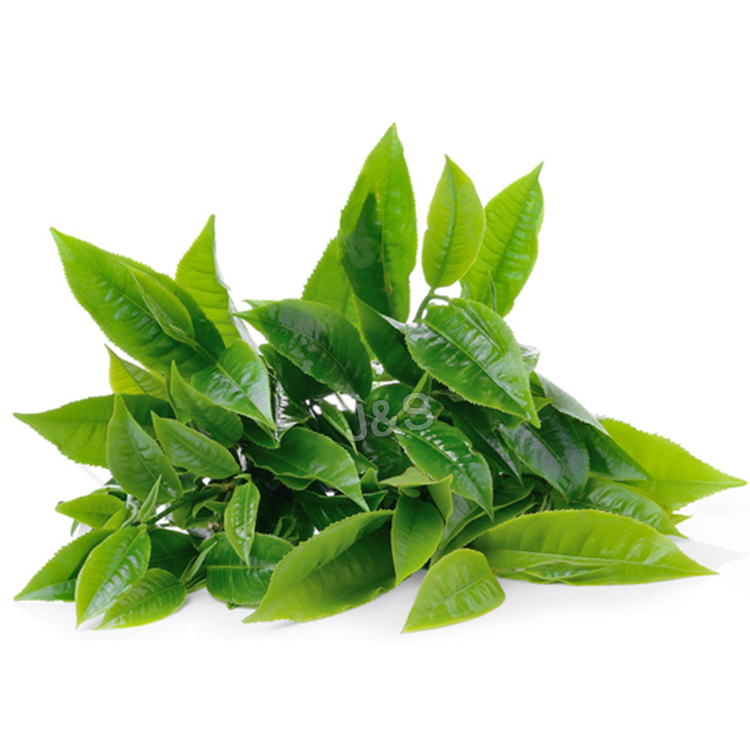
[Latin Name] Camellia sinensis
[Plant Source] China
[Specifications]
Total tea polyphenols 40%-98%
Total catechins 20%-90%
EGCG 8%-60%
[Appearance] Yellow brown powder
[Plant Part Used] Green tea leaf
[Particle size] 80 Mesh
[Loss on drying] ≤5.0%
[Heavy Metal] ≤10PPM
[Storage] Store in cool & dry area, keep away from the direct light and heat.
[Package] Packed in paper-drums and two plastic-bags inside.
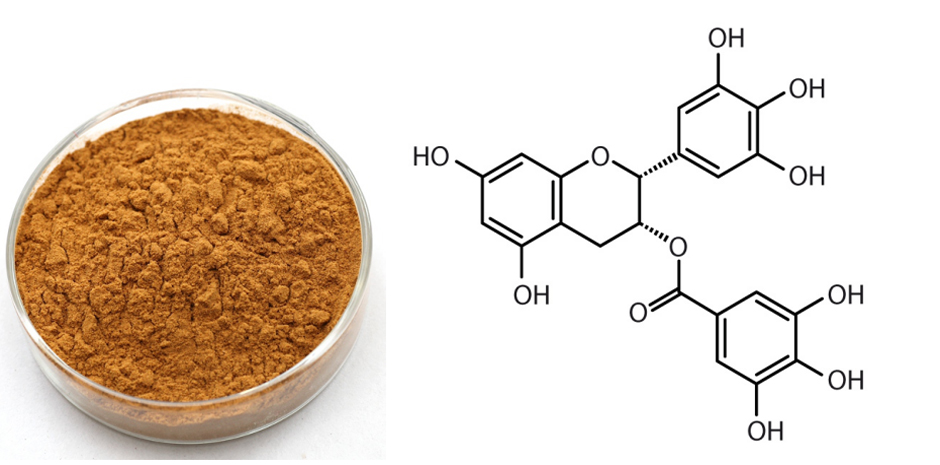
[What is green tea extract]
Green tea is the second largest beverage demanded by consumers worldwide. Used in China and India for its medicinal effects. There are several compounds extracted from green tea including catechins which contain an enormous amount of hydroxyphenols that are easily oxidized, congregated and contracted, which explains its good anti-oxidation effect. Its anti-oxidation effect is 25-100 times as strong as those of vitamin C and E.
It is widely used in medicines, agriculture, and chemical and food industries. This extract prevents cardio-vascular disease, lowers the risk of cancer, and decreases blood sugar and blood pressure, as well as viruses. In the food industry, the anti-oxidation agent used for preserving food and cooking oils.
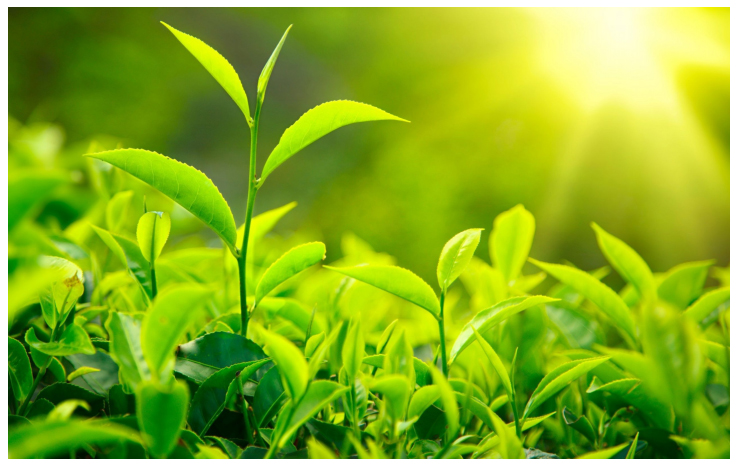
[Function]
1. Green tea extract can reduce blood pressure, blood sugar, blood lipids.
2. Green tea extract has the function of removing radicals and anti-aging.
3. Green tea extract can enhance the immune function and prevention of colds.
4. Green tea extract will anti-radiation,anti-cancer, inhibiting the increasing of cancer cell.
5. Green tea extract used to anti-bacterium, with the function of sterilization and deodorization.
[Application]
1.Applied in cosmetics field, Green tea extract owns the effect of anti-wrinkle and anti-Aging.
2.Applied in food field, Green tea extract is used as natural antioxidant, antistaling agent, and anti-fading agents.
3.Applied in pharmaceutical field, Green tea extract is used to prevent and cure cardiovascular disease, diabetes.
Product detail pictures:
Related Product Guide:
Good quality comes initial; company is foremost; small business is cooperation" is our business philosophy which is frequently observed and pursued by our business for Renewable Design for Green tea extract Factory for Bulgaria , The product will supply to all over the world, such as: Mozambique, Bahamas, Moldova, We guarantee that our company will try our best to reduce customer purchase cost , shorten the period of purchase , stable products quality , increase customers' satisfaction and achieve win-win situation .
Buy one, get one Lipstick offer: https://shrsl.com/?~9hsh
Buy one, get one Eyeshadow offer: https://shrsl.com/?~9hsn
2nd Buy one, get one Eyeshadow offer: https://shrsl.com/?~9hwd
Sale is available only to those that register and is open from July 9th 10AM CST – July 12th 10PM CST! Get these amazing new colors before anyone else!
New Summer 2015 Colors!
Lipglosses in the original formula:
Tiny Dancer
S.W.A.K.
LipGLosses – Amor Caliente, Metropolis, Diamond Sands
(net wt. .17 oz/ 5g)
Ricinus Communis, Euphorbia Cerifera, Butyrospermum Parkii (Shea) Butter, Simmondsia Chinensis (Jojoba) Seed Oil, Aloe Barbadensis, Roman Anthemis Nobilis (Chamomile) Extract, Citrus Grandis (Grapefruit) Extract, Essence of Vanilla, May Contain: Titanium Dioxide, Hypericum Perforatum (St. John’s Wort) Extract, Mica, Iron Oxides
Lipsticks in X Formula:
Beachside
Firecracker
Twist N’ Pout
Risqué
LIPSTICKS – X-SERIES. – New York, Rebel, Drama, Naughty
Ricinus Communis, Citric Acid, Caprylic/Capric Triglyceride, Silica, Butyrospermum Parkii (Shea) Butter, Copercnicia Cerifera (Carnauba) Wax, Bis-Diglyceryl Polyacyladipate-2, Euphorbia Cerifera (Candelilla) Wax, Persea Gratissima (Avocado) Oil, Simmondsia Chinensis (Jojoba) Seed Oil, Gluten Free Tocopheryl Acetate, May Contain Titanium Dioxide CI 77891,Mica CI 77019, Manganese Violet CI 77742, Iron Oxides CI 77489, CI 77491, CI 77492, CI 77499
Lipsticks in Instant Color Formula:
Petal to the Metal
Unpinkable
LIPSTICKS INSTANT COLOR FORMULA – Coral Crush, Hibiskiss, Oh My Guava, Push Pop, Sweet Pea, Fierce, Barcelona, Reddish Fettish, Swoon, Ravishing, Cranberry Magic, Mix & Mingle, Pinkle Twinkle, Firefly, Brazilliant, Sweet Coraline, Petal Rebel, Mayberry, Maven Mauve, Kiss On The Chic
Helianthus Annus – 100% pure cold pressed, Euphorbia Cerifera (Candelilla) Wax, Butyrospermum Parkii, Synthetic Beeswax, All Natural Gluten Free – Soy Free – Corn Free Vitamin E Tocopheryl Acetate, May Contain: Titanium Dioxide ,Manganese Violet, Mica, Iron Oxide.
****Giveaway Info and Rules (CLOSED – Winner is kateliness2)****
1. Must be subscribed to my channel
2. Must be over 18
3. Comment below what your favorite color on me was, and what color is your personal favorite below.
4. Winner will be picked by a random generator and posted in the description of this video on July 12th (1 week entry) as well as private message.
My Info:
My e-mail: crueltyfreeveganbeauty@gmail.com
Follow me on Instagram @crueltyfreeveganbeauty
Lets be friends on Goodreads! https://www.goodreads.com/user/show/5855581-danielle
iHerb Discount Code: https://www.iherb.com?rcode=KBH495 to receive up to $10 off your first order!
Spa Heros Referral Link: https://shop.spaheroes.com/refer/Danie-USUJMULI
Joppa Minerals Code: https://r.sloyalty.com/r/tBl0XhBoBmKl to get $10 off your first order from Joppa Minerals!
https://www.humnutrition.com/products – Discounts for HUM below.
Take the get started quiz for $10 off your first order. And also use code F7B62 to get an additional $10 off your order, and I also get $10 off my next order when you use this code!
***Red Apple Lipstick Summer collection sent for consideration. All opinions are honest and my own. Some links are affiliate links.***
These delicious curried potato patties have a great-tasting yoghurt and cumin sauce (RECIPE BELOW). Enjoy them with a tasty zucchini salad or turn them into a burger with a crusty roll and salad. Freeze any leftover patties so you have some on hand.
SUBSCRIBE
Get 2-3 brand new videos every week (TUE, THU, FRI), including recipes, kitchen hacks and handy cooking tips to help you feed your family and friends: https://goo.gl/msa4kR
CURRIED POTATO PATTIES WITH ZUCCHINI SALAD
Serves 4 Prep 20 mins Cooking 20 mins
600g brushed potatoes, peeled, chopped
¼ cup (60ml) olive oil
1 brown onion, finely chopped
1 tsp Keen’s Traditional Curry Powder
400g can Coles Lentils, rinsed, drained
1 zucchini, cut into thin strips lengthways
²⁄³ cup (190g) Coles Natural Yoghurt
1 tsp Coles Ground Cumin Seeds
120g pkt Coles Australian 4 Leaf Salad
1. Cook the potato in a saucepan of boiling water until tender. Drain well. Return to pan. Use a potato masher or fork to mash until almost smooth.
2. Meanwhile, heat 1 tbs of the oil in a medium frying pan over medium heat. Add the onion. Cook, stirring, for 2-3 mins or until onion softens and colours slightly. Add the curry powder and cook for 30 secs. Add the lentils and toss to combine. Remove from heat.
3. Heat a large frying pan over high heat. Add half the zucchini and cook for 1 min each side or until tender. Repeat with remaining zucchini. Set aside to cool.
4. Add lentil mixture to mash and combine. Divide mixture into 8 portions. Shape each portion into a patty, pressing firmly to shape. Heat 1 tbs of remaining oil in a frying pan over medium heat. Cook patties, in batches, for 2-3 mins each side or until golden brown and heated through.
5. Combine yoghurt and cumin in a bowl. Combine the zucchini, salad leaves and remaining oil in a bowl. Serve patties and salad drizzled with yoghurt mixture.
WATCH MORE
Want more delicious dinner ideas? Check out our Feed Your Family playlist: https://www.youtube.com/playlist?list=PL8rYS6B-sVuJZcgew9_jUhsDLS6SqwqYT, which includes the following vegetarian options:
Quick & easy broad bean falafel salad
How to make easy zucchini slice
Cauliflower steaks
4 ingredient easy pumpkin soup
How to make lemon & fetta loaded fries
More AT HOME WITH COLES videos | https://www.youtube.com/coles
Shop online with Coles | https://www.shop.coles.com.au
More recipes on Facebook | https://www.facebook.com/coles
Follow us on Twitter | https://twitter.com/coles
More great recipes | https://www.taste.com.au/coles
 By Grace from Iran - 2018.06.03 10:17
This supplier offers high quality but low price products, it is really a nice manufacturer and business partner.
By Jenny from Slovak Republic - 2017.11.29 11:09