Wholesale Dealers of Astaxanthin Factory from Congo
Wholesale Dealers of Astaxanthin Factory from Congo Detail:
[Latin Name] Haematococcus Pluvialis
[Plant Source] from China
[Specifications]1% 2% 3% 5%
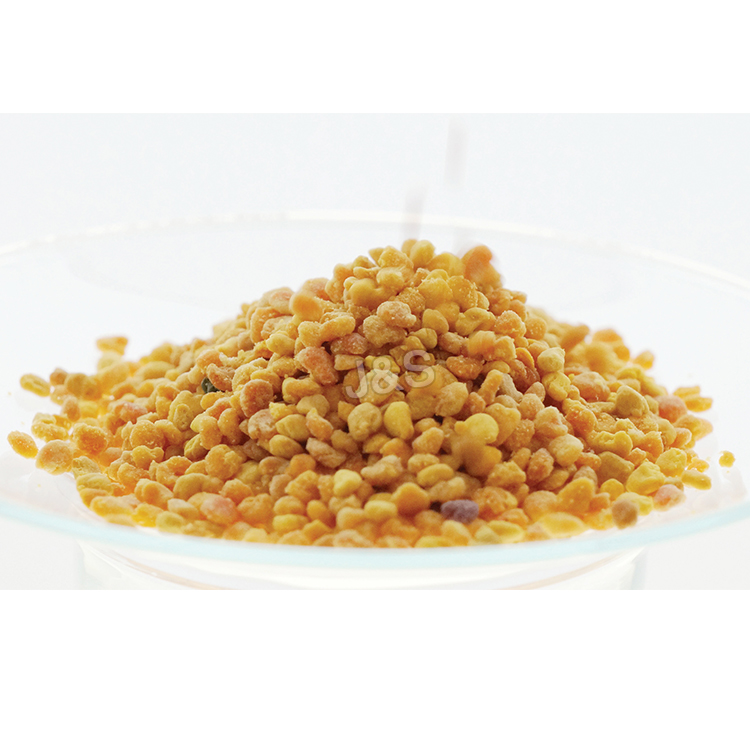
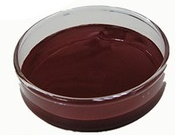
[Appearance] Dark red Powder
[Particle size] 80 Mesh
[Loss on drying] ≤5.0%
[Heavy Metal] ≤10PPM
[Storage] Store in cool & dry area, keep away from the direct light and heat.
[Shelf life] 24 Months
[Package] Packed in paper-drums and two plastic-bags inside.
[Net weight] 25kgs/drum
Brief Introduction
Astaxanthin is a natural nutritional component, it can be found as a food supplement. The supplement is intended for human, animal, and aquaculture consumption.
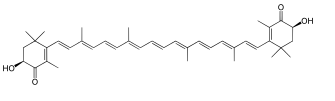
Astaxanthin is a carotenoid. It belongs to a larger class of phytochemicals known as terpenes, which are built from five carbon precursors; isopentenyl diphosphate and dimethylallyl diphosphate . Astaxanthin is classified as a xanthophyll (originally derived from a word meaning “yellow leaves” since yellow plant leaf pigments were the first recognized of the xanthophyll family of carotenoids), but currently employed to describe carotenoid compounds that have oxygen-containing moities, hydroxyl or ketone , such as zeaxanthin and canthaxanthin. Indeed, astaxanthin is a metabolite of zeaxanthin and/or canthaxanthin, containing both hydroxyl and ketone functional groups. Like many carotenoids, astaxanthin is a colorful, lipid-soluble pigment. This colour is due to the extended chain of conjugated (alternating double and single) double bonds at the centre of the compound. This chain of conjugated double bonds is also responsible for the antioxidant function of astaxanthin (as well as other carotenoids) as it results in a region of decentralized electrons that can be donated to reduce a reactive oxidizing molecule.
Function:
1.Astaxanthin is a powerful antioxidant and may protect against oxidative damage to body tissues.
2.Astaxanthin can improve the immune response by increasing the number of antibody producing cells.
3.Astaxanthin is a potential candidate to treat neurodegenerative disease such as Alzhimer and Parkinson diease.
4.Astaxanthin dan reduce UVA-light damage to skin such as sunburn, inflammation, ageing and skin cancer.
Application
1.When applied in pharmaceutical field, astaxanthin powder has the good function of antineoplastic;
2.When applied in health food field, astaxanthin powder is used as food additives for pigment and health care;
3.When applied in cosmetic field, astaxanthin powder has the good function of antioxidant and anti-aging;
4.When applied in animal feeds field, astaxanthin powder is used as animal feed additive to impart coloration, including farm-raised salmon and egg yolks.
Product detail pictures:
Related Product Guide:
We always think and practice corresponding to the change of circumstance, and grow up. We aim at the achievement of a richer mind and body and the living for Wholesale Dealers of Astaxanthin Factory from Congo , The product will supply to all over the world, such as: Serbia, Oman, Serbia, Our stock have valued 8 million dollar , you can find the competitive parts within short delivery time. Our company is not only your partner in business, but also our company is your assistant in the coming corporation.
With vitamins and beta-carotenes, antioxidants and alkaloids, and host of astringent properties, the herb eyebright has been used in medicine for centuries. But there is one particular area in which this herb has been the undisputed leader, which is, as its very name makes it apparent, in the treatment and prevention of a significant number of ailments related to the eye. In fact, it is often considered to be the best antidote for any eye related disorder. But because it has a wide range of beneficial compounds eyebright can and is also used to treat a host of other common ailments. However, caution is advised when using eyebright, especially when using it on the eye, as sometimes it can lead to some side effects. Eyebright, unlike a majority of herbs, bears beautiful flowers and so can be cultivated as beautiful garden plants. Even the petals of its flowers can provide excellent medicinal benefits. To know more on what all benefits that you can find from this herb continue pursuing this article.
Benefits Of Eyebright
•It is used to treat the inflammation of the eyes. Various types of eye inflammation like ophthalmia, blepharitis, and stye can be effectively treated by using an eyebright tea as a compress. To make this tea, boil one teaspoon of eyebright herb in one and a half cup of water for ten minutes. Then drain the leaves using a fine strainer and allow the tea to cool. Take a cotton pad and dampen it in the tea and put it on the eye three to four times every day.
•Other eye ailments like conjunctivitis, weeping eye, cataracts, blood shot and strained eyes can be alleviated by washing the eyes with an eyebright tincture. Take two cups of cool water and add five to eight drops of eyebright tincture. You can also boil one teaspoon of eyebright herb in one and a half cup of water. Now strain the liquid in a bowl of rose water. Every four hours wash the eyes with this solution to control the symptoms of eye infection.
•Eyebright is known for its antibacterial and astringent properties. Therefore eyebright can also be used to treat acne and skin irritation. The best way to relieve skin problems is to wash the skin with eyebright tea or apply it on the skin as a poultice. Crush two handfuls of eyebright leaves and flower petals and apply it on the skin. Leave it for twenty minutes and then remove. Wash the skin in the morning. You can also wash the skin with a cotton pad soaked in eyebright tea or tincture. Eyebright oil makes for an excellent face moisturizer that can be applied at night and washed off in the morning.
•Eyebright can also be used to treat various allergies and respiratory problems like cold, cough, stuffy nose and sinusitis. This is because eyebright contains the natural astringent tannins which tighten the mucus membrane. The herb is also rich in flavonoids that defend the body against such ailments. When suffering from problems like these it is recommended to take eyebright tea two to three times a day until the symptoms subside.
•Another important benefit of eyebright is that it can improve the cognitive performance and memory. Since eyebright contains flavanoids and beta-carotene, a regular dose of eyebright tea or powder can improve gradual memory loss.
•Eyebright tea or tincture can help detoxify the liver and protect it from damage if taken regularly. However, this herb should not be taken as a solution to alcoholism. Liver damage through alcohol can only be treated with this herb only if alcohol is avoided and a proper diet is taken.
The article on eyebright benefits will give you all the information related this wonderful herb. Include it in your day to day living and make the most out of it!
a
Ancient Healing Benefits of Frankincense
Tradition tells us that, in Babylon, nearly 60,000 pounds of frankincense burned annually for its aromatics and its role in rituals. Later, we see the Magi bringing frankincense along with gold and myrrh to the infant Jesus. More than a costly, fragrant gift, the ancient healing benefits of frankincense are well documented and have made this tree resin famous today.
Ayurvedic medicine, in practice for centuries, uses frankincense (referred to as “dhoop” and it use as “dhoopan”) for wound healing, female hormonal issues, arthritis, and air purification. In many cultures – including Somali, Ethiopian, Arabian, and Indian – frankincense has daily uses. Burning it in the house is said to bring good health, and burning it in the evening is meant to purify the home and the residents’ clothing.
Properties of Frankincense
Frankincense (Boswellia carterii, Boswellia serrata, and the other Boswellia species), as with all plants and their essential oils, carries many different molecules with different purposes. Some stand out as prominent in certain substances, as is the case with boswellic acids (BAs) in frankincense. Although there is some debate whether or not BA is too large a compound to survive conventional essential oil filtration systems, there are studies in the literature that claim they are indeed part of frankincense oil
Nonetheless, the healing benefits of frankincense have traditionally centered on disease prevention and anti-inflammatory properties, and researchers have been able to confirm that boswellic acids contain a potent ability to modify the immune system as well. Part of having a more efficient immune system is the regulation of inflammation, as well, which can have effects topically or systemically.
Another promising property is the proposed frankincense cancer cure that we’ve read so much about in the past few years. In several studies, frankincense has demonstrated anti-cancer properties and the ability to mitigate many different kinds of cancer cells. As more studies are conducted, the implications of this ability will be exciting to watch unfold!
The jury is still out as to the exact mechanism(s) explaining why frankincense essential oil is so beneficial to cancer patients. However, advances in recent research suggest that Beta-elemene – a cancer fighting terpene found in frankincense and myrrh with the ability to cross the blood brain barrier – may be partly responsible.
As stated by the Memorial Sloan Kettering Cancer Center,
“Beta-elemene is a compound found in plants such as celery, mint, and in many others used in traditional medicine. Although the pure form is not used as dietary supplement, some cancer patients use herbs high in beta-elemene as treatment. Beta-elemene was shown to prevent growth of cancer cells in laboratory cells by different mechanisms. A few poorly designed studies done in humans showed that it may improve quality of life in cancer patients. It is unclear if raw herbs containing beta-elemene have the same effects in humans. More research is needed.”
Some even suggest that the amount of β-elemene that frankincense and myrrh contain could very well explain why so many people claim that both oils have been instrumental to them beating cancer God’s way.
At the end of the day, once we know the basic properties of an herb, root and resin we are able to determine the best ways to utilize it. Let’s take a closer look at what the components of frankincense mean for our daily lives…
1. Boosting the Immune System
The immune system is intricate and amazing, interacting with every system of the body to prevent and fight disease. One of the primary mechanisms of the immune system is the influx of white blood cells, or lymphocytes, the main defense method that the body has. Inflammation is another component of the immune system, but in an unhealthy body, it goes overboard and becomes problematic.
By studying the way that frankincense affects the immune system in mice, we have an idea of its interaction with our own immune response. In Phytotherapy Research, the results of this study were noted to include:
Cytokine production
Slowed hypersensitivity
Increased immunoglobins
Improved T-cell interactions
The bottom line is that multiple areas of the immune system are regulated under the influence of frankincense.
2. Fighting Pain and Inflammation
The beauty of immunomodulators is that they can stimulate an under-productive immune system that allows illness to creep in, while also relaxing an over-productive immune system that attacks itself or benign substances with inflammation, often becoming painful, chronic, and debilitating.
 By Jonathan from Poland - 2018.09.21 11:01
Perfect services, quality products and competitive prices, we have work many times, every time is delighted, wish continue to maintain!
By Bertha from UAE - 2017.08.28 16:02