13 Years Factory wholesale Phytosterol Manufacturer in Swaziland
13 Years Factory wholesale Phytosterol Manufacturer in Swaziland Detail:
[Latin Name] Glycine max(L.) Mere
[Specification] 90%; 95%
[Appearance] White powder
[Melting point] 134-142℃
[Particle size] 80Mesh
[Loss on drying] ≤2.0%
[Heavy Metal] ≤10PPM
[Storage] Store in cool & dry area, keep away from the direct light and heat.
[Shelf life] 24 Months
[Package] Packed in paper-drums and two plastic-bags inside.
[Net weight] 25kgs/drum
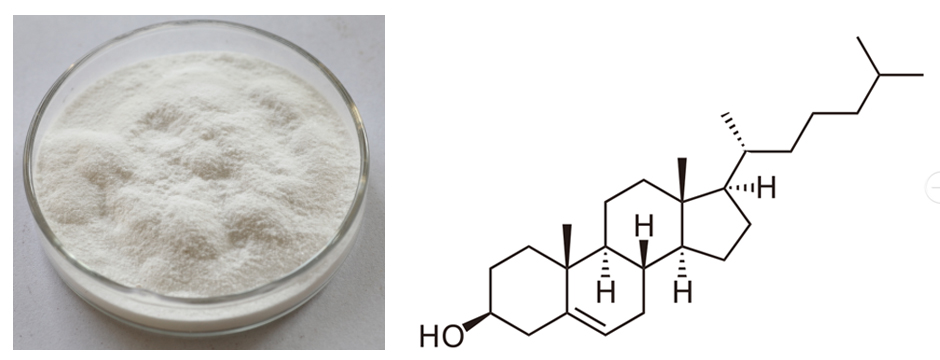
[What is Phytosterol?]
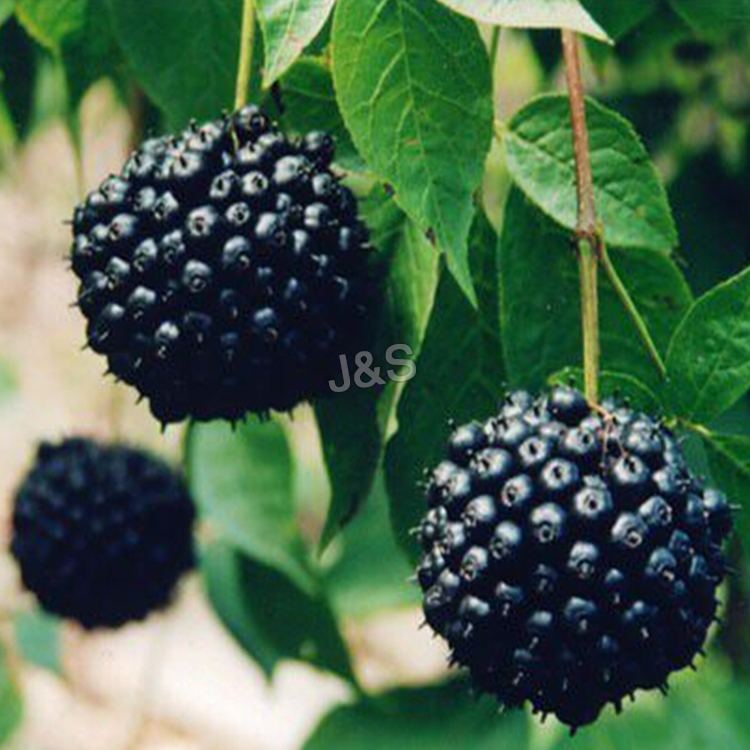
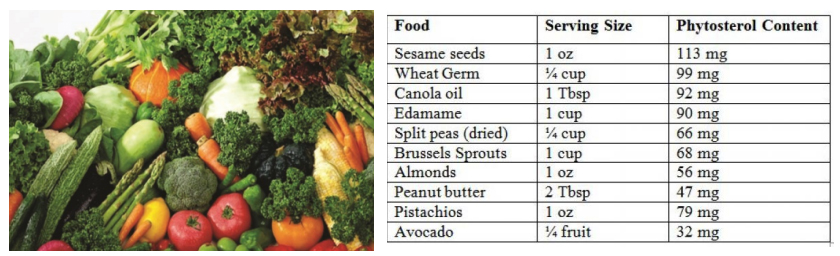
Phytosterols are compounds found in plants that resemble cholesterol. The National Institutes of Heath report that there are over 200 different phytosterols, and the highest concentrations of phytosterols are found naturally in vegetable oils, beans and nuts. Their benefits are so recognized that foods are being fortified with phytosterols. At the supermarket, you may see orange juice or margarine advertising phytosterol contents. After reviewing the health benefits, you may want to add phytosterol-rich foods to your diet.
[Benefits]
Cholesterol-Lowering Benefits
The most well-known, and scientifically proven, benefit of phytosterols is their ability to help lower cholesterol. A phytosterol is a plant compound that is similar to cholesterol. A study in the 2002 issue of “Annual Review of Nutrition” explains that phytosterols actually compete for absorption with cholesterol in the digestive tract. While they prevent the absorption of regular dietary cholesterol, they themselves are not easily absorbed, which leads to a total lower cholesterol level. The cholesterol-lowering benefit does not end with a good number on your blood work report. Having lower cholesterol leads to other benefits, such as a reduced risk for heart disease, stroke and heart attacks.
Cancer Protection Benefits
Phytosterols have also been found to help protect against the development of cancer. The July 2009 issue of the” European Journal of Clinical Nutrition” offers encouraging news in the fight against cancer. Researchers at the University of Manitoba in Canada report that there is evidence that phytosterols help prevent ovarian, breast, stomach and lung cancer. Phytosterols do this by preventing the production of cancer cells, stopping the growth and spread of cells that are already in existence and actually encouraging the death of cancer cells. Their high anti-oxidant levels are believed to be one way phytosterols help fight cancer. An anti-oxidant is a compound that fights free radical damage, which is negative effects on the body produced by cells that are unhealthy.
Skin Protection Benefits
A lesser known benefit of phytosterols involves skin care. One of the contributing factors in the aging of the skin is the breakdown and loss of collagen — the main component in connective skin tissue — and sun exposure is a major contributor to the problem. As the body ages, it is not able to produce collagen as it once did. The German medical journal “Der Hautarzt” reports a study in which various topical preparations were tested on skin for 10 days. The topical treatment that showed anti-aging benefits to the skin was the one that contained phytosterols and other natural fats. It is reported that phytosterols not only stopped the slow-down of collagen production that can be caused by the sun, it actually encouraged new collagen production.
Product detail pictures:
Related Product Guide:
The very rich projects management experiences and one to one service model make the high importance of business communication and our easy understanding of your expectations for 13 Years Factory wholesale Phytosterol Manufacturer in Swaziland , The product will supply to all over the world, such as: Johannesburg, Dubai, Mali, Our company is continuing to serve customers with high quality, competitive price and timely delivery. We sincerely welcome friends from all over the world to cooperate with us and enlarge our business. If you are interested in our products, please feel free to contact us. We would love to provide you with further information.
https://www.nutrex-hawaii.com — Professional Triathlete and Ironman Tim Marr talks about how BioAstin Hawaiian Astaxanthin has personally improved his training and performance as an athlete. Taking BioAstin Hawaiian Astaxanthin provides major benefits to athletes and anyone looking to add additional healthy elements to their diet.
The body relies on antioxidants to provide healing power to damaged cellular structures. When our cells are working at full health it equates to a long list of improved bodily functions. Faster recovery time, prevention of joint and muscle soreness, an improved cardiovascular system, and improved nervous system are just a few of the benefits of taking astaxanthin.
Learn more about how athletes can benefit from astaxanthin at: https://www.nutrex-hawaii.com/bioastin-the-athletes-secret-weapon
View more Nutrex Hawaii Videos: https://www.youtube.com/user/NutrexHawaii
Like Nutrex Hawaii on Facebook: https://www.facebook.com/nutrexhawaii
Follow Nutrex Hawaii on Twitter: https://twitter.com/SuperNutrient
Follow Nutrex Hawaii on Pinterest: https://www.pinterest.com/nutrexhawaii/
Follow Nutrex Hawaii on Instagram:
https://instagram.com/nutrexhawaii
Follow Nutrex Hawaii on Google +: https://plus.google.com/+Nutrexhawaiisupernutrients
In this lecture i m discuss about the introduction of carbohydrates. carbohydrates means hydrates of carbon. A carbohydrate is a biological molecule consisting of carbon (C), hydrogen (H) and oxygen (O) atoms, usually with a hydrogen–oxygen atom ratio of 2:1 (as in water); in other words, with the empirical formula Cm(H2O)n (where m could be different from n). This formula holds true for monosaccharides. Some exceptions exist; for example, deoxyribose, a sugar component of DNA, has the empirical formula C5H10O4. Carbohydrates are technically hydrates of carbon; structurally it is more accurate to view them as polyhydroxy aldehydes and ketones.
The term is most common in biochemistry, where it is a synonym of ‘saccharide’, a group that includes sugars, starch, and cellulose. The saccharides are divided into four chemical groups: monosaccharides, disaccharides, oligosaccharides, and polysaccharides. Monosaccharides and disaccharides, the smallest (lower molecular weight) carbohydrates, are commonly referred to as sugars.The word saccharide comes from the Greek word σάκχαρον (sákkharon), meaning “sugar”. While the scientific nomenclature of carbohydrates is complex, the names of the monosaccharides and disaccharides very often end in the suffix -ose. For example, grape sugar is the monosaccharide glucose, cane sugar is the disaccharide sucrose, and milk sugar is the disaccharide lactose.
Carbohydrates perform numerous roles in living organisms. Polysaccharides serve for the storage of energy (e.g. starch and glycogen) and as structural components (e.g. cellulose in plants and chitin in arthropods). The 5-carbon monosaccharide ribose is an important component of coenzymes (e.g. ATP, FAD and NAD) and the backbone of the genetic molecule known as RNA. The related deoxyribose is a component of DNA. Saccharides and their derivatives include many other important biomolecules that play key roles in the immune system, fertilization, preventing pathogenesis, blood clotting, and development.
In food science and in many informal contexts, the term carbohydrate often means any food that is particularly rich in the complex carbohydrate starch (such as cereals, bread and pasta) or simple carbohydrates, such as sugar (found in candy, jams, and desserts).
Often in lists of nutritional information, such as the USDA National Nutrient Database, the term “carbohydrate” (or “carbohydrate by difference”) is used for everything other than water, protein, fat, ash, and ethanol. This will include chemical compounds such as acetic or lactic acid, which are not normally considered carbohydrates. It also includes “dietary fiber” which is a carbohydrate but which does not contribute much in the way of food energy (calories), even though it is often included in the calculation of total food energy just as though it were a sugar.
Carbohydrates are found in a wide variety of foods. The important sources are cereals (wheat, maize, rice), potatoes, sugarcane, fruits, table sugar(sucrose), bread, milk, etc. Starch and sugar are the important carbohydrates in our diet. Starch is abundant in potatoes, maize, rice and other cereals. Sugar appears in our diet mainly as sucrose(table sugar) which is added to drinks and many prepared foods such as jam, biscuits and cakes. Glucose and fructose are found naturally in many fruits and some vegetables. Glycogen is carbohydrate found in the liver and muscles (as animal source). Cellulose in the cell wall of all plant tissue is a carbohydrate. It is important in our diet as fiber which helps to maintain a healthy digestive system.
oligosaccharide,polysaccharide biology,polysaccharides,carbohydrate metabolism,CARBOHYDRATES,carbohydrate in hindi,carbohydrates classification,Carbohydrates (Hindi),CLASSIFICATION OF CARBOHYDRATES,Super Revision- Carbohydrates,Introduction & classification of carbohydrates, Carbohydrates & Sugars, CARBOHYDRATES LECTURE , Biochemistry of Carbohydrates, monosaccharide, vinay, vinay rajput, vinay rajput tutorial, introduction of carbohydrates, carbohydrates by vinay rajput carbohydrates by vinay, carbohydrates in hindi, carbohydrates food list in hindi, carbohydrates food list india, carbohydrates food, carbohydrates food list , carbohydrates biochemistry in hindi, carbohydrates biochemistry, carbohydrates biochemistry lecture, carbohydrates biochemistry animation, what are carbohydrates, carbohydrates lipids and proteins. All About Carbohydrates in 6 min! From a HighSchool Student – BIOLOGY | HD Carbohydrates Bozeman science
I describes and gives examples of monosaccharides, disaccharides, oligosaccharide and polysaccharides. I also explains how they grow through dehydration reactions and shrink through hydrolysis.
We have worked with many companies, but this time is the best,detailed explanation, timely delivery and quality qualified, nice!