18 years Factory offer Lyophilized royal jelly powder Supply to Mumbai
18 years Factory offer Lyophilized royal jelly powder Supply to Mumbai Detail:
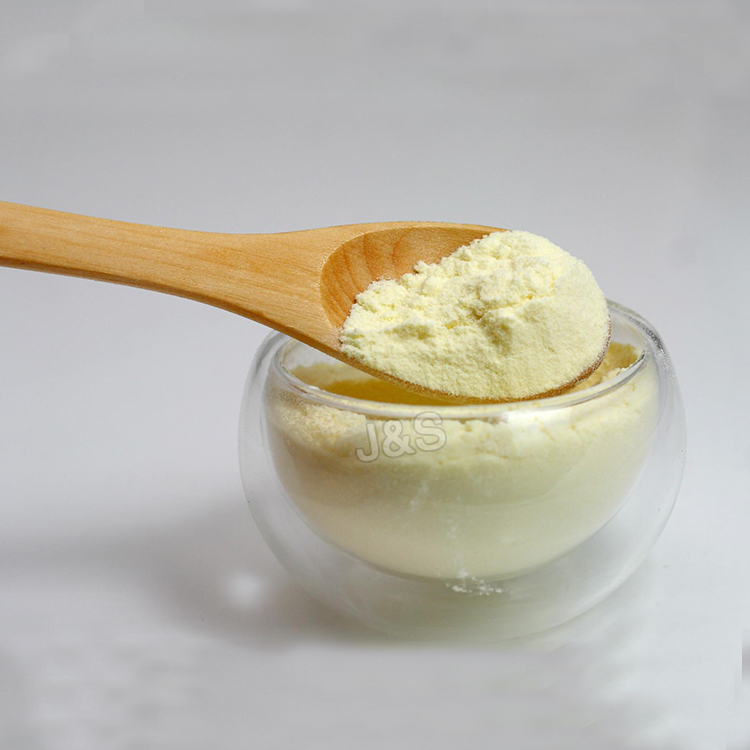
[Products Name] Royal jelly powder,Lyophilized royal jelly powder
[Specification] 10-HDA 4.0%, 5.0%, 6.0%, HPLC
[Gerneral feature]
1. Low antibiotics, Chloramphenicol< 0.1ppb
2. certified by, according to EOS & NOP standard;
3.100% pure with no additives;
4. More easily absorbed into the body than fresh royal jelly
5. Can be easily produced into tablets.
[Our advantages]
- 600 bee farmers, 150 units of bee-feeding groups located in natural mountains;
- certificated by;
- NON-antibiotics, widely exported to Europe;
- Health Certificate, Sanitary Certificate and Quality Certificate are available.
[Lyophilized technology]
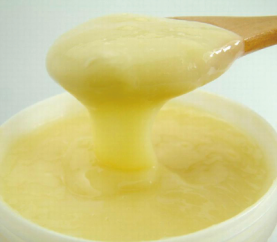
Lyophilized technology, also known as Freeze-drying, it is a dehydration process typically used to maintain activity of all nutrition ingredients in royal jelly, also to make the royal jelly convenient for transport. Freeze-drying works by freezing the material and then reducing the surrounding pressure to allow the frozen water in the material to sublimate directly from the solid phase to the gas phase. This technology can maintain all activity of nutrition ingredient.
Lyophilized royal jelly powder is processed directly from fresh royal jelly.
3kgs fresh royal jelly is used to make 1kg lyophilized royal jelly powder.
During all the production process, there is no additives.
[Packing]
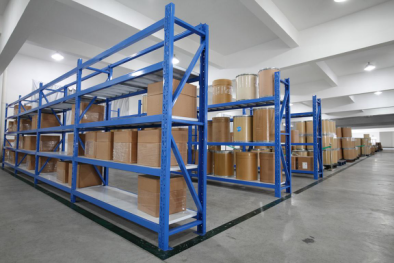
5kg/bag, 25kgs/drum
1kg/bag, 20kgs/carton
Main indices of physical and chemic in Lyophilized royal jelly
| Ingredients Indices | Lyophilized royal jelly | Standards | Results |
| Ash | 3.2 | <5 | Complies |
| Water | 4.1% | <7% | Complies |
| Glucose | 43.9% | <50% | Complies |
| Protein | 38.29% | >33% | Complies |
| 10-HDA | 6.19% | >4.2% | Complies |
[Our work flow]
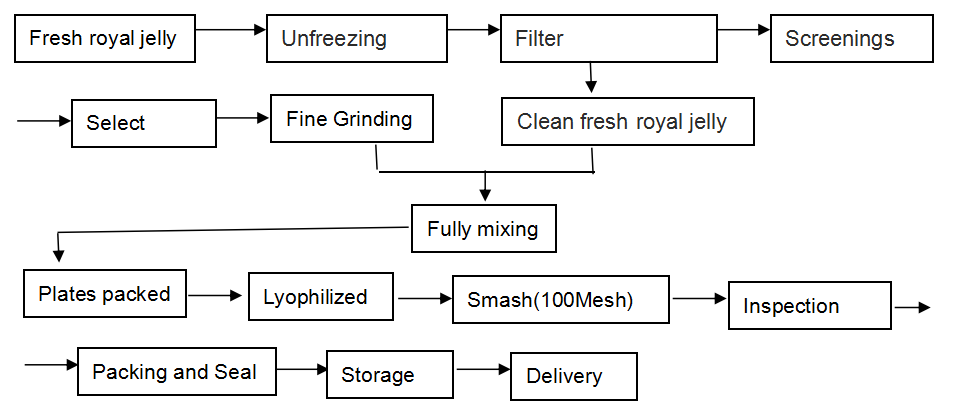
Our Lyophilized Royal Jelly Powder is produced in this way: we lyophilize the fresh royal jelly by advanced freeze-drying facilities without losing any nutritional ingredients, reserving the natural ingredients in utmost, and then make them into the form of powder, for any food additives are not needed to add.
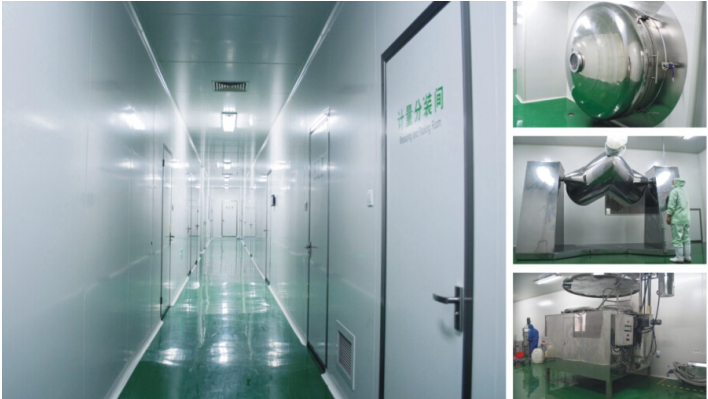
The raw material we use is the natural fresh royal jelly which is up to the export standard . We process our products strictly according to export standard. Our workshop is up to the requirements of GMP.
Royal Jelly powder has been selected as drug excipients by many European and American pharmaceutical producing enterprises.Meanwhile it is applies to health food and cosmetics industries.
[Quality control]
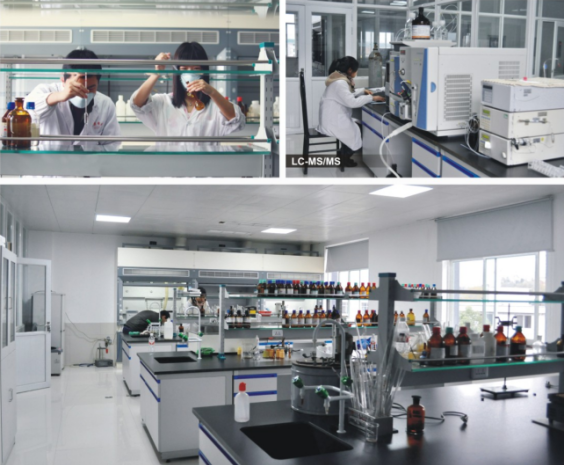
Traceability record
GMP standard production
Advanced inspection equipment
[Function]
1.Enhances the immune system
2.Promotes wound healing
3.Has antitumor/anticancer properties
4.Lowers cholesterol levels
5.Increases fat metabolism
6.Is a powerful antioxidant
7.Regulates blood sugar levels
[Applications]
It’s widely used in health tonic, health pharmacy, hairdressing and cosmetic area, and mainly was applied in capsules, troche and oral liquids etc.
Product detail pictures:
Related Product Guide:
"Sincerity, Innovation, Rigorousness, and Efficiency" could be the persistent conception of our enterprise to the long-term to produce together with clients for mutual reciprocity and mutual profit for 18 years Factory offer Lyophilized royal jelly powder Supply to Mumbai , The product will supply to all over the world, such as: Sri Lanka, Iran, Grenada, By integrating manufacturing with foreign trade sectors, we can present total customer solutions by guaranteeing the delivery of right merchandise to the right place at the right time, which is supported by our abundant experiences, powerful production capability, consistent quality, diversified products and the control of the industry trend as well as our maturity before and after sales services. We'd like to share our ideas with you and welcome your comments and questions.
MIRACLE REMEDY: Drinking Apple Cider Vinegar Before Bedtime Will Change YOUR LIFE For Good!
https://amzn.to/1Xw6x4X – Click here to order and read other reviews.
About the Product:
-New Formulation, now with 30 grams complete protein, and added recovery elements
-Full Scoop: 20 servings per tub, 41 grams per serving, Half Scoop: 40 servings per tub, 21 grams per serving
-6g BCAAs and 6g glutamine in a complete, multisource blend of premium, plant-based protein made from pea, alfalfa, pumpkin, and sunflower seed
-Added turmeric, tart cherry and probiotics to improve recovery speed
-Gluten-free, made without dairy or soy, Informed-Choice certified, Non-GMO Project verified, and certified vegan, with no artificial flavors, colors, or sweeteners
Product Description
Flavor: Berry | Size: Tub
Next-level performance calls for clean, next-level protein. Build and repair strong muscles and reduce recovery time with help from Vega Sport Performance Protein. Featuring 30 grams of complete protein-made from premium plant-based ingredients, including pea, alfalfa, pumpkin seed and sunflower seed proteins-Vega Sport Performance Protein delivers a balanced, full-spectrum amino acid profile. Every delicious post-workout serving of Vega Sport Performance Protein powder boasts 6 grams of branched chain amino acids (BCAAs), 6 grams of glutamine, turmeric, tart cherry and probiotics. Enjoy Vega Sport Performance Protein within 45 minutes after your workout. Easy to make on-the-go shaken with ice-water or non-dairy milk, you can also add it as a protein supplement to your favorite smoothie recipe. Available in Vanilla, Chocolate, Mocha or Berry flavors.
 By Quyen Staten from Qatar - 2017.05.02 18:28
The factory workers have a good team spirit, so we received high quality products fast, in addition, the price is also appropriate, this is a very good and reliable Chinese manufacturers.
By Freda from Monaco - 2018.06.18 19:26