China Professional Supplier Ginseng extract Factory from New Delhi
China Professional Supplier Ginseng extract Factory from New Delhi Detail:
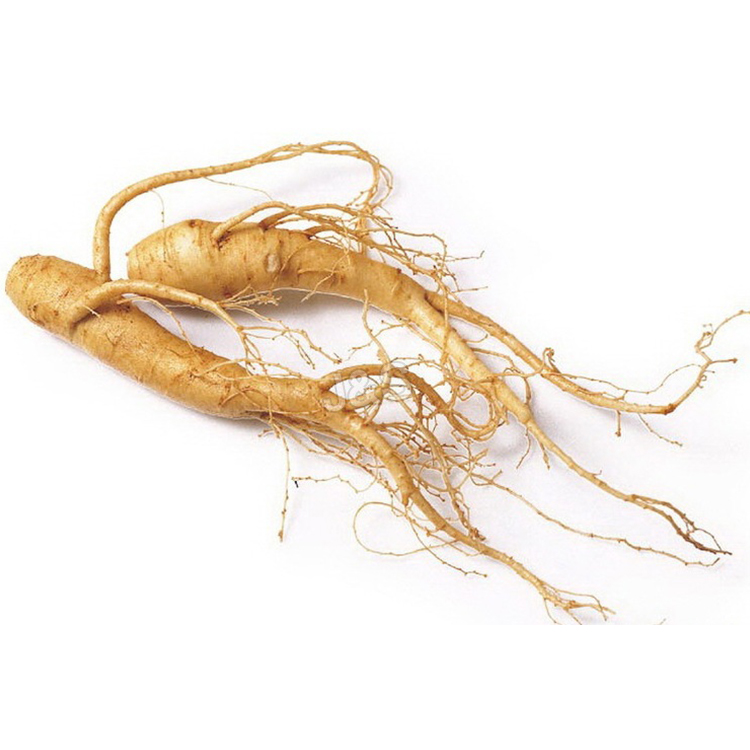
[Latin Name] Panax ginseng CA Mey.
[Plant Source] Dried Root
[Specifications] Ginsenosides 10%–80%(UV)
[Appearance] Fine Light Milk Yellow Powder
[Particle size] 80 Mesh
[Loss on drying] ≤ 5.0%
[Heavy Metal] ≤20PPM
[Extract solvents] Ethanol
[Microbe] Total Aerobic Plate Count: ≤1000CFU/G
Yeast & Mold: ≤100 CFU/G
[Storage] Store in cool & dry area, keep away from the direct light and heat.
[Shelf life]24 Months
[Package] Packed in paper-drums and two plastic-bags inside.
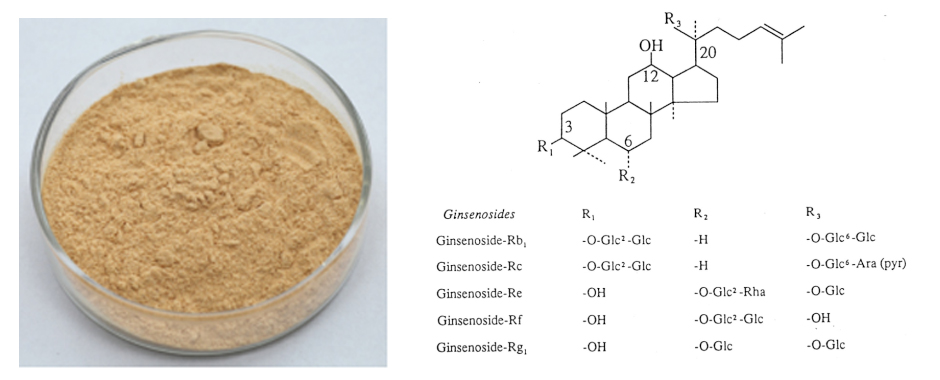
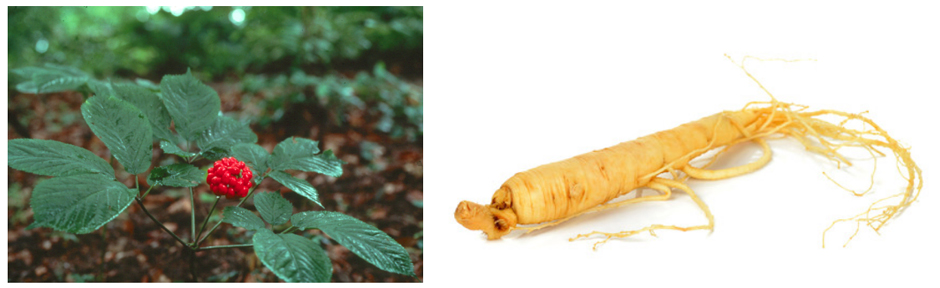
[What is Ginseng]
In terms of modern scientific research, ginseng is known to be an adaptogen. Adaptogens are substances that assist the body to restore itself to health and work without side effects even if the recommended dose is widely exceeded.
Ginseng due to its adaptogens effects is widely used to lower cholesterol, increase energy and endurance, reduce fatique and effects of stress and prevent infections.
Ginseng is one of the most effective antiaging supplements. It can alleviate some major effects of aging, such as degeneration of the blood system, and increase mental and physical capacity.
Other important benefits of ginseng is its support in cancer treatment and its effects on sports performance.
[Application]
1. Applied in food additives, it owns the effect of antifatigue, anti-aging and nourishing brain;
2. Applied in pharmaceutical field, it is used to treat coronary heart disease, angina cordis, bradycardia and high heart rate arrhythmia, etc.;
3. Applied in cosmetics field, it owns the effect of whitening, dispelling spot, anti-wrinkle, activating skin cells, making skin more tender and firm.
Product detail pictures:
Related Product Guide:
We insist over the principle of development of 'High top quality, Performance, Sincerity and Down-to-earth working approach' to supply you with exceptional services of processing for China Professional Supplier Ginseng extract Factory from New Delhi , The product will supply to all over the world, such as: Argentina, United States, Algeria, We critically promise that we deliver all the customers with the best quality solutions, the most competitive prices and the most prompt delivery. We hope to win a resplendent future for customers and ourselves.
Title: Cyanidin-3-O-glucoside ameliorates lipid and glucose accumulation in C57BL/6J mice via activation of PPAR-α and AMPK?
3rdInternational Conference and Exhibition on Nutrition & Food Sciences
September 23-25, 2014 Valencia , Spain
OMICS International: https://conferenceseries.com/
Pharmaceutical Conferences: https://pharmaceuticalconferences.com
Global OMICS open access Journals: https://omicsonline.org
Global Medical Conferences: https://conferenceseries.com
Global Cancer Conferences: https://cancersummit.org
Global Diabetes Conferences: https://diabetesexpo.com
Global Dental Conferences: https://dentalcongress.com
Global Nursing Conferences: https://nursingconference.com
Abstract
Cyanidin-3-O-glucoside (C3G) is an anthocyanidin abundant in fruits and vegetables that exhibits potent activities in energy metabolism; however, molecular target(s) and the mode of actions of C3G have been elusive. Surface plasmon resonance and time-resolved fluorescence resonance energy transfer analyses revealed that C3G directly interacted with PPARα ligand-binding domain, thus the C3G induced hepatic fatty acid oxidation and ketogenesis regulating PPARα responsive genes. C3G also bound directly to the α1 subunit of AMPK in cell-free kinase assay, phosphorylated ACC1, decreased hepatic malonyl- CoA concentration, thus reduced hepatic fatty acid synthesis. In high-fat-diet fed C57BL/6J mice orally administrated with C3G for 8 weeks, hepatic and plasma triglycerides were significantly reduced due to the combined effects of PPARα and AMPK activation. Insulin resistance and glucose tolerance were significantly improved with reduction in hepatic gluconeogenesis in C3G mice compared with those of controls. The AMPK activation by C3G led to the phosphorylation inhibition of FoxO1 and CREB to suppress the expressions of key genes in hepatic gluconeogenesis. Body fat accumulation was reduced in C3G fed mice with induction of thermogenic gene expressions in brown adipocytes and energy expenditure was significantly increased in mice fed C3G. Hepatic autophagy pathway was significantly activated in C3G livers, via activation AMPK-mTORsignaling axis and PPARα activation. Autophagy activation may contribute to lowering lipid accumulation in the liver. Collectively, these demonstrate that C3G in diet has profound metabolic roles in regulating lipid metabolism and insulin resistance via activation of both PPARα and AMPK.
Biography
YaoyaoJia earned her Degree of Doctor of Philosophy from Food Science and Technology Department of Biotechnology Graduate School of Korea University. Her research is mainly focus on effects of natural compounds in cellular lipid metabolism and regulation of PPAR activity.
Moof’s Medical Biochemistry Video Course: https://moof-university.thinkific.com/courses/medical-biochemistry-for-usmle-step-1-exam
For Related Practice Problems with Worked Video Solutions on Carbohydrates, visit courses.moofuniversity.com.
In this video, I depict and describe some key disaccharides and polysaccharides that any and every biochemistry student should be familiar with.
Maltose is a disaccharide with two glucose molecules connected by an alpha-1,4-glycosidic bond. Maltose is a reducing sugar because it has a free anomeric OH group.
Lactose is a disaccharide with a galactose and a glucose connected by a beta-1,4-glycosidic bond. Lactose is a reducing sugar because it has a free anomeric OH group.
Sucrose is a disaccharide with a glucose and a fructose connected by an alpha,beta-1,2-glycosidic bond. Sucrose is not a reducing sugar because it does not have a free anomeric OH group.
Cellulose is a polysaccharide with a bunch of glucose molecules connected by beta-1,4-linkages.
Starch and glycogen are both polysaccharides with a bunch of glucose molecules connected by alpha-1,4-linkages. Glycogen is more highly branched.
Humans have the enzyme to digest alpha-1,4-linkages, not beta-1,4-linkages. That’s why we can digest starch and glycogen, but not cellulose.
For a suggested viewing order of the videos, information on tutoring, personalized video solutions, and an opportunity to support Moof University financially, visit MoofUniversity.com, and follow Moof University on the different social media platforms.
Don’t forget to LIKE, COMMENT, and SUBSCRIBE:
https://www.youtube.com/subscription_center?add_user=MoofUniversity
SUPPORT MOOF UNIVERSITY:
https://www.moofuniversity.com/support-moof/
BUY A T-SHIRT
https://shop.spreadshirt.com/moofuniversity/
INFORMATION ABOUT TUTORING AND PERSONALIZED VIDEO SOLUTIONS:
https://www.moofuniversity.com/tutoring/
INSTAGRAM:
https://instagram.com/moofuniversity/
FACEBOOK:
https://www.facebook.com/pages/Moof-University/1554858934727545
TWITTER:
https://twitter.com/moofuniversity
 By Giselle from Belgium - 2017.05.02 18:28
Product quality is good, quality assurance system is complete, every link can inquire and solve the problem timely!
By Alan from Mexico - 2018.09.21 11:01