China Top 10 Lyophilized royal jelly powder Factory for Botswana
China Top 10 Lyophilized royal jelly powder Factory for Botswana Detail:
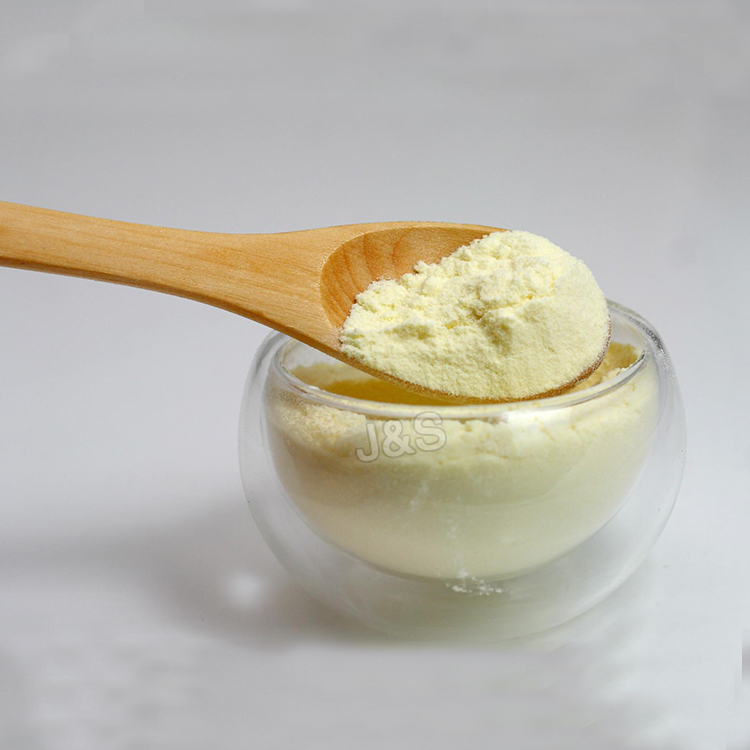
[Products Name] Royal jelly powder,Lyophilized royal jelly powder
[Specification] 10-HDA 4.0%, 5.0%, 6.0%, HPLC
[Gerneral feature]
1. Low antibiotics, Chloramphenicol< 0.1ppb
2. certified by, according to EOS & NOP standard;
3.100% pure with no additives;
4. More easily absorbed into the body than fresh royal jelly
5. Can be easily produced into tablets.
[Our advantages]
- 600 bee farmers, 150 units of bee-feeding groups located in natural mountains;
- certificated by;
- NON-antibiotics, widely exported to Europe;
- Health Certificate, Sanitary Certificate and Quality Certificate are available.
[Lyophilized technology]
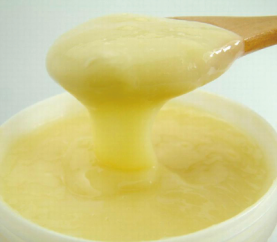
Lyophilized technology, also known as Freeze-drying, it is a dehydration process typically used to maintain activity of all nutrition ingredients in royal jelly, also to make the royal jelly convenient for transport. Freeze-drying works by freezing the material and then reducing the surrounding pressure to allow the frozen water in the material to sublimate directly from the solid phase to the gas phase. This technology can maintain all activity of nutrition ingredient.
Lyophilized royal jelly powder is processed directly from fresh royal jelly.
3kgs fresh royal jelly is used to make 1kg lyophilized royal jelly powder.
During all the production process, there is no additives.
[Packing]
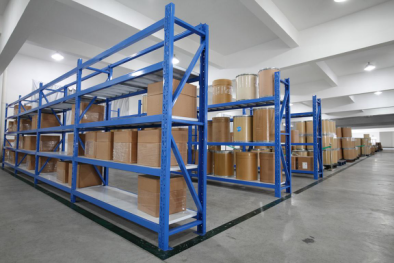
5kg/bag, 25kgs/drum
1kg/bag, 20kgs/carton
Main indices of physical and chemic in Lyophilized royal jelly
| Ingredients Indices | Lyophilized royal jelly | Standards | Results |
| Ash | 3.2 | <5 | Complies |
| Water | 4.1% | <7% | Complies |
| Glucose | 43.9% | <50% | Complies |
| Protein | 38.29% | >33% | Complies |
| 10-HDA | 6.19% | >4.2% | Complies |
[Our work flow]
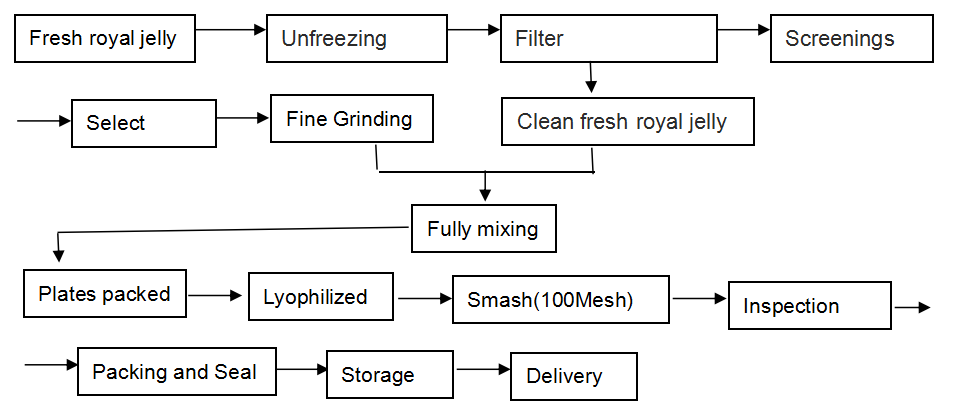
Our Lyophilized Royal Jelly Powder is produced in this way: we lyophilize the fresh royal jelly by advanced freeze-drying facilities without losing any nutritional ingredients, reserving the natural ingredients in utmost, and then make them into the form of powder, for any food additives are not needed to add.
The raw material we use is the natural fresh royal jelly which is up to the export standard . We process our products strictly according to export standard. Our workshop is up to the requirements of GMP.
Royal Jelly powder has been selected as drug excipients by many European and American pharmaceutical producing enterprises.Meanwhile it is applies to health food and cosmetics industries.
[Quality control]
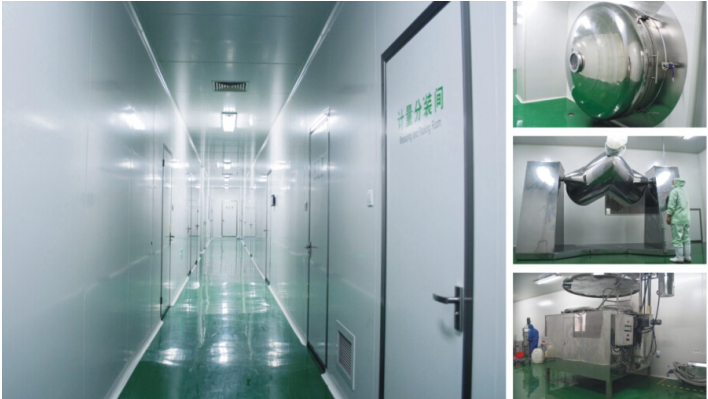
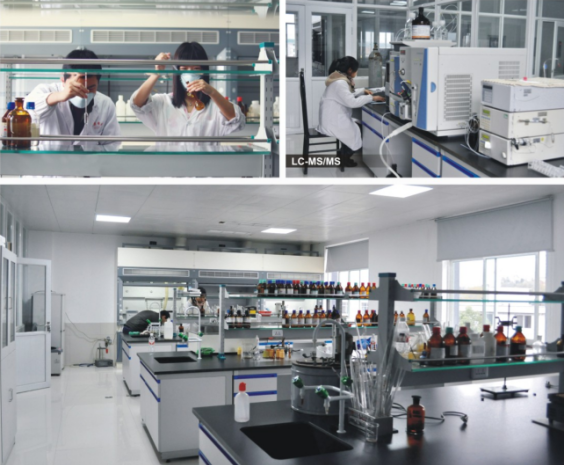
Traceability record
GMP standard production
Advanced inspection equipment
[Function]
1.Enhances the immune system
2.Promotes wound healing
3.Has antitumor/anticancer properties
4.Lowers cholesterol levels
5.Increases fat metabolism
6.Is a powerful antioxidant
7.Regulates blood sugar levels
[Applications]
It’s widely used in health tonic, health pharmacy, hairdressing and cosmetic area, and mainly was applied in capsules, troche and oral liquids etc.
Product detail pictures:
Related Product Guide:
We generally believe that one's character decides products' top quality, the details decides products' high-quality ,along with the REALISTIC,EFFICIENT AND INNOVATIVE team spirit for China Top 10 Lyophilized royal jelly powder Factory for Botswana , The product will supply to all over the world, such as: Melbourne, Lithuania, Cape Town, We maintain long-term efforts and self-criticism, which helps us and improvement constantly. We strive to improve customer efficiency to save costs for customers. We do our best to improve the quality of product. We will not live up to the historic opportunity of the times.
https://davesmith.ludaxx.com/
https://www.davegsmith.com
Why it Works for
F21 is an All Natural Sugar Blocker that helps limit your blood sugar absorption. It consists of different compounds found to have various health benefits, such as L-Arabinose, Coriolus Versicolor Polysacchride, Konjac-Mannan, Magnesium Stearate, Mint flavor: Menthol and Natural Colors. F21 not only does it help promote weight loss, (PSK) boosts your immune system response. In fact, for every gram of F21, you can block up to 20 grams of sugar (sucrose). The formula not only helps promote weight loss, it benefits the digestive system by allowing the blocked sucrose to support beneficial probiotic bacteria while the polysaccharide (PSK) boosts your immune system response.
But how does this formula break down the sugar in our bodies? There are basically three steps:
STEP 1
Sugar (sucrose) enters the body as a whole molecule.
STEP 2
The enzyme “sucrose” separates the sucrose molecule into two individual sugar molecules, Glucose and Fructose, which then enter the blood stream to be used. F21 inhibits sucrose from separating the sucrose molecule.
STEP 3
Instead of the sugars entering the blood stream, the whole sucrose molecule and F21 remain in the digestive tract and become prebiotics.
The main ingredient in F21 is L-Arabinose, which helps prevent sugar (sucrose) from being metabolized in the body. It also helps to satisfy any cravings for sugar. Another ingredient, Polysaccharide (PSK), is an extremely powerful antioxidant and immune-regulatory defender. It’s well researched anti-tumor, anti-infection and anti-inflammation effects help repair damaged cells and support the immune system.
Konjac-Mannan is a natural appetite suppressant. It acts as a trigger signaling your stomach to feel a little more satisfied and can help to reduce hunger cravings.
Prebiotics are indigestible fibers that are food for the probiotics. Both F21 and the whole sucrose molecule remain in the large intestine and become food for probiotics.
Menthol is an compound made synthetically or obtained from cornmint, peppermint or other mint oils. Menthol has local anesthetic and counterirritant qualities, and it is widely used to relieve minor throat irritation. It is known to be a powerfully medicinal compound linked to several potential health benefits. Peppermint oil, a natural source of menthol, has been investigated as a treatment for several diseases and conditions.
Magnesium stearate, also called octadecanoic acid, is manufactured from both animal and vegetable oils and this is the reason why some nutritional supplements specify that the magnesium stearate used is sourced from vegetables.
SUBSCRIBE: https://www.youtube.com/subscription_c… CIALIS, VIAGRA and LEVITRA these are all Male Sexual Enhancements that PORN STAR JOHN E DEPTH and Myself have used while working in the PORN INDUSTRY.
In this video JOHN E talks about FORMULA R3!!! his ENHANCEMENT of choice. He says that this is an all Natural Male Enhancement that not only helps with a man’s SEX DRIVE, but also helps protect the PROSTATE and is just a HEALTHY SUPPLEMENT overall!!!
Music provided by: https://www.audiomicro.com
Talk to John E Depth on Twitter: https://twitter.com/RealJohnEDepth
Check out John E Depth Music on Sound Cloud: https://soundcloud.com/j-depth
Check out the ALL NATURAL MALE ENHANCEMENT!!! FORMULA R3!!
RISE, ROCK, RESTORE!!!! https://www.formular3.com
My Email: Ace_party01@yahoo.com
Twitter: https://twitter.com/ace_pornstar
Instagram: https://instagram.com/ace_party01/
Periscope App: @Ace_pornstar
 By Martha from Nairobi - 2017.12.09 14:01
This supplier stick to the principle of "Quality first, Honesty as base", it is absolutely to be trust.
By Leona from Islamabad - 2017.11.29 11:09