Good Quality for White Willow Bark Extract Manufacturer in Atlanta
Good Quality for White Willow Bark Extract Manufacturer in Atlanta Detail:
[Latin Name] Salix alba L.
[Plant Source] from China
[Specifications] Salicin 15-98%
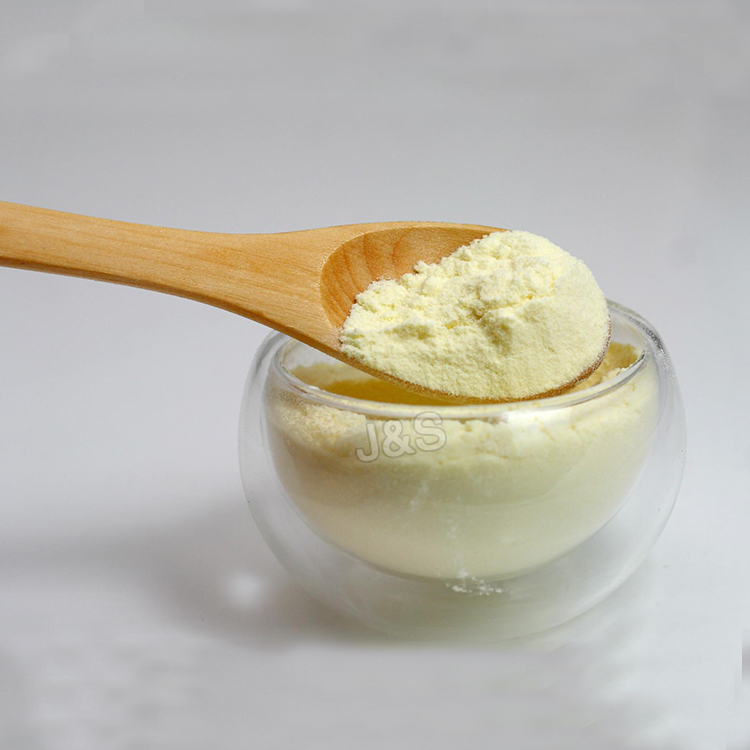
[Appearance] Yellow Brown to White powder
Plant Part Used: Bark
[Particle size] 80 Mesh
[Loss on drying] ≤5.0%
[Heavy Metal] ≤10PPM
[Storage] Store in cool & dry area, keep away from the direct light and heat.
[Shelf life] 24 Months
[Package] Packed in paper-drums and two plastic-bags inside.
[Net weight] 25kgs/drum
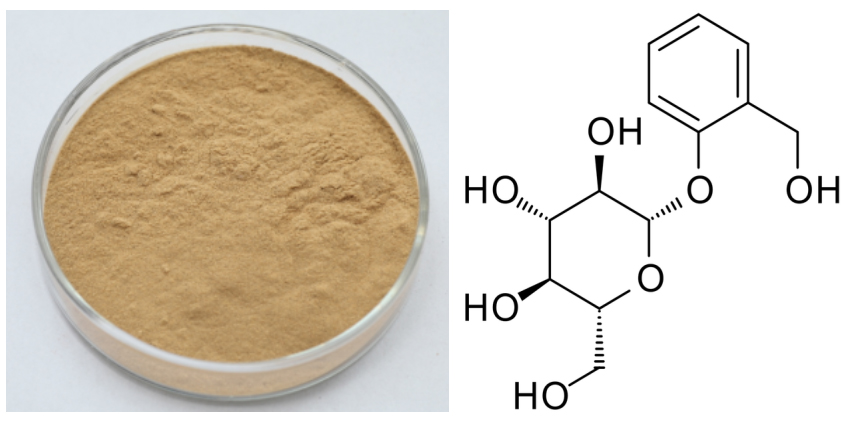
Brief Introduction
Salicin is a naturally occurring compound found in the bark of several species of trees, primarily North American in origin, that are from the willow, poplar, and aspen families. White willow, from whose Latin name, Salix alba, the term salicin is derived, is the most well known source of this compound, but it is found in a number of other trees, shrubs, and herbaceous plants as well being synthesized commercially. It is a member of the glucoside family of chemicals and is used as an analgesic and antipyretic. Salicin is used as a precursor for the synthesis of salicylic acid and acetylsalicylic acid, commonly known as aspirin.
A colorless, crystalline solid in its pure form, salicin has the chemical formula C13H18O7. Part of its chemical structure is equivalent to the sugar glucose, meaning it is classified as a glucoside. It is soluble, but not strongly so, in water and alcolhol. Salicin has a bitter taste and is a natural analgesic and antipyretic, or fever reducer. In large quantities, it can be toxic, and overdoses may lead to liver and kidney damage. In its raw form, it may be mildly irritating to skin, respiratory organs, and eyes.
Function
1. Salicin is used to ease pain and reduce inflammation.
2. Relieve acute and chronic pain, including headache, back and neck pain, muscle aches, and menstrual cramps; Control arthritis discomforts.
3. Relieve acute and chronic pain.
4. It has the same effect on the body as aspirin without any of the side effects.
5. It is an anti-inflammatory, a fever reducer, an analgesic, an anti-rheumatic, and an astringent. Specifically, it helps to relieve headaches.
Application
1.Anti-inflammatory, anti-rheumatic,
2.Reduce a fever,
3.Use as an analgesic and astringent,
4.Relieve headache,
5.Ease pain caused by rheumatism, arthritis, and carpal tunnel syndrome.
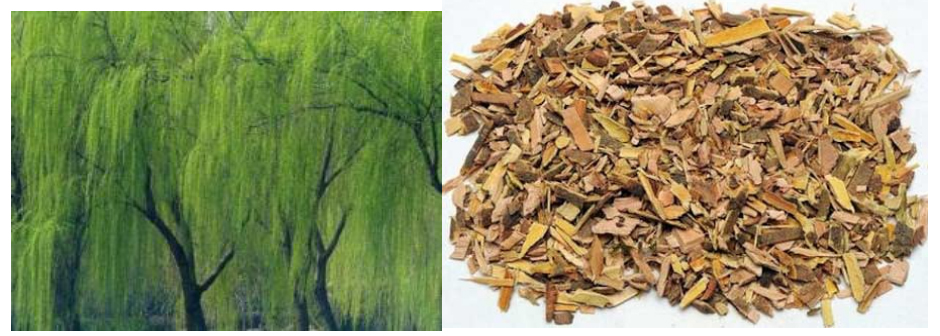
Product detail pictures:
Related Product Guide:
It truly is our responsibility to fulfill your requirements and successfully provide you. Your fulfillment is our best reward. We're seeking forward in your check out for joint development for Good Quality for White Willow Bark Extract Manufacturer in Atlanta , The product will supply to all over the world, such as: Albania, Uruguay, Boston, Our market share of our products and solutions has greatly increased yearly. If you are interested in any of our products or would like to discuss a custom order, make sure you feel free to contact us. We've been looking forward to forming successful business relationships with new clients around the world in the near future. We've been looking forward to your inquiry and order.
Raw vegan salad dressings just for you! Simple, sweet, savory, and delicious, these sauces will help your salad explode with flavor! https://youtu.be/n_z9xhwjOOw
To sign up for the 21-Day Challenge, submit your email here: https://www.fullyraw.com/#!21-day-challenge/cmx5
***Please note that in order to get the free eBOOK, you MUST submit your email AND comment and like EVERY video of the challenge.***
Salads are so important to eat because they keep our greens intake high. Greens are important to help our bodies be alkaline and well-mineralized. I hope that you enjoy these very yummy salad dressings and that you share them with family and friends!
Salad Dressing #1: Tomato-Ginger Dressing
-4-5 Cups of Cherry Tomato or 4-5 Large Beefsteak Tomatoes
-½ Cup to 1 Cup Raw Sesame Seeds or Raw Tahini
-Small Thumb of Ginger
-1 Cup Diced Celery
-2 Tablespoon Lemon Juice
-1 Garlic Clove
Salad Dressing #2
-5-7 Oranges
-Half of One Pineapple
-1 Red Bell Pepper
Salad Dressing #3
-4 Cucumbers
-Half Cup Celery
-Lemon
-Handful of Dill
Salad Dressing #4
-2 Cups Mango
-Handful of Dates (Approx 10)
-Handful of Fresh Rosemary
Salad Dressing #5
-Lemon Juice
-Dates
-2 Tbs. Honey Mustard Powder
Want to keep up with me daily?
❤ Co-op: https://www.rawfully.com
❤ FullyRaw: https://www.fullyraw.com
❤ FullyRaw You Tube: https://www.youtube.com/fullyrawkristina
❤ FullyRaw Kristina Facebook Page: https://www.facebook.com/fullyrawkristina
❤ Kristina’s Bio: https://fullyraw.com/about/about-me
❤ Kristina’s Blog: https://www.rawfully.com/blog
❤ ROC Facebook: https://www.facebook.com/rawfully
❤ Rawfully Twitter: https://www.twitter.com/rawfully
❤ FullyRaw Twitter: https://www.twitter.com/fullyraw
❤ FullyRaw Kristina Instagram: https://www.instagram.com/fullyrawkristina
❤ FullyRaw Kristina Pinterest: https://www.pinterest.com/fullyrawk
Rob Riches will show you the foods to buy and not to buy at the supermarket, helping you achieve, maintain and build a lean sculpture physique.
Products shown in this video:
➤ Predators Prey, Xcore – https://prozis.com/7n5
➤ Beef Protein, Crossgen – https://prozis.com/7n9
➤ Egg Yolk Powder, Prozis Sport – https://prozis.com/7nf
➤ Xtreme Casein, Xcore – https://prozis.com/7nk
➤ Prime Fusion Night Casein, Prozis Sport – https://prozis.com/7np
➤ Instant Oats, Prozis Foods – https://prozis.com/7nt
➤ Omega 3 6 9, Okygen – https://prozis.com/7nD
➤ Green Tea EGCG, Prozis Foods – https://prozis.com/7nJ
Check out our online store: https://prozis.com/7n1
MAKE SURE TO SUBSCRIBE HERE:☞ https://goo.gl/qUytio ☜
Follow us for exclusive content and discounts:
➤ Blog: https://www.prozis.com/blog
➤ Facebook: https://www.facebook.com/Prozis
➤ Twitter: https://twitter.com/prozis
➤ Pinterest: https://www.pinterest.com/prozis/
➤ Instagram: https://instagram.com/prozis
 By Alberta from Sao Paulo - 2017.11.01 17:04
The company account manager has a wealth of industry knowledge and experience, he could provide appropriate program according our needs and speak English fluently.
By Susan from Hanover - 2018.10.31 10:02