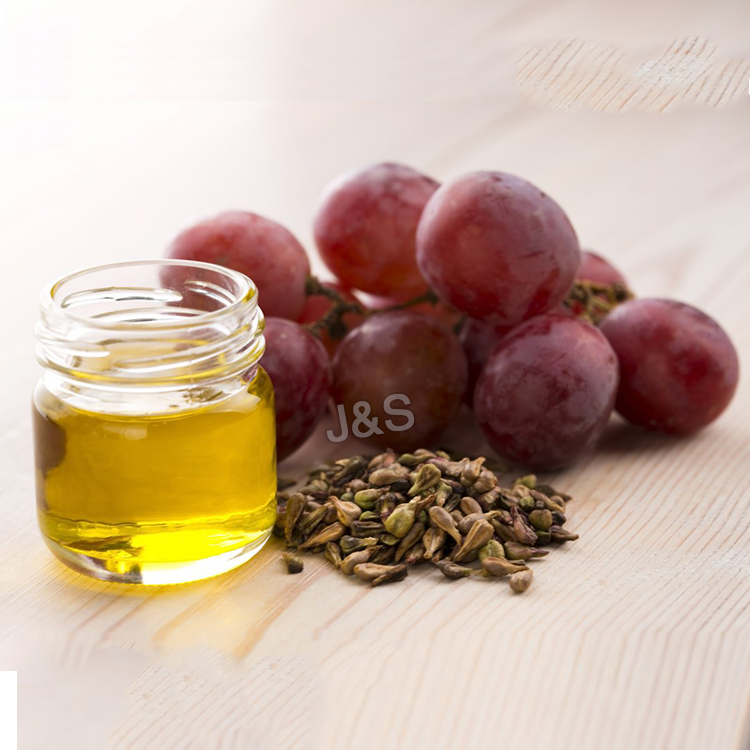
High Quality for Grape seed extract Factory from Nicaragua
High Quality for Grape seed extract Factory from Nicaragua Detail:
[Latin Name] Vitis vinifera Linn
[Plant Source] Grape seed from Europe
[Specifications] 95%OPCs;45-90% polyphenols
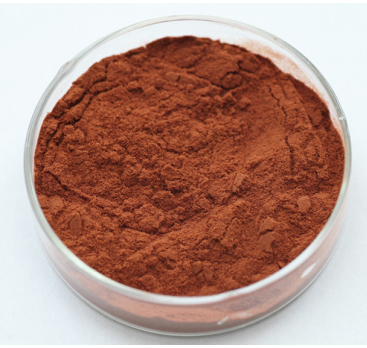
[Appearance] Red brown powder
[Plant Part Used]: seed
[Particle size] 80 Mesh
[Loss on drying] ≤5.0%
[Heavy Metal] ≤10PPM
[Pesticide residue] EC396-2005, USP 34, EP 8.0, FDA
[Storage] Store in cool & dry area, keep away from the direct light and heat.
[Shelf life] 24 Months
[Package] Packed in paper-drums and two plastic-bags inside.
[Gerneral feature]
- Our product has passed the ID test by ChromaDex, Alkemist Lab. and other
third-party authoritative testing institutions, such as detection;
2. The pesticide residues match (EC) No 396/2005 USP34, EP8.0, FDA and other foreign pharmacopoeia standards and regulations;
3. The heavy metals in strict accordance with the foreign pharmacopoeia standard controls, such as USP34, EP8.0, FDA, etc.;
4. Our company set up a branch and import raw materials directly from Europe with strict control of heavy metal and pesticide residue. Aslo ensure the procyanidins content in grape seed is more than 8.0%.
5. OPCs over 95%, polyphenol over 70%, high activity, the oxidation resistance is strong, the ORAC more than 11000.
[Function]
Grapes (Vitis vinifera) have been heralded for their medicinal and nutritional value for thousands of years. Egyptians ate grapes a very long time back, and several ancient Greek philosophers spoke about the healing power of grapes — usually in the form of wine. European folk healers made an ointment from the sap of grapevines to treat skin and eye diseases. Grape leaves were used to stop bleeding, inflammation, and pain, such as the kind brought on by hemorrhoids. Unripe grapes were used to treat sore throats, and dried grapes (raisins) were used for constipation and thirst. Round, ripe, sweet grapes were used to treat a range of health problems including cancer, cholera, smallpox, nausea, eye infections, and skin, kidney, and liver diseases.
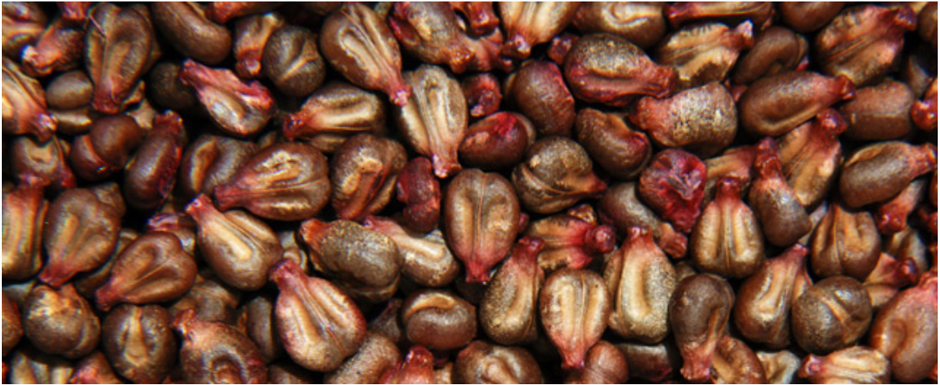
Grape seed extracts are industrial derivatives from whole grape seeds that have a great concentration of vitamin E, flavonoids, linoleic acid and phenolic OPCs. The typical commercial opportunity of extracting grape seed constituents has been for chemicals known as polyphenols having antioxidant activity in vitro.
Product detail pictures:
Related Product Guide:
All we do is usually connected with our tenet " Consumer initial, Rely on 1st, devoting around the food stuff packaging and environmental safety for High Quality for Grape seed extract Factory from Nicaragua , The product will supply to all over the world, such as: Rotterdam, Auckland, Australia, Due to the stability of our products, timely supply and our sincere service, we are able to sell our products not only over the domestic market, but also exported to countries and regions, including the Middle East, Asia, Europe and other countries and regions. At the same time, we also undertake OEM and ODM orders. We will do our best to serve your company, and establish a successful and friendly cooperation with you.
Griffith experiment animation – lecture explains about the DNA transformation experiment by Griffith. https://shomusbiology.com/
Download the study materials here-
https://shomusbiology.com/bio-materials.html
Remember Shomu’s Biology is created to spread the knowledge of life science and biology by sharing all this free biology lectures video and animation presented by Suman Bhattacharjee in YouTube. All these tutorials are brought to you for free. Please subscribe to our channel so that we can grow together. You can check for any of the following services from Shomu’s Biology-
Buy Shomu’s Biology lecture DVD set- www.shomusbiology.com/dvd-store
Shomu’s Biology assignment services – www.shomusbiology.com/assignment -help
Join Online coaching for CSIR NET exam – www.shomusbiology.com/net-coaching
We are social. Find us on different sites here-
Our Website – www.shomusbiology.com
Facebook page- https://www.facebook.com/ShomusBiology/
Twitter – https://twitter.com/shomusbiology
SlideShare- www.slideshare.net/shomusbiology
Google plus- https://plus.google.com/113648584982732129198
LinkedIn – https://www.linkedin.com/in/suman-bhattacharjee-2a051661
Youtube- https://www.youtube.com/user/TheFunsuman
Thank you for watching
Griffith’s experiment, reported in 1928 by Frederick Griffith,[1] was one of the first experiments suggesting that bacteria are capable of transferring genetic information through a process known as transformation.[2][3]
Griffith used two strains of pneumococcus (Streptococcus pneumoniae) bacteria which infect mice — a type III-S (smooth) and type II-R (rough) strain. The III-S strain covers itself with a polysaccharide capsule that protects it from the host’s immune system, resulting in the death of the host, while the II-R strain doesn’t have that protective capsule and is defeated by the host’s immune system. A German bacteriologist, Fred Neufeld, had discovered the three pneumococcal types (Types I, II, and III) and discovered the Quellung reaction to identify them in vitro.[4] Until Griffith’s experiment, bacteriologists believed that the types were fixed and unchangeable, from one generation to another.
In this experiment, bacteria from the III-S strain were killed by heat, and their remains were added to II-R strain bacteria. While neither alone harmed the mice, the combination was able to kill its host. Griffith was also able to isolate both live II-R and live III-S strains of pneumococcus from the blood of these dead mice. Griffith concluded that the type II-R had been “transformed” into the lethal III-S strain by a “transforming principle” that was somehow part of the dead III-S strain bacteria.
Today, we know that the “transforming principle” Griffith observed was the DNA of the III-S strain bacteria. While the bacteria had been killed, the DNA had survived the heating process and was taken up by the II-R strain bacteria. The III-S strain DNA contains the genes that form the protective polysaccharide capsule. Equipped with this gene, the former II-R strain bacteria were now protected from the host’s immune system and could kill the host. The exact nature of the transforming principle (DNA) was verified in the experiments done by Avery, McLeod and McCarty and by Hershey and Chase. Source of the article published in description is Wikipedia. I am sharing their material. Copyright by original content developers of Wikipedia.
Link- https://en.wikipedia.org/wiki/Main_Page
Product Review: Bee Pro Pollen Substitute – Feeding – #Beekeeping Basics – The Norfolk Honey Co.
In the previous video I showed how I mix up my pollen substitute and in this video I am showing you how I feed it to the bees. I picked a sunny day and the bees were very active!
I have used a few different types of Pollen Substitute but never Bee Pro from Mann Lake which is stocked in the UK by Bee -Equipment.co.uk
This video is not sponsored and the product has not been supplied free of charge. I purchased it from their website paying the full amount including postage.
In this video you will hear my honest thoughts of this product in terms of the purchase, delivery and mixing of the product. I will follow this video with another showing how I use it on my colonies and how the bees react to it.
Here is the description from the Mann Lake product page:
Amino acids are the building blocks of protein. Different protein sources contain different amino acid levels; it’s for this reason that a mixture of protein sources should be included in a pollen substitute. A correct amino acid balance is the key to efficient utilization of protein.
Protein quality is determined by its level of essential amino acids. A shortage of any one essential amino acid makes overall protein utilization by the bee less efficient. For example, the bees require 4% Iso-leucine. If the current feed you are using only has 3% Iso-leucine, your bees can only utilize 75% of the available protein.
Can be fed in dry form in a feeder box placed in the yard or made into patties by mixing with high fructose corn syrup or sugar syrup and placed in the hive.
Free of all contaminants. Natural pollens may contain pesticide residue and disease carrying bacteria (foulbrood).
Can be used for building colonies in late winter or early spring, to prepare for pollination and to maintain or increase brood production prior to and after honey flow.
Gives your bees the best nutrients available for the production of larval food.
High protein pollen substitute which supplies the lipids, minerals, and B-complex vitamins honey bees need to produce larval food.
Specially formulated for the commercial beekeeper who is feeding syrup as the source of carbohydrates in the bee’s diet.
I purchased this product in the UK from the following website, I do not currently (Jan 2017) receive any commission for promoting this company or product:
https://www.bee-equipment.co.uk/product-p/fd-201.htm
Available in the USA from Mann Lake:
https://www.mannlakeltd.com/bee-pro-reg-50-lb-bag-22-65-kg
Subscribe to my channel to keep up to date with all of my beekeeping videos:
Sunday: Beekeeping Basics
Wednesday: Getting Started in Beekeeping
Friday: Microscopy for Beekeepers
Subscribe here: https://www.youtube.com/channel/UCpXjo1sDWxAR0_PpF4Y1ymA
My Social Media Feeds:
Twitter: @NorfolkHoneyCo
Instagram: norfolkhoneyco
Looking for a great first book for beekeeping? Check out two of my favourites below:
Affiliate links ( I receive a small commission if you purchase)
UK:
Try The Best Selling Beekeeping Book Ever!
Guide to Bees and Honey by Ted Hooper
Click here for Link: https://amzn.to/2eWHB42
The Honeybee, Around and About by Celia Davis
Click Here for Link: https://amzn.to/2eVa2la
USA: The Backyard Beekeeper by Kim Flottum
Click Here for Link https://amzn.to/2fi9JOo
Or Try The Best Selling Beekeeping Book Ever!
Guide to Bees and Honey by Ted Hooper
Click here for Link: https://amzn.to/2ficqzi
 By Joanna from United States - 2018.09.19 18:37
A good manufacturers, we have cooperated twice, good quality and good service attitude.
By Elizabeth from United States - 2017.09.29 11:19