Low price for Quercetin Supply to Frankfurt
Low price for Quercetin Supply to Frankfurt Detail:
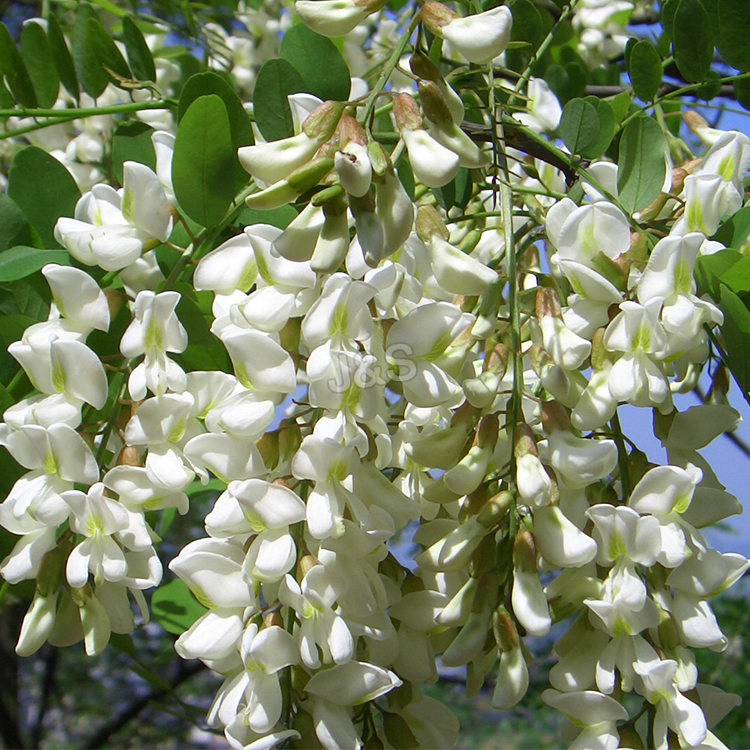
[Latin Name] Sophora Japonica L
[Plant Source] from China
[Specifications] 90%-99%
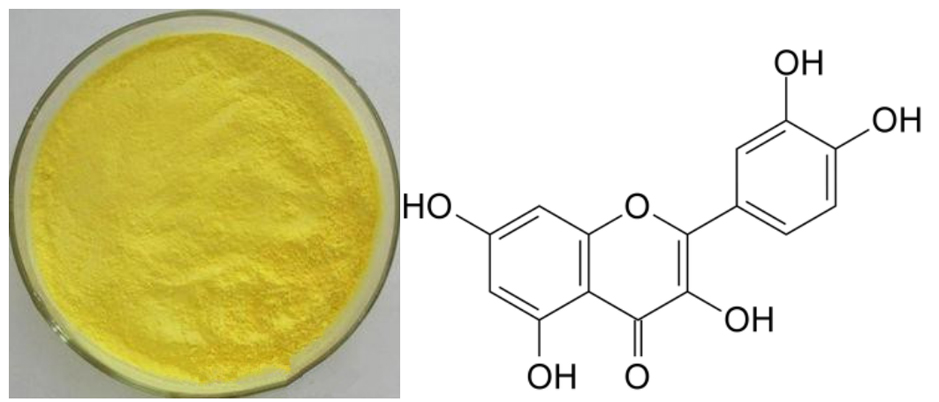
[Appearance] Yellow crystalline powder
Plant Part Used:Bud
[Particle size] 80 Mesh
[Loss on drying] ≤12.0%
[Heavy Metal] ≤10PPM
[Storage] Store in cool & dry area, keep away from the direct light and heat.
[Shelf life] 24 Months
[Package] Packed in paper-drums and two plastic-bags inside.
[Net weight] 25kgs/drum
Brief Introduction
Quercetin is a plant pigment (flavonoid). It is found in many plants and foods, such as red wine, onions, green tea, apples, berries, Ginkgo biloba, St. John’s wort, American elder, and others. Buckwheat tea has a large amount of quercetin. People use quercetin as a medicine.
Quercetin is used for treating conditions of the heart and blood vessels including “hardening of the arteries” (atherosclerosis), high cholesterol, heart disease, and circulation problems. It is also used for diabetes, cataracts, hay fever, peptic ulcer, schizophrenia, inflammation, asthma, gout, viral infections, chronic fatigue syndrome (CFS), preventing cancer, and for treating chronic infections of the prostate. Quercetin is also used to increase endurance and improve athletic performance.
Main Function
1.Quercetin may expel phlegm and arrest coughing, it can also be used as anti-asthmatic.
2. Quercetin has anticancer activity, inhibits PI3-kinase activity and slightly inhibits PIP Kinase activity, reduces cancer cell growth via type II estrogen receptors.
3.Quercetin may inhibit histamine release from basophils and mast cells.
4. Quercetin may control the spread of certain viruses within the body.
5, Quercetin may help reduce tissue destruction.
6.Quercetin may also be beneficial in the treatment of dysentery, gout, and psoriasis
Product detail pictures:
Related Product Guide:
Our well-equipped facilities and great excellent command throughout all stages of generation enables us to guarantee total customer fulfillment for Low price for Quercetin Supply to Frankfurt , The product will supply to all over the world, such as: belarus, Adelaide, Moscow, As an experienced factory we also accept customized order and make it same as your picture or sample specifying specification and customer design packing. The main goal of the company is to live a satisfactory memory to all the customers,and establish a long term win-win business relationship. For more information,please contact us. And it's our great pleasure if you like to have a personally meeting in our office.
Seaweeds are one of the most nutritionally dense foods in the plant kingdom and are an abundant source of minerals and beneficial polysaccharides. Learn more about their benefits and how to get high quality sea vegetables from non-polluted ocean waters, plus our top list of favorite varieties.
Super Seaweeds Store: https://bit.ly/1BTWVm4
Dulse:
Raw Dulse Granules, Maine Coast Sea Vegetables, 1lLb – https://amzn.to/2fN7qU0
Seaweed Iceland Dulse, Whole Raw, 1.76oz – https://amzn.to/2gpEIw9
Dulse Flakes, Mountain Rose Herbs, 1oz-1lb – https://bit.ly/2gkfbAT
Maine Coast Sea Vegetables, Whole Pieces, 2oz – https://amzn.to/2fvsvEF
Kelp:
Maine Coast Sea Vegetables, Raw Icelandic Kelp Powder Blend, 1lb – https://amzn.to/29o0Lky
Mountain Rose, Kelp Capsules, 100caps – https://bit.ly/2gmBPcZ
Seaweed Iceland Sweet Kelp, Royal Kombu, Raw, 1.76oz – https://amzn.to/29d4cpQ
Seaweed Iceland Wakame, Atlantic, Raw, 1.76oz – https://amzn.to/29FFWO1
Seaweed Iceland Kelp, Atlantic Kombu, Raw, 1.76oz – https://amzn.to/29pjk8h
Sea Seasonings Kelp Granules, 1.5oz – https://amzn.to/29d4tcv
Maine Coast Sea Vegetables Kelp Wild Atlantic Kombu, 2oz – https://amzn.to/29ciwCD
Sea Tangle, Kelp Noodles, 3 Pack, 12oz. each – https://amzn.to/29rBbIM
Irish Moss:
Divine s, Fresh Whole Leaf Irish Moss, Raw, Wildcrafted, 16oz – https://amzn.to/2fwqFjX
Edward’s Irish Moss, Raw Whole Leaf Wildcrafted Fresh, 1lb – https://amzn.to/2fshYKq
Raw Irish Moss Flakes, 1lb, Maine Coast Sea Vegetables – https://amzn.to/1iR1pqB
Wild Harvested Irish Moss Dried Pieces, Mountain Rose Herbs – 1oz-1lb – https://bit.ly/2gi50QY
Nori:
Raw Sushi Nori, Maine Coast Sea Vegetables, 50 Sheets – amzn.to/1NG4jcn
Maine Coast Sea Vegetables Laver Wild Atlantic Nor, 1oz – amzn.to/1miU9oF
Earth Circle s Raw Nori Seaweed, 50 Sheet – amzn.to/1Zff0Wz
Mountain Rose, Nori Flakes, 1oz-1lb – https://bit.ly/2gBVys1
Seaweed Page: https://bit.ly/1xQdyQs
Additional Sourced Info:
Sea Vegetables for Food and Medicine, Ryan Drum: https://bit.ly/1srsiEw
Fucoxanthin from edible seaweed, Undaria pinnatifida, shows antiobesity effect through UCP1 expression in white adipose tissues: https://1.usa.gov/1xalI0X
The thyroid, iodine and breast cancer: https://1.usa.gov/17vaTlm
The modulation of pancreatic lipase activity by alginates: https://1.usa.gov/1y1KbNd
Interaction between extracellular lipase LipA and the polysaccharide alginate of Pseudomonas aeruginosa: https://1.usa.gov/1B0MBL9
Fat-busting seaweeds identified, New Castle University Press Release: https://bit.ly/1BNMjay
Acute effect of alginate-based preload on satiety feelings, energy intake, and gastric emptying rate in healthy subjects: https://1.usa.gov/14hmO46
Soluble ß-1,3/1,6-glucan in seaweed from the southern hemisphere and its immunomodulatory effect: https://1.usa.gov/1xWCgPA
Therapeutic intervention with complement and beta-glucan in cancer: https://1.usa.gov/1Iamx2n
Berkeley RadWatch : https://bit.ly/1FFEzvx
All information is for educational purposes only and is the personal view of the author; not intended as medical advice,
diagnosis or prescription. This information has not been evaluated by the FDA and is not intended to cure or prevent any disease.
https://SuccesswithTroyandDana.com
Sugar Blocker | F21 All Natural Sugar Blocker | Ludaxx Sugar Blocker Works!
F21 has been specifically formulated as an All Natural Sugar Blocker™ to help limit your blood sugar absorption. For every tablet of F21 you can block up to 10 grams of sugar (sucrose). Additionally, our patent pending formula not only helps promote weight loss, it benefits the digestive system by allowing the blocked sucrose to support beneficial probiotic bacteria while the polysaccharide (PSK) boosts your immune system response.
F21 Ingredients:
L-Arabinose, Coriolus Versicolor Polysacchride, Konjac-Mannan, Magnesium Stearate
Mint flavor: Menthol and Natural Colors.
Dr Rudi’s Story
“As a medical weight loss specialist, I am so excited to have access to products that supports what I have been telling my patients for years at a cost that is affordable. One of the biggest problems my clients face is convincing them to make changes in their lifestyle before they start seeing success, now with F21 and the other Ludaxx products, changes can begin to happen even before their lifestyle has changed.”
What is F21?
F21 is a delicious tasting tablet that is half the sweetness of sugar which helps block sugar absorption into the bloodstream as well as supporting beneficial probiotics within your digestive system! It is also an antioxidant that will boost your immune system response…
Cameron’s Story
“I decided to join Ludaxx after I started seeing my friends and family that were using F21 begin to experience better health including weight loss. Even though the need to lose weight is not an issue that I am facing, knowing that every gram of F21 can block up to twenty grams of Sucrose makes me feel less worried that weight will ever be an issue for me.”
F21 has been formulated to help limit your blood sugar absorption and control further weight gain. For every gram of L-Arabinose, F21 blocks up to 20 grams of sugar (sucrose) by inhibiting the enzyme called sucrase. Our digestive system will also receive the benefits of F21 to feed probiotic bacteria. With our powerful polysaccharides (PSK) to support the immune system response and protect against further free radical damage, we present you the product of the future. *
* These statements have not been evaluated by the Food and Drug Administration (FDA). This product is not intended to diagnose, prevent, mitigate, treat or cure disease.
Ingredients
L-Arabinose, Coriolus versicolor polysaccharide,
Other Ingredients
Konjac-Mannan, Magnesium Stearate
Help us share the power of the F21 with others…
Thanks, Troy & Dana
904-591-5413
https://successwithtroyanddana.com
SUGAR BLOCKER
BLOCK SUGAR
LUDAXX SUGAR BLOCKER
LUDAXX F21
SUGAR BLOCKERS
[diabetes]
[glucose]
[diabetic diet]
[type 2 diabetes]
[blood sugar levels]
[glucose levels]
[low blood sugar]
[what is diabetes]
[normal blood sugar levels]
[low blood sugar symptoms]
[blood sugar]
[blood glucose levels]
[high blood sugar]
[normal blood sugar]
[blood sugar levels chart]
[symptoms of low blood sugar]
[high blood sugar symptoms]
[normal glucose levels]
[fasting blood sugar]
[blood sugar chart]
[symptoms of high blood sugar]
[blood glucose]
[normal blood glucose levels]
[how to lower blood sugar]
 By Pearl from Cyprus - 2018.09.16 11:31
The company can keep up with the changes in this industry market, product updates fast and the price is cheap, this is our second cooperation, it's good.
By Wendy from Oman - 2017.09.28 18:29