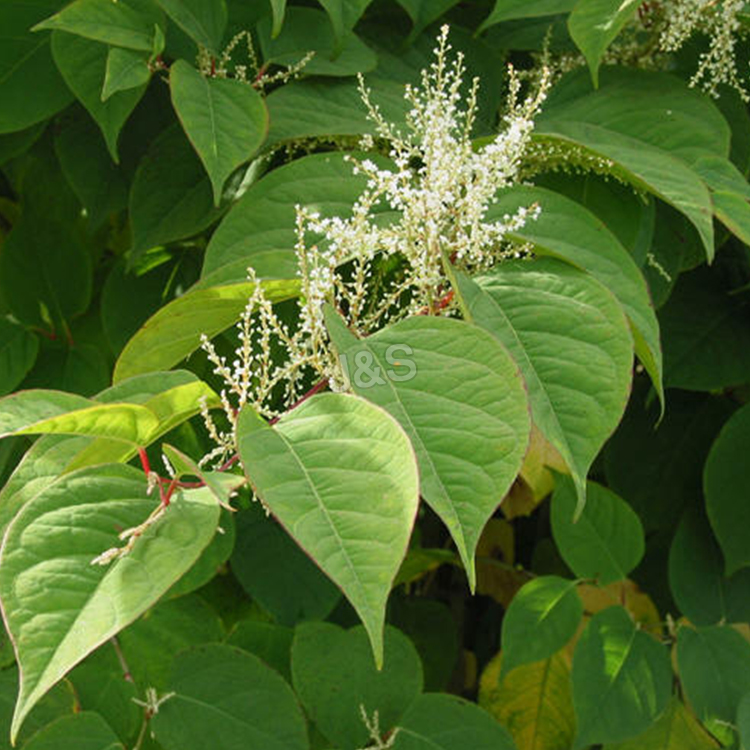
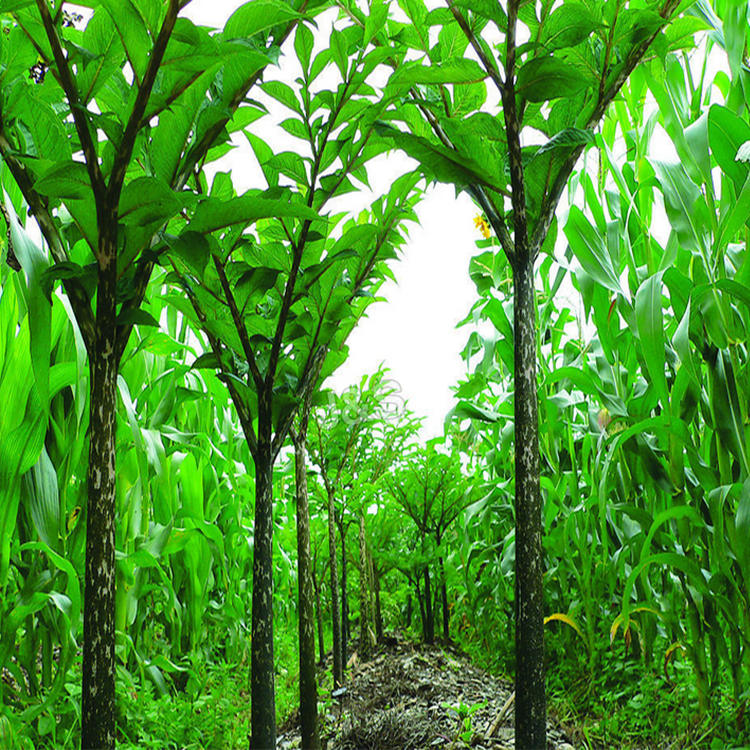
Manufacturer for White Willow Bark Extract Manufacturer in Sudan
Manufacturer for White Willow Bark Extract Manufacturer in Sudan Detail:
[Latin Name] Salix alba L.
[Plant Source] from China
[Specifications] Salicin 15-98%
[Appearance] Yellow Brown to White powder
Plant Part Used: Bark
[Particle size] 80 Mesh
[Loss on drying] ≤5.0%
[Heavy Metal] ≤10PPM
[Storage] Store in cool & dry area, keep away from the direct light and heat.
[Shelf life] 24 Months
[Package] Packed in paper-drums and two plastic-bags inside.
[Net weight] 25kgs/drum
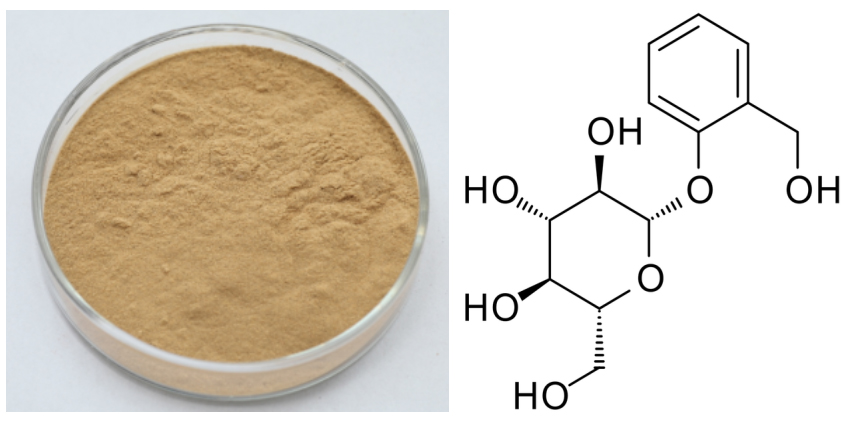
Brief Introduction
Salicin is a naturally occurring compound found in the bark of several species of trees, primarily North American in origin, that are from the willow, poplar, and aspen families. White willow, from whose Latin name, Salix alba, the term salicin is derived, is the most well known source of this compound, but it is found in a number of other trees, shrubs, and herbaceous plants as well being synthesized commercially. It is a member of the glucoside family of chemicals and is used as an analgesic and antipyretic. Salicin is used as a precursor for the synthesis of salicylic acid and acetylsalicylic acid, commonly known as aspirin.
A colorless, crystalline solid in its pure form, salicin has the chemical formula C13H18O7. Part of its chemical structure is equivalent to the sugar glucose, meaning it is classified as a glucoside. It is soluble, but not strongly so, in water and alcolhol. Salicin has a bitter taste and is a natural analgesic and antipyretic, or fever reducer. In large quantities, it can be toxic, and overdoses may lead to liver and kidney damage. In its raw form, it may be mildly irritating to skin, respiratory organs, and eyes.
Function
1. Salicin is used to ease pain and reduce inflammation.
2. Relieve acute and chronic pain, including headache, back and neck pain, muscle aches, and menstrual cramps; Control arthritis discomforts.
3. Relieve acute and chronic pain.
4. It has the same effect on the body as aspirin without any of the side effects.
5. It is an anti-inflammatory, a fever reducer, an analgesic, an anti-rheumatic, and an astringent. Specifically, it helps to relieve headaches.
Application
1.Anti-inflammatory, anti-rheumatic,
2.Reduce a fever,
3.Use as an analgesic and astringent,
4.Relieve headache,
5.Ease pain caused by rheumatism, arthritis, and carpal tunnel syndrome.
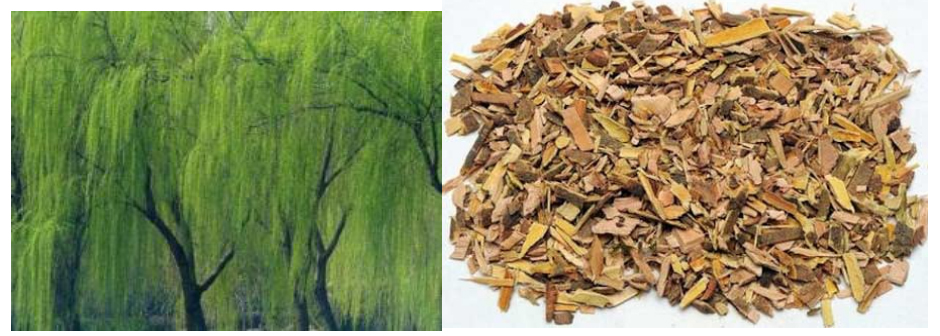
Product detail pictures:
Related Product Guide:
To create much more price for clients is our company philosophy; purchaser growing is our working chase for Manufacturer for White Willow Bark Extract Manufacturer in Sudan , The product will supply to all over the world, such as: Latvia, Atlanta, California, Our staffs are adhering to the "Integrity-based and Interactive Development" spirit, and the tenet of "First-class Quality with Excellent Service". According to the needs of every customer, we give customized & personalised services to help customers achieve their goals successfully. Welcome clients from home and abroad to call and inquire!
METTEZ EN “HD” LA QUALITÉ – Forêt de Fontainebleau – Énergies – Ruines – MR-GINSENG.COM – https://mr-ginseng.com – Explication de la vidéo – En me baladant dans cette forêt, je retrouve souvent des traces d’Anciennes civilisations, néanmoins peu d’informations sur le web à ce sujet. Les énergies que j’y ressens m’ont conduit dans différents lieux dont celui ci, où on se sent régénéré et en paix. J’ai montré les différentes couleurs énergétiques du lieu avec la caméra, en prenant en compte le soleil et la lumière, ce qui permet de mettre à jour les couleurs du Lieu. A PROPOS DE MR GINSENG = https://mr-ginseng.com/a-propos-de-mr-ginseng-com/ – Mr-Ginseng.com – Copyright 2016
LKISTE DES PLANTES MEDICINALES MR-GINSENG.COM
https://mr-ginseng.com
https://mr-ginseng.com/a-propos-de-mr-ginseng-com/
https://en.mr-ginseng.com/
https://en.mr-ginseng.com/about-mr-ginseng-com/
https://mr-ginseng.com/acerola/
https://mr-ginseng.com/ail/
https://mr-ginseng.com/aloe-vera/
https://mr-ginseng.com/ashwagandha/
https://mr-ginseng.com/baies-acai/
https://mr-ginseng.com/cannabis/
https://mr-ginseng.com/cannelle/
https://mr-ginseng.com/chlorella/
https://mr-ginseng.com/citron/
https://mr-ginseng.com/cordyceps/
https://mr-ginseng.com/curcuma/
https://mr-ginseng.com/citron/
https://mr-ginseng.com/fenugrec/
https://mr-ginseng.com/ganoderma/
https://mr-ginseng.com/ganoderma/
https://mr-ginseng.com/gelee-royale/
https://mr-ginseng.com/gingembre/
https://mr-ginseng.com/ginkgo-biloba/
https://mr-ginseng.com/ginseng/
https://mr-ginseng.com/gluten/
https://mr-ginseng.com/goji/
https://mr-ginseng.com/griffonia-simplicifolia/
https://mr-ginseng.com/guarana/
https://mr-ginseng.com/harpagophytum/
https://mr-ginseng.com/maca/
https://mr-ginseng.com/mandragore/
https://mr-ginseng.com/melisse/
https://mr-ginseng.com/menthe-poivree/
https://mr-ginseng.com/omega-3/
https://mr-ginseng.com/ortie/
https://mr-ginseng.com/propolis/
https://mr-ginseng.com/rhodiola/
https://mr-ginseng.com/spiruline/
https://mr-ginseng.com/thym/
https://mr-ginseng.com/tribulus-terrestris/
www.iocob.nl Kruidengeneeskunde IOCOB
Een korte uitleg over fytotherapie door Prof.dr. Jan M. Keppel Hesselink, voorzitter Stichting IOCOB.
Binnen de fytotherapie wordt behandeld met onderdelen van planten. Er zijn twee hoofdvormen van fytotherapie: de reguliere fytotherapieen de complementaire fytotherapie. De regulierer fytotherapie maakt gebruik van onderdelen en preparaten van planten waarvan de gewone geneeskunde de werking vanerkent, zoals Ginkgo Biloba extract voor etalagebenen. Dit preparaat is een regulier geneesmiddel en is ook als zodanig geregistreerd. De complementaire fytotherapie maakt gebruik van meestal onverdunde extracten van planten, in de vorm van tabletten, crèmes en druppels.
De internationaal geaccepteerde definitie van fytotherapie kan bij de ESCOP gevonden worden.
De Nederlandse vereniging voor Fytotherapie onderscheidt vijf belangrijke contexten voor het gebruik van fytotherapeutica:
de reguliere (moderne westerse) geneeskunde,
de westers traditionele (natuur-)geneeskunde, de antroposofische geneeskunde,
de traditionele Chinese geneeskunde,
de Ayurvedische (Aziatische) geneeskunde,
de vele vormen van fytotherapie die te vinden zijn in geneeswijzen uit andere landen, zoals de Afrikaanse landen en in de Islamitische geneeskunde.
De fytotherapie kan opgevat worden als een onderdeel van de natuurgeneeskunde.
IOCOB zal veelbelovende fytopreparaten onder de loep nemen en het wetenschappelijk onderzoek beschrijven. IOCOB streeft naar een stringente analyse van het product, om tot een gewogen uitspraak te komen, of het product en de indicatie zinvol is en of er voldoende wetenschappelijk bewijs bestaat. Fytotherapeutica kunnen ook bijdragen aan de moderne inzichten in lastige te behandelen ziekten. Zo is er een Chinees kruid gevonden dat geelzucht bij kinderen kan verbeteren, omdat het een leverreceptor kan activeren voor billirubine, de gele kleurstof die in het bloed zit.
Dat er plantenpreparaten zijn die bij chronisch prostatisme zinvol zijn is algemeen bekend. Eind 2007 bewees een Franse groep onderzoekers dat het geven van een plantaardig middel (waarin o.a. Saw Palmetto) samen met een regulier middel (een alfa blokker) beter effect gaven dan de middelen afzonderlijk. En dat beide middelen even werkzaam waren. Een voorbeeld van complementaire behandeling in de meest klassieke zin van het woord.
In het September nummer van het tijdschrift Urology melden Franse onderzoekers de resultaten van een gerandomiseerde studie met 4 armen: een behandeling met placebo, met een klassiek regulier middel (de alfa blokker Doxazosine), een plantenmiddel (waarin o.a. Saw Palmetto), en de combinatie van beiden:
A randomized controlled study of 4 groups of male patients diagnosed as chronic non-bacterial prostatitis/chronic pelvic pain syndrome (CP-CPPS) according to the NIH classification strategy. Group I of 35 men treated with alpha blockers (Doxazosin) of 2 mg daily. Group II of 35 men treated with phytotherapy (saw palmetto and P. africanum) with the standard dose. Group III of 35 men treated with combination of both and Group IV 28 men treated with placebo as a control. NIH-Chronic prostatitis symptom Index (NIH-CPSI) was measured before and 3 month after treatment.
Er werd gemeten wat de effecten waren na 3 maanden.
Effecten vergelijkbaar, beide actieve middelen beter
De klachten qua pijn en plassen, en de kwaliteit van leven waren voor het begin van de behandeling allen vergelijkbaar. Na behandeling bleken alle 3 de actieve behandelingen beter te zijn dan placebo, en de combinatie was weer beter. Een bijzonder resultaat!
After treatment, there was a statistically significant difference between the placebo group and all the other 3 treatment groups. Pain score was improved by 66.1%, 74.2% and 80.1% for groups I, II and III respectively with only significant difference between the combination group and the alpha blockers one. Urinary symptoms improved by 66.8%, 41.3% and 72.2% respectively with significant difference between the combination therapy and phytotherapy group. Quality of life improved in all 3 groups but better in group III 59.3%, 58.4% and 71.4% respectively.
Bron
POS-01.45: Alpha blockers versus phytotherapy for the treatment of chronic non-bacterial prostatitis Urology, Volume 70, Issue 3, Supplement 1, September 2007, Page 204
 By Barbara from Mauritius - 2018.04.25 16:46
Managers are visionary, they have the idea of "mutual benefits, continuous improvement and innovation", we have a pleasant conversation and Cooperation.
By Monica from Malawi - 2018.09.21 11:01