Short Lead Time for Lyophilized royal jelly powder in Kazakhstan
Short Lead Time for Lyophilized royal jelly powder in Kazakhstan Detail:
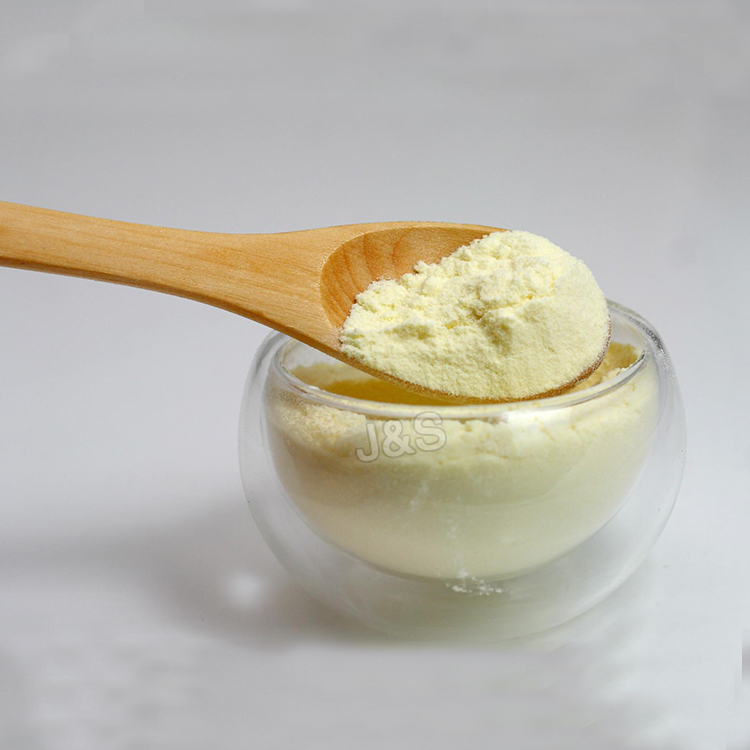
[Products Name] Royal jelly powder,Lyophilized royal jelly powder
[Specification] 10-HDA 4.0%, 5.0%, 6.0%, HPLC
[Gerneral feature]
1. Low antibiotics, Chloramphenicol< 0.1ppb
2. certified by, according to EOS & NOP standard;
3.100% pure with no additives;
4. More easily absorbed into the body than fresh royal jelly
5. Can be easily produced into tablets.
[Our advantages]
- 600 bee farmers, 150 units of bee-feeding groups located in natural mountains;
- certificated by;
- NON-antibiotics, widely exported to Europe;
- Health Certificate, Sanitary Certificate and Quality Certificate are available.
[Lyophilized technology]
Lyophilized technology, also known as Freeze-drying, it is a dehydration process typically used to maintain activity of all nutrition ingredients in royal jelly, also to make the royal jelly convenient for transport. Freeze-drying works by freezing the material and then reducing the surrounding pressure to allow the frozen water in the material to sublimate directly from the solid phase to the gas phase. This technology can maintain all activity of nutrition ingredient.
Lyophilized royal jelly powder is processed directly from fresh royal jelly.
3kgs fresh royal jelly is used to make 1kg lyophilized royal jelly powder.
During all the production process, there is no additives.
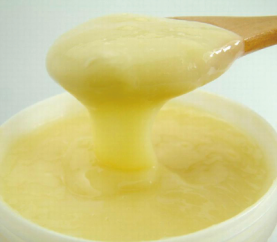
[Packing]
5kg/bag, 25kgs/drum
1kg/bag, 20kgs/carton
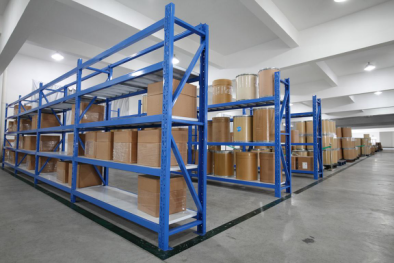
Main indices of physical and chemic in Lyophilized royal jelly
| Ingredients Indices | Lyophilized royal jelly | Standards | Results |
| Ash | 3.2 | <5 | Complies |
| Water | 4.1% | <7% | Complies |
| Glucose | 43.9% | <50% | Complies |
| Protein | 38.29% | >33% | Complies |
| 10-HDA | 6.19% | >4.2% | Complies |
[Our work flow]
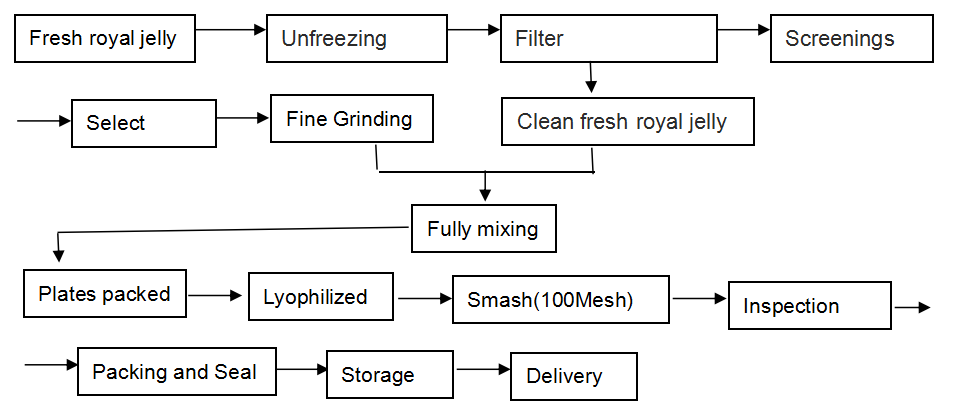
Our Lyophilized Royal Jelly Powder is produced in this way: we lyophilize the fresh royal jelly by advanced freeze-drying facilities without losing any nutritional ingredients, reserving the natural ingredients in utmost, and then make them into the form of powder, for any food additives are not needed to add.
The raw material we use is the natural fresh royal jelly which is up to the export standard . We process our products strictly according to export standard. Our workshop is up to the requirements of GMP.
Royal Jelly powder has been selected as drug excipients by many European and American pharmaceutical producing enterprises.Meanwhile it is applies to health food and cosmetics industries.
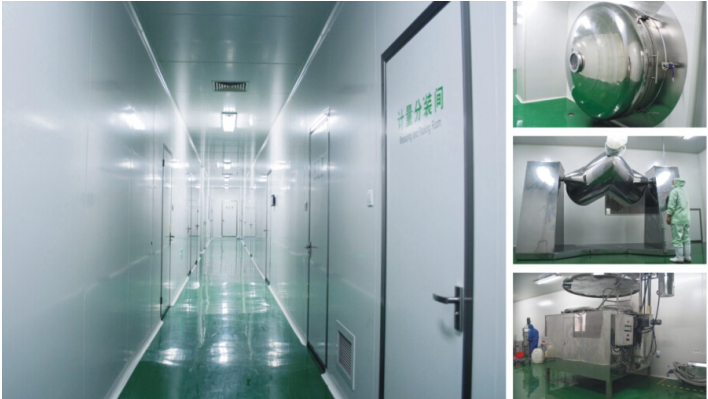
[Quality control]
Traceability record
GMP standard production
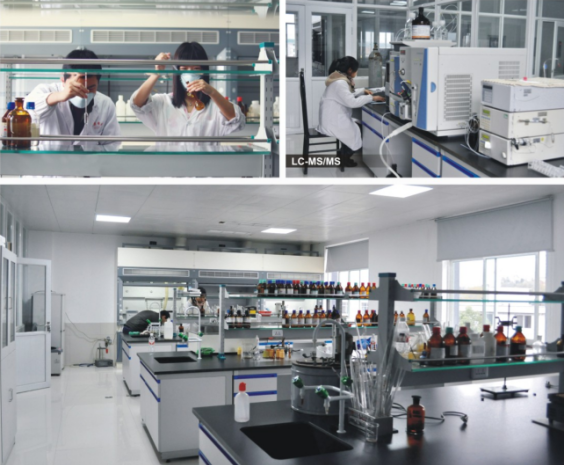
Advanced inspection equipment
[Function]
1.Enhances the immune system
2.Promotes wound healing
3.Has antitumor/anticancer properties
4.Lowers cholesterol levels
5.Increases fat metabolism
6.Is a powerful antioxidant
7.Regulates blood sugar levels
[Applications]
It’s widely used in health tonic, health pharmacy, hairdressing and cosmetic area, and mainly was applied in capsules, troche and oral liquids etc.
Product detail pictures:
Related Product Guide:
The organization keeps on the procedure concept "scientific management, high quality and efficiency primacy, purchaser supreme for Short Lead Time for Lyophilized royal jelly powder in Kazakhstan , The product will supply to all over the world, such as: Czech, Mumbai, Colombia, As an experienced factory we also accept customized order and make it same as your picture or sample specifying specification and customer design packing. The main goal of the company is to live a satisfactory memory to all the customers, and establish a long term win-win business relationship. For more information, please contact us. And It is our great pleasure if you like to have a personally meeting in our office.
For More info or want to do Sante Business
Vince @ 0999-3859028 / 046-4245341
Email Me: vinceblaine@gmail.com
https://www.facebook.com/VincentBalane.21
It’s our chance to change our life cycle.
We all had a Dreams, BIG DREAMS to have a better life.
We Learned in School, Find A Job, then work with our Boss.
What if there’s a way to shorten our time to achieved our Dreams, OUR BIG DREAMS? What would you do?
Sante Barley is the premier Pure Barley Products in the Philippines.
Andito ang Sante Pure Barley International para matulungan tayo pinansyal at pati kalusugan natin. PANALO KA DITO!
Like our FB Page: https://www.facebook.com/pages/Sante-Pure-Barley-International/536567033064104
If you are looking for ways to increase sexual stamina and improve sexual performance, there is a program that can help you with the best male enhancement. Natural Male Solutions has programs for penis enlargement exercises and natural penis enlargement that will teach you how to improve sexual stamina. Male enhancement pills are also available, and you can learn ways to increase sexual stamina online at www.naturalmalesolutions.com
 By Modesty from Philippines - 2017.08.15 12:36
Product quality is good, quality assurance system is complete, every link can inquire and solve the problem timely!
By Harriet from Cannes - 2017.12.09 14:01