Wholesale Price China Pine bark Extract Manufacturer in Mombasa
Wholesale Price China Pine bark Extract Manufacturer in Mombasa Detail:
[Latin Name] Pinus pinaster.
[Specification] OPC ≥ 95%
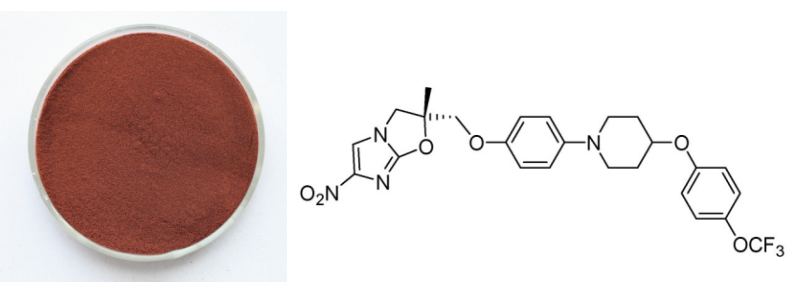
[Appearance] Red brown fine powder
Plant Part Used: Bark
[Particle size] 80Mesh
[Loss on drying] ≤5.0%
[Heavy Metal] ≤10PPM
[Storage] Store in cool & dry area, keep away from the direct light and heat.
[Shelf life] 24 Months
[Package] Packed in paper-drums and two plastic-bags inside.
[Net weight] 25kgs/drum
[What is Pine bark?]
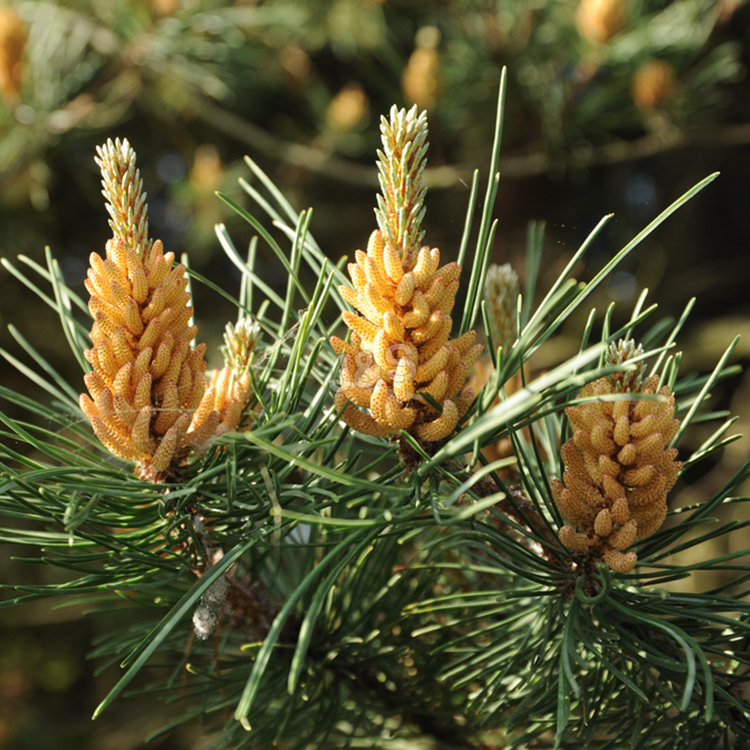
Pine bark, botanical name Pinus pinaster, is a maritime pine native to southwest France that also grows in countries along the western Mediterranean. Pine bark contains a number of beneficial compounds that are extracted from the bark in a way that doesn’t destroy or damage the tree.
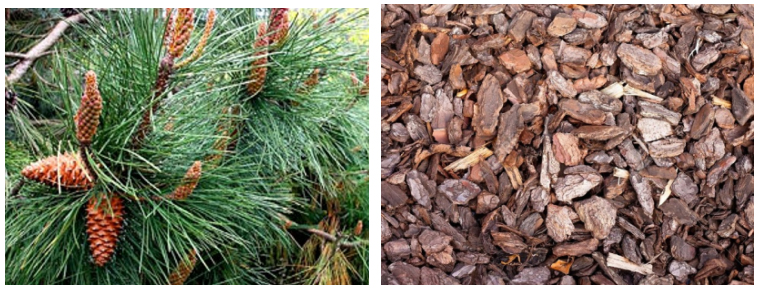
[How does it work?]
What gives pine bark extract its notoriety as a powerful ingredient and super antioxidant is that it’s loaded with oligomeric proanthocyanidin compounds, OPCs for short. The same ingredient can be found in grape seeds, the skin of peanuts and witch hazel bark. But what makes this miracle ingredient so amazing?
While OPCs found in this extract are mostly known for their antioxidant-producing benefits, these amazing compounds exude antibacterial, antiviral, anticarcinogenic, anti-aging, anti-inflammatory and anti-allergic properties. Pine bark extract can help reduce muscle soreness and may help improve conditions relating to poor circulation, high blood pressure, osteoarthritis, diabetes, ADHD, female reproductive issues, skin, erectile dysfunction, eye disease and sports stamina.
Seems like it must be pretty amazing, but let’s look closer. The list goes on a bit further, as the OPCs in this extract may “inhibit lipid peroxidation, platelet aggregation, capillary permeability and fragility, and to affect enzyme systems,” which basically means it may be a natural treatment for many serious health conditions, such as stroke and heart disease.
[Function]
- Lowers Glucose Levels, Improving Diabetic Symptoms
- Helps Prevent Hearing Loss and Balance
- Staves Off Infections
- Protects the Skin from Ultraviolet Exposure
- Decreases Erectile Dysfunction
- Reduces Inflammation
- Helps Increase Athletic Performance
Product detail pictures:
Related Product Guide:
"Quality first, Honesty as base, Sincere service and mutual profit" is our idea, in order to develop continuously and pursue the excellence for Wholesale Price China Pine bark Extract Manufacturer in Mombasa , The product will supply to all over the world, such as: Naples, London, Latvia, We win many reliable customers by rich experience, advanced equipments, skilled teams, strict quality control and best service. We can guarantee all our products. Customers' benefit and satisfaction are always our biggest goal. Please contact us. Give us a chance, give you a surprise.
This is another gift I received from one of my Japanese friends. This is Konnyaku Jelly and this is my first time eating Konnyaku Jelly despite having lived in Japan for 13 years. I’ve heard so much about this sweet and some people choking and dying on Konnyaku Jelly in Japan. I really like the texture of Konnyaku Jelly.
Konnyaku by Wikipedia:
Konjac is grown in India, China, Japan and Korea for its large starchy corms, used to create a flour and jelly of the same name. It is also used as a vegan substitute for gelatin.
In Japanese cuisine, konjac (konnyaku) appears in dishes such as oden. It is typically mottled grey and firmer in consistency than most gelatins. It has very little taste; the common variety tastes vaguely like salt. It is valued more for its texture than flavor.
Ito konnyaku (糸蒟蒻) is a type of Japanese food consisting of konjac cut into noodle-like strips. It is usually sold in plastic bags with accompanying water. It is often used in sukiyaki and oden. The name literally means “thread-konjac”.
Japanese konnyaku is made by mixing konjac flour with water and limewater.[2] Hijiki is often added for the characteristic dark color and flavor. Without additives for color, konnyaku is pale white. It is then boiled and cooled to solidify. Konnyaku made in noodle form is called shirataki and used in foods such as sukiyaki and gyudon.
Konjac is consumed in parts of China’s Sichuan province; the corm is called moyu (Chinese: 魔芋; literally “devil’s taro”), and the jelly is called “konjac tofu” (魔芋豆腐 móyù dòufu) or “snow konjac” (雪魔芋 xuě móyù).
The dried corm of the konjac plant contains around 40% glucomannan gum. This polysaccharide makes konjac jelly highly viscous.
Konjac has almost no calories, but is very high in fiber. Thus, it is often used as a diet food. It can also be used for facial massage accessories which are currently popular in Korea.
The product Lipozene[3] is made from the konjac root.
Fruit jelly
Konjac can also be made into a popular Asian fruit jelly snack, known variously in the United States as lychee cups (after a typical flavor and Nata de coco cube suspended in the gel) or konjac candy, usually served in bite-sized plastic cups.
Choking risk
Perhaps because of several highly publicized deaths and near-deaths in the San Francisco Bay Area among children and elderly caused by suffocation while eating konjac candy, the U.S. Food and Drug Administration (FDA) issued product warnings[4] in 2001 and subsequent recalls in the United States and Canada. Unlike gelatine and some other commonly used gelling agents, konjac fruit jelly does not melt readily in the mouth. Some products formed a gel strong enough such that only chewing, not tongue pressure or breathing pressure, could disintegrate the gel. Although the product is intended to be eaten by gently squeezing the gel’s cup, a consumer could suck the product out with enough force to unintentionally lodge it in his or her trachea. Konjac fruit jelly was subsequently also banned in the European Union.[5][6][7]
Some konjac jelly snacks are not of a size and consistency to pose any unusual choking risk, but are nonetheless affected by the government bans. Some products that remain in Asian markets have an increased size, unusual shape, and more delicate consistency than the round, plug-like gels that were associated with the choking incidents. The snacks usually have warning labels advising parents to make sure their children chew the jelly thoroughly before swallowing. Japan’s largest manufacturer of konjac snacks, MannanLife, temporarily stopped production of the jellies after a 21-month-old Japanese boy was revealed to have choked to death on a frozen MannanLife konjac jelly.[8] 17 people have died from choking on konjac between 1995 and 2008.[9] MannanLife konjac jelly’s packaging bag now shows a note to consumers, advising them to cut the product into smaller pieces before serving it to small children.
https://en.wikipedia.org/wiki/Konnyaku_jelly
https://davesmith.ludaxx.com
https://www.davegsmith.com/
https://bluelineproducts.com/
Why it Works for Health Sugar Blocker in this area Harlingen
Why it Works for
F21 is an All Natural Sugar Blocker that assists restrict your blood sugar absorption. It consists of various substances discovered to have numerous health advantages, such as L-Arabinose, Coriolus Versicolor Polysacchride, Konjac-Mannan, Magnesium Stearate, Mint taste: Menthol and Natural Colors. F21 not just does it assist promote weight-loss, (PSK) enhances your immune system feedback. For every gram of F21, you can obstruct up to 20 grams of sugar (sucrose). The formula not just assists promote weight-loss, it rewards the intestinal system by allowing the shut out sucrose to support beneficial probiotic germs while the polysaccharide (PSK) enhances your immune system feedback.
DG Smith https://www.davegsmith.com/
over the counter appetite suppressant :
00:00:05 over the counter diet pills
00:00:12 sugar diabetes
00:00:19 best appetite suppressant for women over the counter
00:00:26 diabetes care
00:00:34 safe appetite suppressant
It is a very good, very rare business partners, looking forward to the next more perfect cooperation!