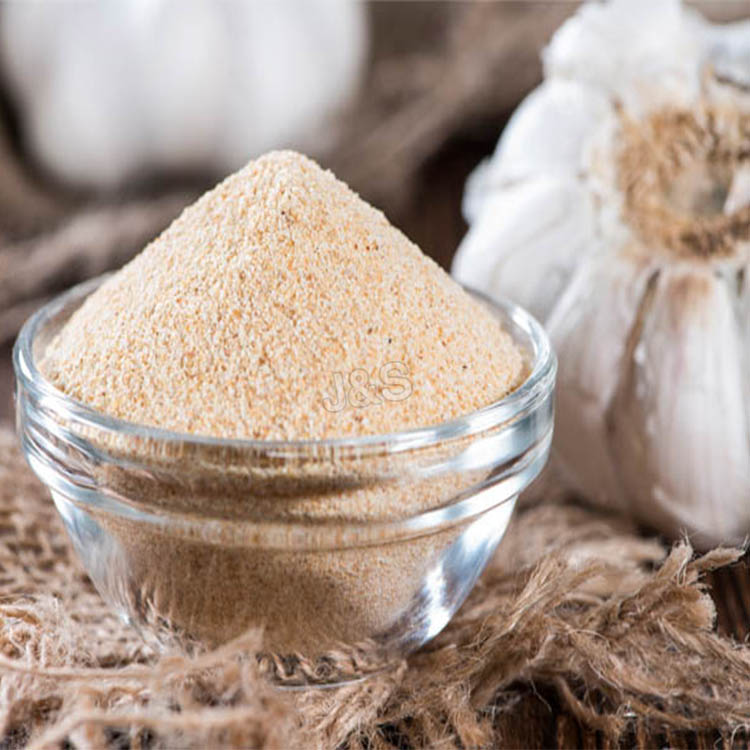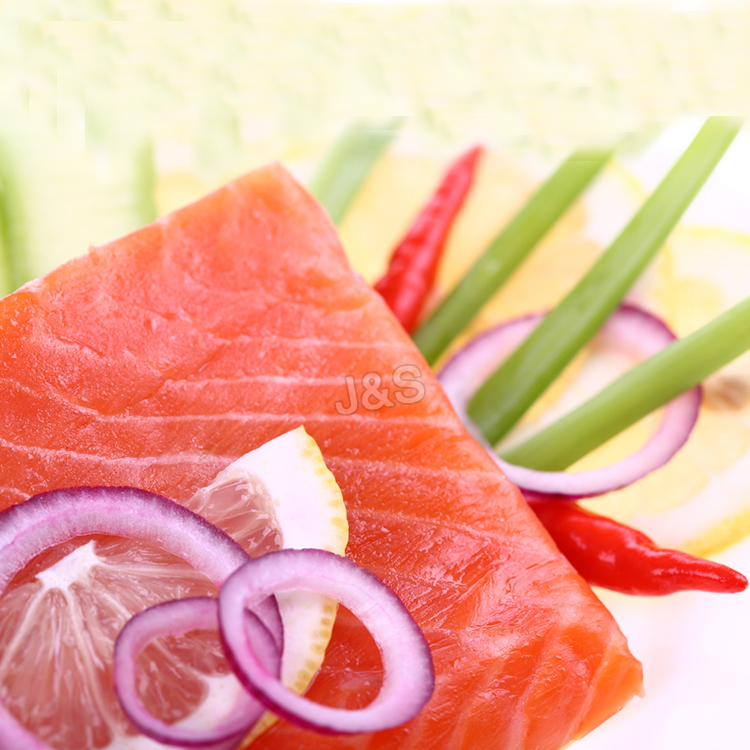
Cheapest Price Astaxanthin Supply to Israel
Cheapest Price Astaxanthin Supply to Israel Detail:
[Latin Name] Haematococcus Pluvialis
[Plant Source] from China
[Specifications]1% 2% 3% 5%
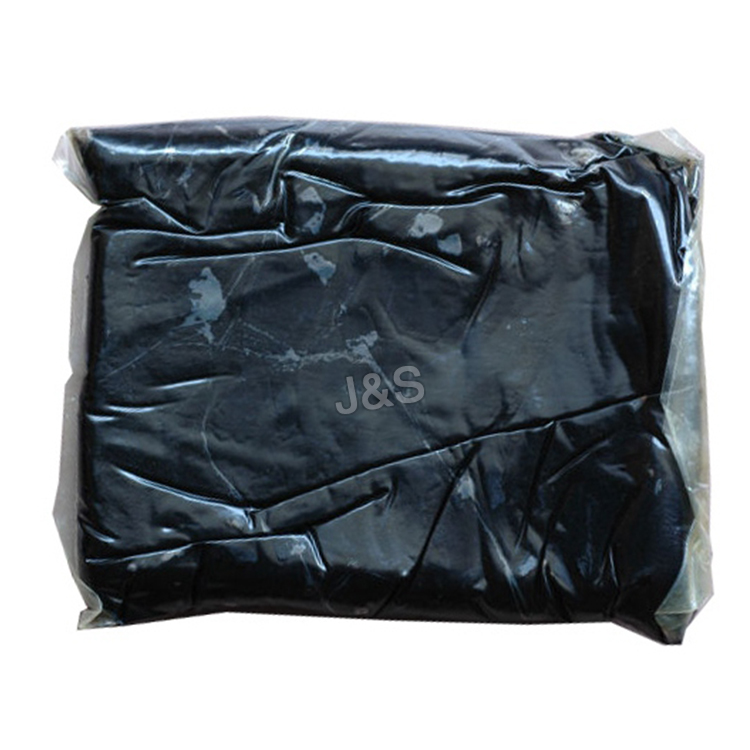
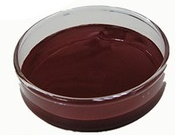
[Appearance] Dark red Powder
[Particle size] 80 Mesh
[Loss on drying] ≤5.0%
[Heavy Metal] ≤10PPM
[Storage] Store in cool & dry area, keep away from the direct light and heat.
[Shelf life] 24 Months
[Package] Packed in paper-drums and two plastic-bags inside.
[Net weight] 25kgs/drum
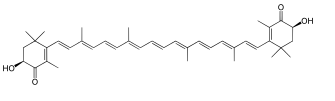
Brief Introduction
Astaxanthin is a natural nutritional component, it can be found as a food supplement. The supplement is intended for human, animal, and aquaculture consumption.
Astaxanthin is a carotenoid. It belongs to a larger class of phytochemicals known as terpenes, which are built from five carbon precursors; isopentenyl diphosphate and dimethylallyl diphosphate . Astaxanthin is classified as a xanthophyll (originally derived from a word meaning “yellow leaves” since yellow plant leaf pigments were the first recognized of the xanthophyll family of carotenoids), but currently employed to describe carotenoid compounds that have oxygen-containing moities, hydroxyl or ketone , such as zeaxanthin and canthaxanthin. Indeed, astaxanthin is a metabolite of zeaxanthin and/or canthaxanthin, containing both hydroxyl and ketone functional groups. Like many carotenoids, astaxanthin is a colorful, lipid-soluble pigment. This colour is due to the extended chain of conjugated (alternating double and single) double bonds at the centre of the compound. This chain of conjugated double bonds is also responsible for the antioxidant function of astaxanthin (as well as other carotenoids) as it results in a region of decentralized electrons that can be donated to reduce a reactive oxidizing molecule.
Function:
1.Astaxanthin is a powerful antioxidant and may protect against oxidative damage to body tissues.
2.Astaxanthin can improve the immune response by increasing the number of antibody producing cells.
3.Astaxanthin is a potential candidate to treat neurodegenerative disease such as Alzhimer and Parkinson diease.
4.Astaxanthin dan reduce UVA-light damage to skin such as sunburn, inflammation, ageing and skin cancer.
Application
1.When applied in pharmaceutical field, astaxanthin powder has the good function of antineoplastic;
2.When applied in health food field, astaxanthin powder is used as food additives for pigment and health care;
3.When applied in cosmetic field, astaxanthin powder has the good function of antioxidant and anti-aging;
4.When applied in animal feeds field, astaxanthin powder is used as animal feed additive to impart coloration, including farm-raised salmon and egg yolks.
Product detail pictures:
Related Product Guide:
We are experienced manufacturer. Wining the majority from the crucial certifications of its market for Cheapest Price Astaxanthin Supply to Israel , The product will supply to all over the world, such as: Marseille, South Africa, Panama, Since our establishment, we keep on improving our products and customer service. We are able to provide you with a wide range of high quality hair products at competitive prices. Also we can produce different hair products according to your samples. We insist on high quality and reasonable price. Except this, we provide best OEM service. We warmly welcome OEM orders and customers all over the world to cooperate with us for mutual development in the future.
https://nutriopic.com/iron-fuz-vid
This plant based iron supplement has many benefits like improving the immune system, helping sleep, boosting mental clarity, improving blood, promoting cognitive function and all round energy levels for better all by maintaining healthy iron levels.
This is also in good standing in the arena of iron supplements for anemia.
Leading manufacturer of natural health supplements, Global Healing Center, has announced the launch of its new iron supplement – Iron Fuzion, with free shipping to anywhere in U.S and Canada
Iron Fuzion according to the makers of the supplement is produced to help in the maintenance of healthy iron levels in the body, boost energy levels, enhance a balanced immune system and improvement of mental clarity.
Iron is one of the most essential nutrients essential for the total well being of the body. However, studies have shown that many people do not have the required amount of iron in their body system. Being iron deficient has been associated with many illnesses, leading to the need for iron supplements especially with everyday diets lacking the required amount of daily iron intake.
Several factors have been discovered to cause iron deficiency, with pregnant women and frequent blood donors having a higher risk of being iron deficient. However, the use of iron supplements like Iron Fuzion helps to prevent iron-deficiency anemia, reduce fatigue, promote cognitive function and improve sleep quality altered by low concentrations of iron.
As one of the few plant-based iron supplements, Iron Fuzion is gentle on the stomach, vegan and safe for vegetarians, free from gluten, include extracts from thyme and echinacea extracts and is 100 percent natural containing no toxic additives, fillers, colors, or artificial ingredients and sweeteners. Other ingredients of the supplement include fulvic acid and gum acacia.
A bottle of Iron Fuzion containing 60 vegetarian capsules of iron supplement from natural plant extracts currently sells for less than $30, with free shipping anywhere in the U.S. or Canada. The product also comes with a 180-Day Money Back Guarantee, with users getting a full refund if results gotten are unsatisfactory. However, the makers have stated that results may vary.
#IronFuzionsupplement
#Iweightloss
#sideffects
#IronFuzioningredients
#IronFuzion
#healthbenefits
#Improvesleep
#mentalclarity
#healthyblood
#cognitivefunction
My Twitter https://twitter.com/nessyhill | Instagram https://instagram.com/nessyhill
Subscribe to BrainCraft! https://ow.ly/rt5IE
Why Do We Love Sugar: https://youtu.be/USNWXPfdc9g
Can You be Addicted to Sugar? https://youtu.be/1aLCwDT-X6c
BrainCraft is created and hosted by Vanessa Hill and brought to you by PBS Digital Studios. Talking psychology, neuroscience & why we act the way we do.
Sound design: Joel Werner (https://joelwerner.com)
Producer: Ella Colley
Keep in touch, won’t you?
Snapchat: nessyhill
Twitter https://twitter.com/nessyhill
Instagram https://instagram.com/nessyhill
Tumblr https://braincraft.tumblr.com
Facebook https://www.facebook.com/Braincraft
REFERENCES
The Inventor of Saccharin. Scientific American, 1886 https://books.google.com/books?id=f4I9AQAAIAAJ&pg=PA36#v=onepage&q&f=false
Schramm, D. D., Karim, M., Schrader, H. R., Holt, R. R., Cardetti, M., & Keen, C. L. (2003). Honey with high levels of antioxidants can provide protection to healthy human subjects. Journal of agricultural and food chemistry, 51(6), 1732-1735. https://www.ncbi.nlm.nih.gov/pubmed/12617614
Rizkalla, S. W. (2010). Health implications of fructose consumption: A review of recent data. Nutr Metab (Lond), 7(82), 911-22. https://www.ncbi.nlm.nih.gov/pmc/articles/PMC2991323/
Yang, Q. (2010). Gain weight by “going diet?” Artificial sweeteners and the neurobiology of sugar cravings: Neuroscience 2010. The Yale journal of biology and medicine, 83(2), 101. https://www.ncbi.nlm.nih.gov/pmc/articles/PMC2892765/
And a good fact Sheet on sugar and sweeteners:
https://extension.colostate.edu/docs/pubs/foodnut/09301.pdf
IMAGES
Agave plant via Stan Shebs, https://en.wikipedia.org/wiki/File:Agave_tequilana_2.jpg
 By Christina from Atlanta - 2017.03.28 16:34
The company leader recept us warmly, through a meticulous and thorough discussion, we signed a purchase order. Hope to cooperate smoothly
By Agustin from azerbaijan - 2018.11.04 10:32