High Quality for Ginger Root Extract Manufacturer in Lima
High Quality for Ginger Root Extract Manufacturer in Lima Detail:
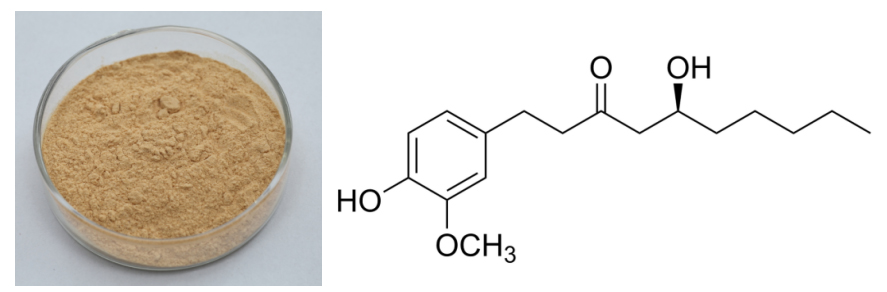
[Latin Name] Zingiber Officinalis
[Specification] Gingerols 5.0%
[Appearance] Light yellow powder
Plant Part Used: Root
[Particle size] 80Mesh
[Loss on drying] ≤5.0%
[Heavy Metal] ≤10PPM
[Storage] Store in cool & dry area, keep away from the direct light and heat.
[Shelf life] 24 Months
[Package] Packed in paper-drums and two plastic-bags inside.
[Net weight] 25kgs/drum
[What is ginger?]
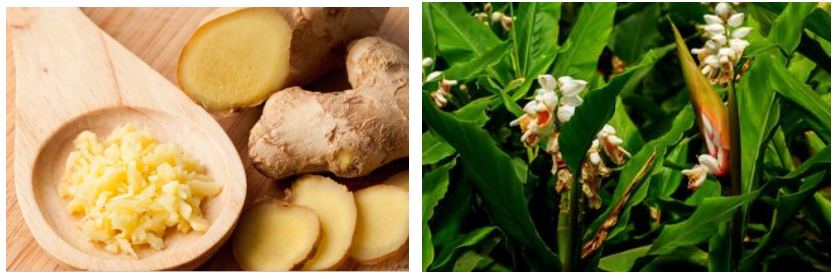
Ginger is a plant with leafy stems and yellowish green flowers. The ginger spice comes from the roots of the plant. Ginger is native to warmer parts of Asia, such as China, Japan, and India, but now is grown in parts of South American and Africa. It is also now grown in the Middle East to use as medicine and with food.
[How does it work?]
Ginger contains chemicals that may reduce nausea and inflammation. Researchers believe the chemicals work primarily in the stomach and intestines, but they may also work in the brain and nervous system to control nausea.
[Function]
Ginger is among the healthiest (and most delicious) spices on the planet.It is loaded with nutrients and bioactive compounds that have powerful benefits for your body and brain.Here are 11 health benefits of ginger that are supported by scientific research.
- Ginger Contains Gingerol, a Substance With Powerful Medicinal Properties
- Ginger Can Treat Many Forms of Nausea, Especially Morning Sickness
- Ginger May Reduce Muscle Pain and Soreness
- The Anti-Inflammatory Effects Can Help With Osteoarthritis
- Ginger May Drastically Lower Blood Sugars and Improve Heart Disease Risk Factors
- Ginger Can Help Treat Chronic Indigestion
- Ginger Powder May Significantly Reduce Menstrual Pain
- Ginger May Lower Cholesterol Levels
- Ginger Contains a Substance That May Help Prevent Cancer
- Ginger May Improve Brain Function and Protect Against Alzheimer’s Disease
- The Active Ingredient in Ginger Can Help Fight Infections
Product detail pictures:
Related Product Guide:
It is a good way to enhance our products and solutions and repair. Our mission will be to build creative solutions to consumers with a great experience for High Quality for Ginger Root Extract Manufacturer in Lima , The product will supply to all over the world, such as: Lithuania, Mombasa, Melbourne, For many years, we now have adhered to the principle of customer oriented, quality based, excellence pursuing, mutual benefit sharing. We hope, with great sincerity and good will, to have the honor to help with your further market.
Video shows what pycnogenol means. Any of a group of flavonoids extracted from the bark of pine trees, especially proanthocyanidins.. An antioxidant dietary supplement containing such an extract. pycnogenol synonyms: OPC, proanthocyanidin. Pycnogenol Meaning. How to pronounce, definition audio dictionary. How to say pycnogenol. Powered by MaryTTS, Wiktionary
Using This New Method,
Renaturing,
Sunflower Seeds Get Re-Ripened.
With This Process, The Sunflower Seed’s Hard Waxy-Fat
Gets Changed Into Enzyme Rich,
Omega Rich
Ripe Nut Food
and is now abundant in fresh live oils
(And is now pressing 22% more Sunflower oil, than from regular ‘hard seed’ !)
Acidity literally Gets Transformed Into Acid-Alkaline-Balanced
This ‘ Re-naturing ‘ process, is the combination of two natural processes, that of the Sprouting process, and that of the Ripening/drying process
Early on, I was told that if I wanted to make Almond Oil, I’d need a thirty five thousand dollar cold press… next there was an eight thousand dollar press…$300-500 dollar twin gear juicers did the job…until the more recent Piteba press which is only around $150
It was now time to see if the re-ripened Sunflower seed (Now abundant in oil) could be ground up with a basic kitchen hand-grinder ($30.US) and then wrung out, using just a small piece of cloth material to get the oil
This video is that moment.
After this point is more about the processes…(I’d watch the video now, and come back and read later)
Natural factors that relate to the re-naturing process; signatures of bio-mimicry, etc.
With the sprouting process, the act of soaking seeds in water simulates a spring rain (time to wake up)
As initial waters awaken the Sunflower seed, the hard to digest starches begin changing into easier to digest food, with the hard wax-like fat breaking down, on its journey toward becoming raw fresh fats & oils.
There’s an explosion of enzyme activity, as natural preservatives of ‘ highly acidic ‘ transform towards ‘ acid-alkaline balanced ‘.
( More happens than this, I’m keeping it simple )
see
” Natural Toxins in Sprouted Seeds: Separating Myth From Reality “:
by Warren Peary & William Peavy (Scroll down to “Anti-Nutrients in Sprouted Legumes” and “Anti-Nutrients As Protectors”)
The second natural process used, is what I consider ‘ the ripening process ‘
While contemplating fruiting trees, it seemed to me the growing fruit/nut first probably got nutrients from the mother tree. (Another perspective, the growing food first grew to fullness in size)
With the growing part over, I felt the tree had ‘ended its nutrient supply connection’,
now letting the fruit/nut (simply) ‘dry/ripen/cure’
While still having its stem to continue acting as its hanger, till later
There’s clearly an art to drying / reducing / curing (ripening) at different temperatures and moisture levels
When it comes to ripening, it’s well known that weather conditions hugely affect the final quality and flavors of foods. Take grapes (and wines) for example, when certain years clearly stand out from the rest because they got the perfect amount of rain or sunshine, (Versus a year whose season might have ended with abrupt cold and rain)
Basically, by the speed, temp.’s,and surrounding conditions by which they’ve ripened
People who dry their greens, hung in a dark cool area, know that the greatest of the food’s qualities will be exhibited (or not) simply because of how it was dried/cured.
Remember, produce generally ripens on its way to market; or, after it’s already on the store shelves
Nuts might get sent to market fresh, but the longer they sit waiting for consumerism the harder and more acidic they become
(That is, till they’re re-awoken with water once again)
It’s also been realized, that this soaking & drying-back method, could be done more than once, multiple times
One key I’ve found for good ‘drying back’ (for seeds) is simply ‘ not too fast ‘, and ‘ not too slow ‘.
If it dries ‘ too fast ‘ it dries without certain formulations /qualities
If it dries ‘ too slow ‘ it may stagnate, sour, mold (Holding &sharing those same diminished qualities and flavors)
Curing’s an art… using experiences earned through the diversity of ever-changing conditions
There’s an art form in using a dehydrator too,
but I truly love ‘room temp drying’, where there’s most always a wide ‘ safe band ‘ for what works as ‘ perfect ‘ Basically put…it’s hard to screw up
provided the place you’re drying them isn’t overly moist and wet; or too hot & dry.
The nuts or seeds can be laid on many different types of surfaces; sometimes put on plates, or trays; and sometimes with paper under them.
Different parts of a house may be warmer or colder, so it pays to put them everywhere, and let them show you where they like to be best, sampling them each 3 to 5 hours till done.(Then you’ll simply know where you’ll want to dry them after that)
Examples: one plate might be put at counter height in a room; one plate/tray may be put near ceiling height; maybe put a plate ‘ one room away from the kitchen ‘…and as you can see in the video, I’m drying them in our living room, and using a screen.
 By Catherine from Morocco - 2018.06.19 10:42
The company can keep up with the changes in this industry market, product updates fast and the price is cheap, this is our second cooperation, it's good.
By Eunice from Philippines - 2017.10.13 10:47