Top Quality White Willow Bark Extract Manufacturer in Melbourne
Top Quality White Willow Bark Extract Manufacturer in Melbourne Detail:
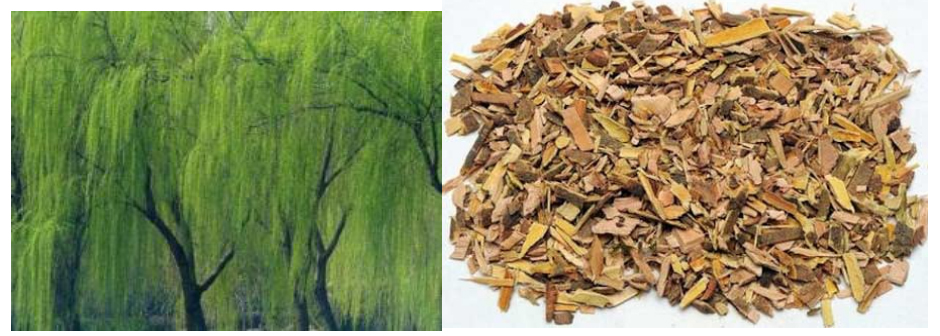
[Latin Name] Salix alba L.
[Plant Source] from China
[Specifications] Salicin 15-98%
[Appearance] Yellow Brown to White powder
Plant Part Used: Bark
[Particle size] 80 Mesh
[Loss on drying] ≤5.0%
[Heavy Metal] ≤10PPM
[Storage] Store in cool & dry area, keep away from the direct light and heat.
[Shelf life] 24 Months
[Package] Packed in paper-drums and two plastic-bags inside.
[Net weight] 25kgs/drum
Brief Introduction
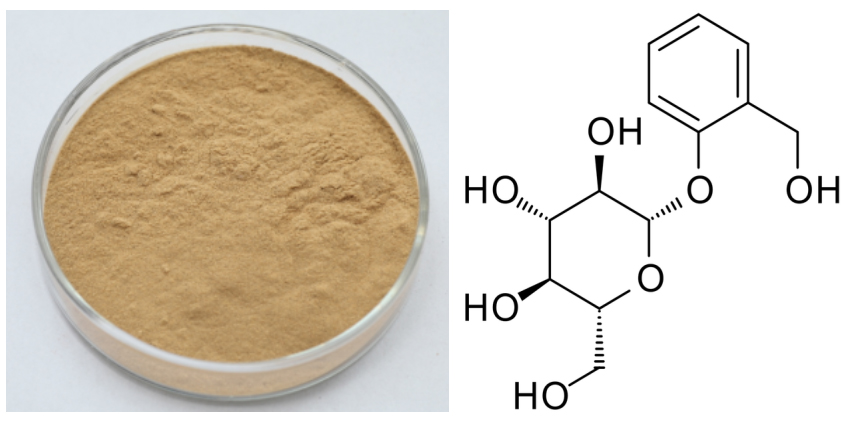
Salicin is a naturally occurring compound found in the bark of several species of trees, primarily North American in origin, that are from the willow, poplar, and aspen families. White willow, from whose Latin name, Salix alba, the term salicin is derived, is the most well known source of this compound, but it is found in a number of other trees, shrubs, and herbaceous plants as well being synthesized commercially. It is a member of the glucoside family of chemicals and is used as an analgesic and antipyretic. Salicin is used as a precursor for the synthesis of salicylic acid and acetylsalicylic acid, commonly known as aspirin.
A colorless, crystalline solid in its pure form, salicin has the chemical formula C13H18O7. Part of its chemical structure is equivalent to the sugar glucose, meaning it is classified as a glucoside. It is soluble, but not strongly so, in water and alcolhol. Salicin has a bitter taste and is a natural analgesic and antipyretic, or fever reducer. In large quantities, it can be toxic, and overdoses may lead to liver and kidney damage. In its raw form, it may be mildly irritating to skin, respiratory organs, and eyes.
Function
1. Salicin is used to ease pain and reduce inflammation.
2. Relieve acute and chronic pain, including headache, back and neck pain, muscle aches, and menstrual cramps; Control arthritis discomforts.
3. Relieve acute and chronic pain.
4. It has the same effect on the body as aspirin without any of the side effects.
5. It is an anti-inflammatory, a fever reducer, an analgesic, an anti-rheumatic, and an astringent. Specifically, it helps to relieve headaches.
Application
1.Anti-inflammatory, anti-rheumatic,
2.Reduce a fever,
3.Use as an analgesic and astringent,
4.Relieve headache,
5.Ease pain caused by rheumatism, arthritis, and carpal tunnel syndrome.
Product detail pictures:
Related Product Guide:
Assume full accountability to fulfill all demands of our purchasers; attain continual advancements by marketing the advancement of our clientele; grow to be the final permanent cooperative partner of purchasers and maximize the interests of purchasers for Top Quality White Willow Bark Extract Manufacturer in Melbourne , The product will supply to all over the world, such as: Macedonia, Gabon, Iceland, we rely on own advantages to build a mutual-benefit commerce mechanism with our cooperative partners. As a result, we've gained a global sales network reaching the Middle East, Turkey, Malaysia and Vietnamese.
My experience with degenerative disc disease, and what is WORKING for me in dealing with the pain! Order yours at www.shoplikeaboss.com, and be sure to contact me for proper dosage instructions.
Easy Slim Tea has 19 finest quality ingredients like Japanese Tea, Nagkesar, Elaichi, Laung, Vasuka, Tulsi, Peepal, Haldi, Sonth, Kalimirch, Dalchini, Tez Patta, Sounf, Jeera, Gulab, Mulethi, Pudina etc. This tea harmonizes the need of losing weight as well as to maintain good health as it increases the metabolic rate of the body thereby reducing the body fat. It reduces the body’s absorption rate of fats, and thus avert those unwanted calories. Flush harmful toxins from the body which may be preventing you from reaching your full weight loss potential, even when you are following proper exercise routine. Easy Slim Tea is rich in catechin polyphenols.
Easy Slim Tea by dissolving into our body works as an anti-oxidant agent that has the power to fight and kill cancer cells without harming healthy tissues in the body. Studies also revealed that these anti-oxidants have been effective in lowering cholesterol levels, and hampering the abnormal formation of blood clots, which is the main factor that causes stroke and heart attacks. This makes Easy Slim Tea very beneficial for one’s health and well being.
It is also said to prevent tooth decay & helps in fighting bacteria that cause skin problems. Considering the many benefits which Easy Slim Tea has, it is recommended that you drink not only for the purposes of losing weight but also keeping you and your family overall healthy. Easy Slim Tea is more effective in reducing that extra weight if you are already eating lot of vegetables, fruits and exercise. Eat well, do exercise and be healthy. Drink two cups of Easy Slim Tea Daily for effective results
How Easy Slim Tea Works
Easy Slim Tea mainly works by burning fat and increasing the metabolism rate of the body. The herbs in Easy Slim Tea have a compound called catechin polyphenols which alter the body’s use of norepinephrine. Norepinephrine is a chemical transmitter in the nervous system which increases the rate of calorie burning. As the body use of norepinephrine is altered the digestive system starts burning the calories faster thereby releasing more energy than accumulating fat. This over a period of time leads to good metabolic rate & loss of extra weight from the body.
Benefits of using Easy Slim tea
• Increases metabolic rate of the body thereby reducing the weight.
• Reduces bodyfat by digesting the fat
• Stimulates digestion
• Enhances bowel functioning
• Reduces hunger feeling
• Detoxifies the body internally
• Raises combustion
• Purifies blood
• Reduces cholesterol
• Reinforces immune-system
• It is 100% natural, herbal and
How it works
More than likely you are walking around with accumulated waste and parasites from years of unhealthy habits, if so, dieting alone may not be enough. When you combine healthy eating, moderate exercise and add detoxification to the mix you will increase your weight loss results dramatically. Getting rid of the toxins will make you feel incredible as those harmful toxins will no longer take all of your body’s energy earlier consumed to constantly fight them. Importantly, toxin buildup in the colon is the starting point to most diseases. By keeping your body and specifically your colon constantly flushed you will lessen the time toxins have to build up in the body and cause long term and sometimes irreversible harm. Easy Slim Tea helps in detoxifying your body completely.
How to Achieve Beautiful Skin
Toxin buildup is also the main cause of acne and other skin conditions. By elimination toxins your skin will be able to “breathe” and pores will not be clogged with free radicals and harmful fats which can cause horrible acne and other skin problems. With a healthy diet along with using Easy Slim Tea and drinking plenty of water, your skin should dramatically improve and in turn make you look and feel 10 years younger. So, not only should you improve your health and wellness with Easy Slim Tea , you should improve your appearance with more youthful skin.
Although Easy Slim Tea may help in reducing upto 5kg/pm it is still recommend that include plenty of fresh vegetables, fruits, juices, and pure water in your daily intake.
 By Adam from Finland - 2017.08.21 14:13
In China, we have many partners, this company is the most satisfying to us, reliable quality and good credit, it is worth appreciation.
By Prima from Barcelona - 2017.04.28 15:45